Quick answer: vanilla caviar is the pure seed paste scraped from the bean: the most intense and the most visual form of vanilla, ideal for crème brûlée, ice cream and every dessert where you want to see the black specks. Vanilla powder is the whole bean, dried and then milled: perfect in cake batters, shortbread and hot drinks. Vanilla extract is a liquid maceration, ready to measure out: the practical everyday reflex. And the whole bean remains the original raw material, unbeatable for slow infusions.
1. What is vanilla caviar?
Split a Bourbon vanilla bean lengthways: the glossy black pulp filling the inside, made of thousands of tiny seeds, is vanilla caviar. It is the most aromatic part of the whole bean, the part pastry chefs scrape out with the back of a knife before setting it to infuse.
Caviar sold in a jar is that same gesture done for you, by hand and on a larger scale. The yield tells you what the product really is: it takes several kilos of whole beans to obtain one kilo of caviar. A 20 g jar therefore concentrates the aromatic equivalent of about thirty beans, with no sugar, no alcohol and no additives.
At Vanille Désiré, our Bourbon vanilla caviar from Madagascar (20 g) comes from our own beans. Since Désiré, our founder, our family has grown its vines in the SAVA, in north-eastern Madagascar: the beans are picked by hand, then opened one by one to release the seeds. From our vine to your jar, with no middleman, because we are the ones who grow it.
Do not confuse it with industrial “vanilla paste”, which usually blends a few seeds with glucose syrup, thickeners and flavourings. Real vanilla caviar contains nothing but seeds.
2. Vanilla powder: the whole bean, dried and milled
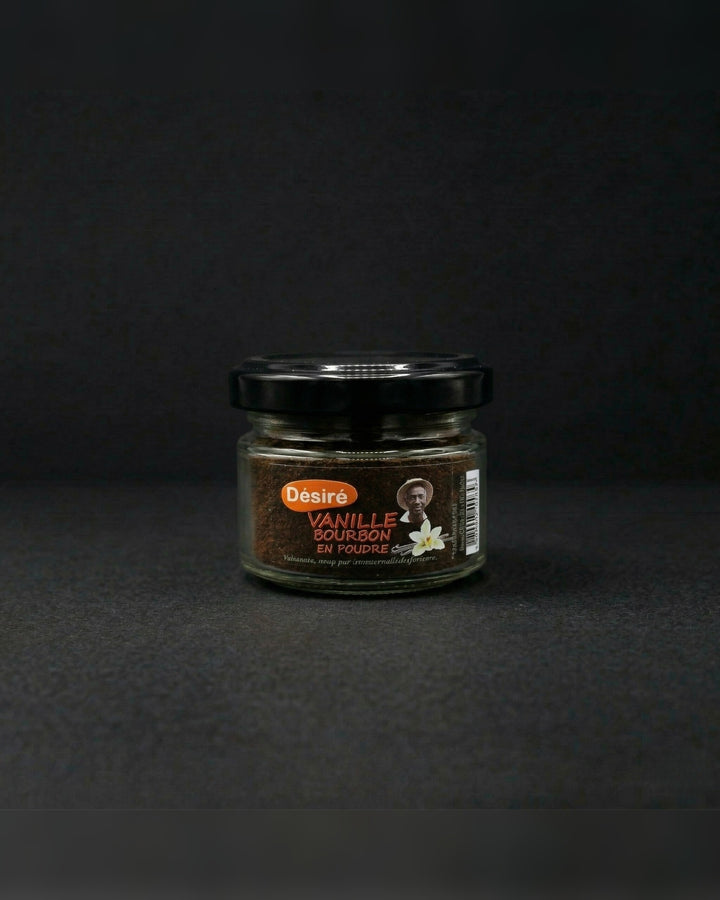
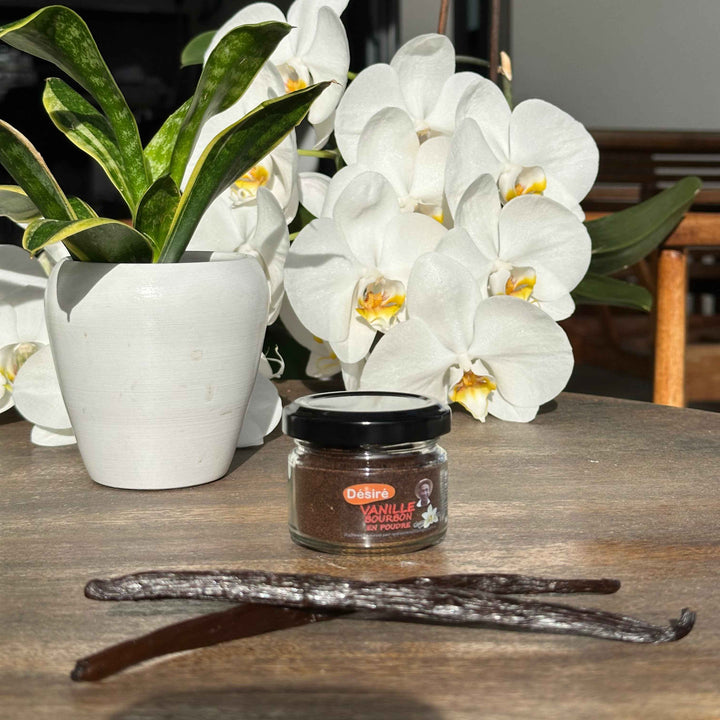
Vanilla powder is made by drying whole beans and then grinding them finely. It therefore contains everything the bean contains: the seeds, but also the skin, which is itself loaded with aroma.
Its strengths: it disperses perfectly through dry preparations (flours, sugars, biscuit doughs), stands up very well to oven baking, and flavours a hot chocolate, a porridge or a smoothie in seconds. Its light brown grain is visually more discreet than caviar: you choose it for the taste rather than for the effect.
Not to be confused with vanilla sugar, which is simply flavoured sugar: a good vanilla powder is 100% milled bean, with no carrier and no added sugar.
3. Vanilla extract: liquid aroma, ready to measure
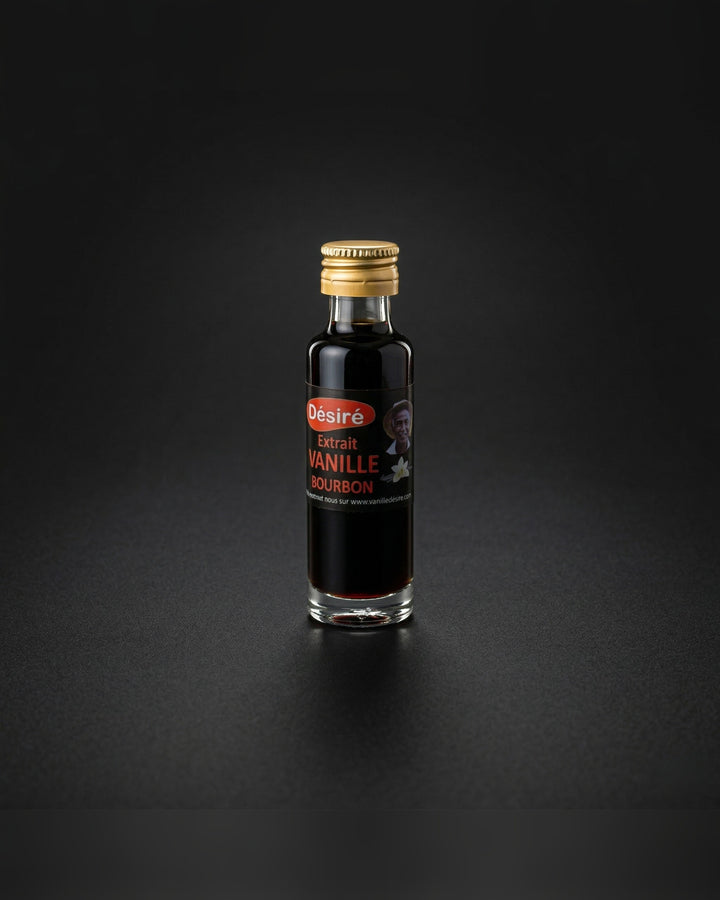
Vanilla extract is a long maceration of beans in a water and alcohol base. The liquid captures the aromatic compounds of vanilla, vanillin first among them, and is measured out by the spoon or drop by drop.
It is the most practical form for everyday use: a teaspoon in a pancake batter, a yoghurt, a quick whipped cream, and the job is done. Most of the alcohol evaporates during cooking. On the other hand, extract leaves no visual trace, and its more linear aromatic profile lacks the complexity of freshly scattered seeds.
Be wary of supermarket “vanilla flavourings”: most are based on synthetic vanillin, with no natural vanilla at all. A genuine extract states its origin and its concentration in beans.
4. And the whole bean?
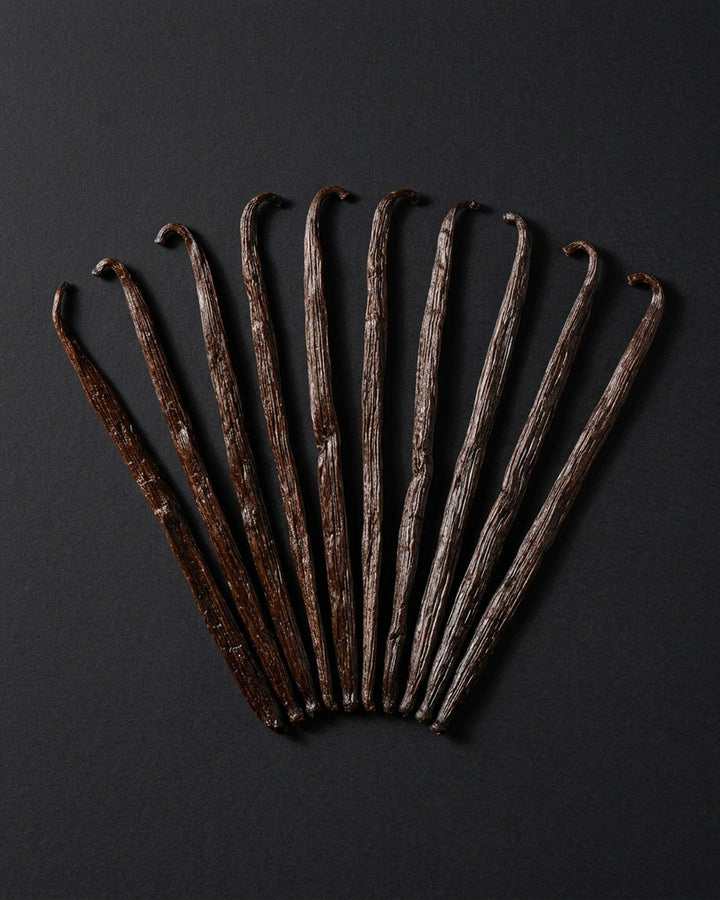
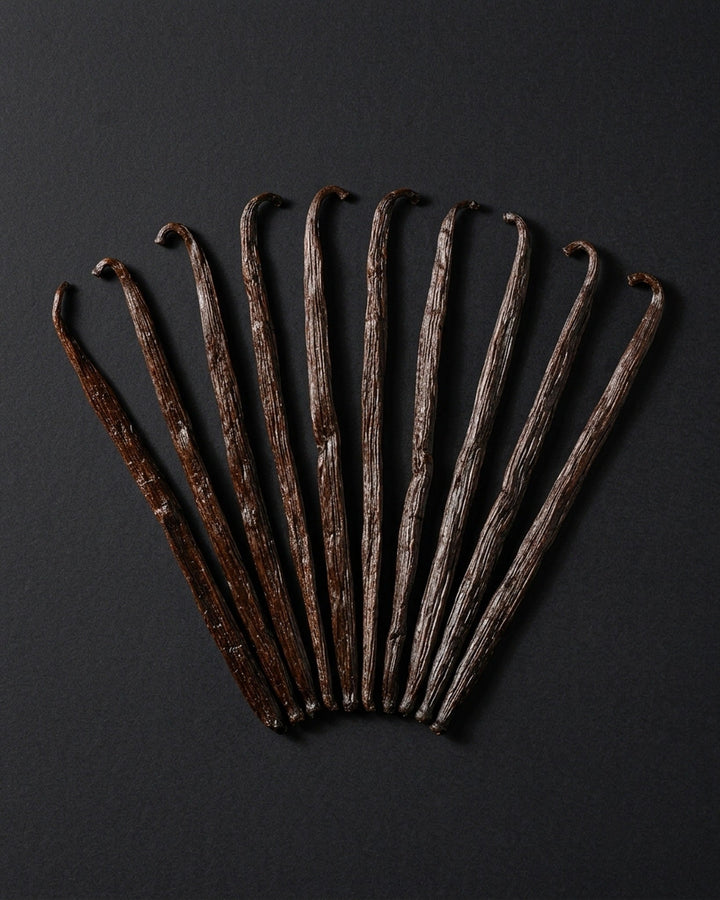
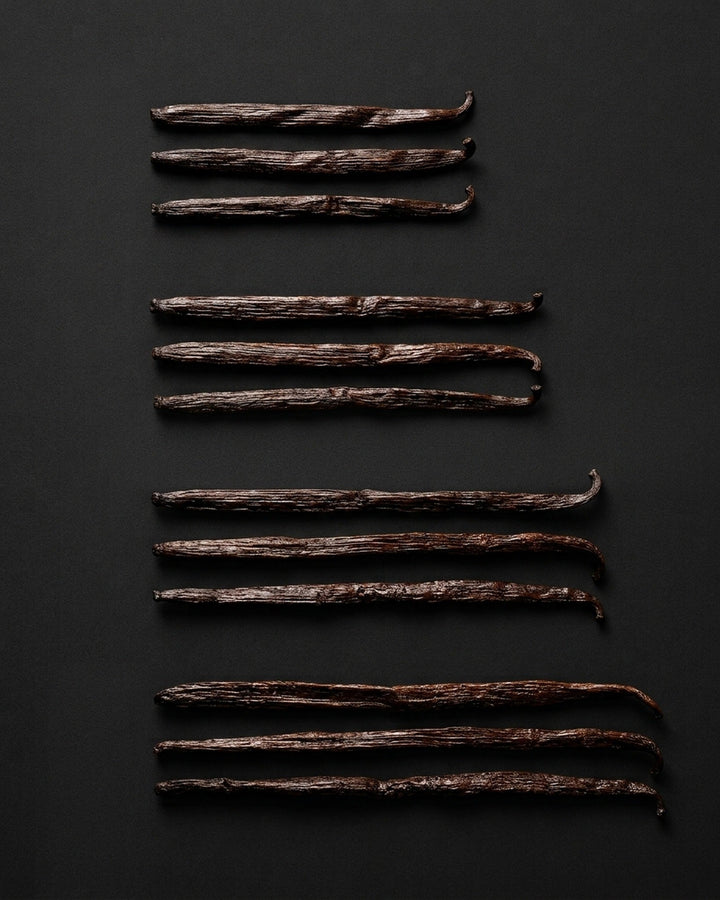
The Bourbon vanilla bean remains the original raw material and the most complete experience: you split it, scrape out the caviar, then infuse the bean itself in milk or cream. For an infused rum, a homemade vanilla sugar or a crème anglaise worthy of a Sunday table, nothing replaces it.
Its only constraint is the work involved: split, scrape, infuse, strain. Our tutorial How to use a vanilla bean sets out the technique, our Bourbon Vanilla Planifolia guide tells the whole story of the variety, and the full Vanille Désiré Wiki brings together all our guides to vanilla, peppers and spices from Madagascar.
5. Comparison table
| Criterion | Vanilla caviar | Vanilla powder | Vanilla extract |
|---|---|---|---|
| Composition | Pure seeds from the bean | Whole bean, milled | Beans macerated in water and alcohol |
| Intensity per gram | Maximum | High | Medium, very consistent |
| Visual result | Signature black specks | Discreet brown grain | None |
| Behaviour when baked | Excellent | Excellent | Good (some aromas are volatile) |
| Ease of measuring | By the spoon, precise | By the spoon, precise | Maximum, drop by drop |
| Ideal uses | Custards, ice creams, desserts | Cake batters, biscuits, drinks | Everyday use, quick baking |
All three forms come from the same harvest, the one our family grows in the SAVA; the caviar, the powder and the extract are made by us. That is what lets you compare them without changing origin or bean quality.
6. Which one to choose, and when
- Crème brûlée, crème anglaise, panna cotta, baked custard: caviar, without hesitation. Perfect diffusion in hot liquids and visible black specks in the finished dish.
- Homemade ice creams and sorbets: caviar again. The seeds spread evenly in the churn, with no long infusion and no straining, and the aroma holds up to the cold.
- Loaf cakes, shortbread, madeleines, cookies: powder. It blends into the flour without changing the texture of the dough.
- Yoghurts, porridge, smoothies, coffee: powder or extract, depending on whether you want the grain or the discretion.
- Quick whipped cream, pancake batter, midweek cake: extract, for how fast it measures out.
- Infused rum, syrups, slow infusions: the whole bean, with a touch of caviar if you like.
- A celebration dessert where everything has to be right: bean plus caviar, the pastry chefs' pairing.
7. Equivalences and quantities
Indicative equivalences, to be adjusted to the intensity you are after:
- 1 vanilla bean ≈ 1/4 teaspoon of caviar (≈ 1 g) ≈ 1/2 teaspoon of powder (≈ 2 g) ≈ 1 to 2 teaspoons of extract
- For 1 L of cream or milk (crème anglaise, ice cream for 8): 1/2 teaspoon of caviar, the equivalent of 2 to 3 beans
- For 500 g of cake batter: 1 level teaspoon of powder
- For whipped cream (300 ml): a pinch of caviar or 1 teaspoon of extract
In every case, add the vanilla early in hot preparations so the aromas develop, and taste before adding more: good vanilla asks for less than you would think. To keep it at its best, see our guide Storage & preparation.
8. FAQ
9. Buy & related products
- Bourbon vanilla caviar from Madagascar (20 g): the equivalent of about 30 beans, ready to measure out
- Bourbon vanilla powder (20 g): the whole bean, milled, for batters and drinks
- Bourbon vanilla extract (20 ml): the everyday reflex
- Bourbon vanilla, Discovery format, 1 to 5 beans: to try the whole bean
- Bourbon vanilla, 3 beans (glass tube): the gift format
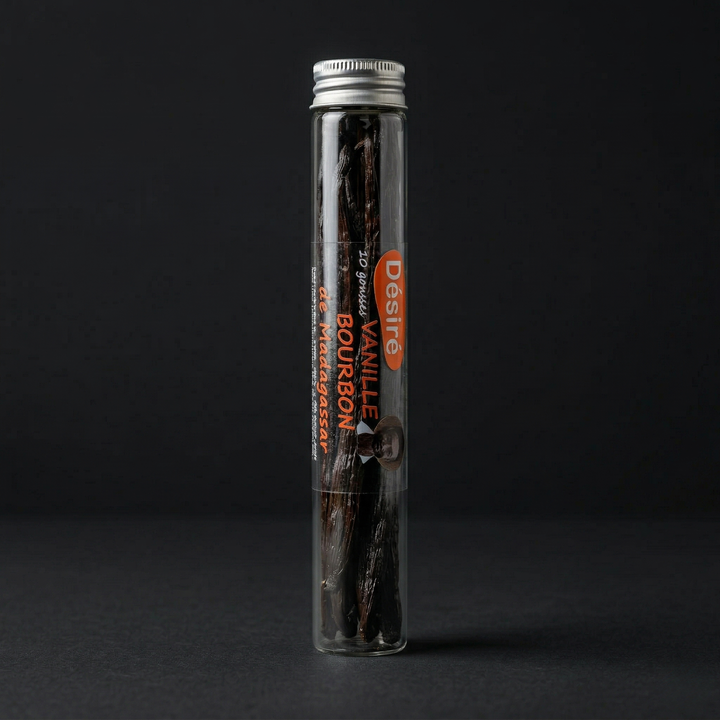
- Bourbon vanilla, 10 beans (glass tube): for those who bake often
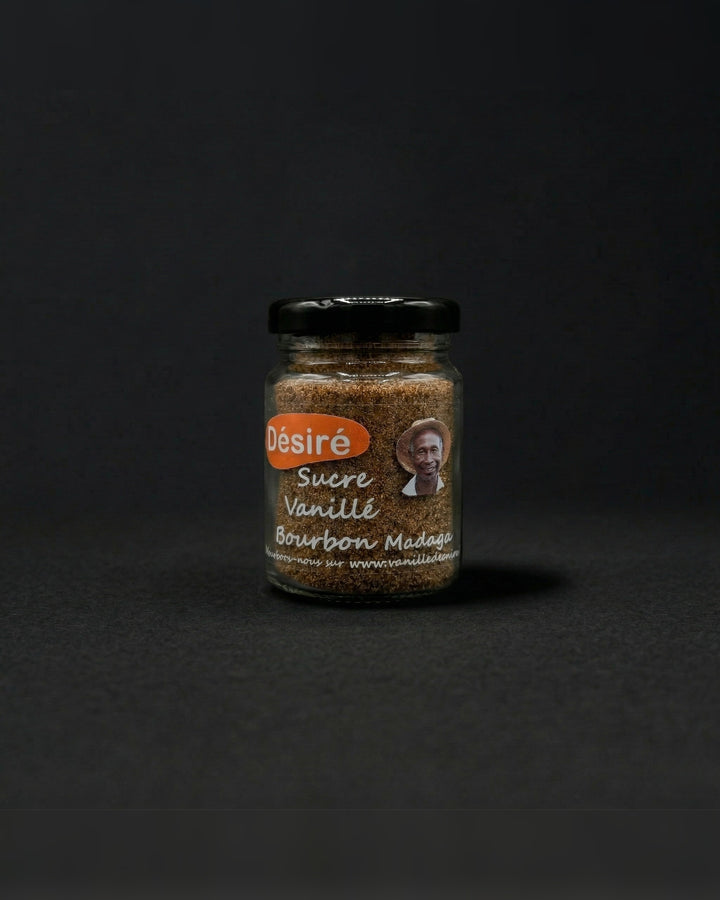
- Bourbon vanilla sugar (60 g): the finishing touch on a Sunday cake
- The complete Bourbon Vanilla from Madagascar collection: beans, powder, extract, caviar and vanilla sugar in one place