Madagascar combava: the wild citrus with a fragrant zest
Quick answer:combava (Citrus hystrix) is a small green citrus fruit with a knobbly skin, native to Southeast Asia and naturalised in Madagascar. Its aromatic value comes from the zest, not the juice. In Madagascar, a semi wild combava is harvested along the east coast, then dried and ground into a fine powder. Profile: lemongrass, bergamot, orange blossom, kaffir.
1. Origin and terroir in Madagascar
Combava is native to the Indo Malay archipelago (Indonesia, Malaysia, Thailand, where it is called "makrut" or "kaffir lime"). It was introduced to the Indian Ocean, Reunion, Mauritius, Madagascar, via colonial trade routes. In Reunion, it became emblematic of local Creole cuisine. In Madagascar, it grows in two contexts:
- Garden grown : a small bushy tree 3 to 4 m tall, found in almost every traditional Malagasy garden, where the fresh leaves are picked for stews.
- Semi wild at the forest edge : on the east coast, plants that escaped cultivation have naturalised and produce fruit that is more aromatic, more fragrant, and sometimes smaller.
Our combava comes from Vangaindrano, in southeastern Madagascar, where our family grows and harvests it. The fruit is picked at full ripeness (intense green, characteristic knobbly surface), zested by hand to collect only the outer aromatic layer (without the bitter white pith), then dried at low temperature (40°C maximum) for 3 to 4 days to preserve the essential oils. PHOTO_COMBAVA_FOREST, a hand holding a freshly picked, knobbly combava at the forest edge.
Low temperature drying is crucial. Combava is rich in volatile compounds (citronellal, limonene, terpinen-4-ol) that break down above 50°C. "Industrial" combava powders oven dried at 80-100°C lose up to 60% of their aromatic potential. Our artisanal method preserves almost the entire profile.
Once dry, the zest is ground into a fine powder using a stone mill, which avoids heat buildup and preserves the aromas. The yield is very low : it takes around 12 to 15 fresh combavas to produce 20 g of powder, which is why the price per gram is relatively high. This is an exceptional product, meant to be used in small amounts.
2. Detailed aromatic profile
Combava cannot be compared to any other known citrus. It is a unique profile, at once floral, lemony and resinous.
Main notes:lemongrass (very pronounced), bergamot zest, orange blossom, light eucalyptus. This is the immediate identity of combava, a fragrant citrus freshness that has neither the roundness of orange nor the sharpness of lemon.
Secondary notes:green (citrus leaf), lightly resinous (soft pine), a faint minty base, a verbena finish. On the finest batches, you can also pick up a note of fresh ginger and peppermint.
Intensity:very high. 1/4 teaspoon of powder is enough to flavour a dish for 4 people. It is one of the most concentratedspices you can find, never to be measured by guesswork.
Persistence:long. Combava keeps releasing its aroma as other flavours fade. It is an excellent finishing touchbecause it "opens up" the dish on the finish.
Volatility:very high. Unlike its lingering taste, its aromatic molecules evaporate quickly with heat. The rule is: add combava at the end of cookingor off the heat, never at the start. This is the most common mistake made by cooks discovering this spice.
3. Culinary uses and micro recipes
Combava is a transformativeingredient: it does more than flavour, it changes the whole dimension of a dish. Just a few pinches are enough to give fish, rice or cream an immediately recognisable exotic, floral character.
Sea bream tartare with combava (4 servings)
400 g very fresh sea bream fillet, diced, juice of 1 lime, 2 tablespoons olive oil, 1/2 teaspoon of combava powder, 1 finely chopped shallot, fleur de sel, Voatsiperifery pepper. Mix 15 minutes before serving. Combava works very well here in place of ginger.
Combava scented rice (4 servings, side dish)
250 g basmati rice, 500 ml water, 1 green cardamom pod, 1 pinch of combava powder added at the end of cooking (cover for 5 minutes). Serve with grilled fish, a mild curry, or roast poultry.
Combava syrup (300 ml, cold infusion)
300 ml cold water, 250 g sugar dissolved cold, 1 teaspoon of combava powder, zest of 1 lime. Mix, leave to infuse for 24 hours in the fridge, then strain. For cocktails (gin and tonic, mojito), fruit salad, panna cotta.
Combava butter for scallops (4 servings)
100 g softened salted butter, 1/2 teaspoon of combava powder, lime zest. Work into a smooth paste, roll into a log, and chill for 1 hour. Add a knob to seared scallops just before serving.
Combava crème brûlée (6 ramekins)
500 ml cream, 100 ml milk, 6 egg yolks, 80 g sugar, 1/2 teaspoon of combava powder added off the heatafter infusing at 70°C. Bake for 1 hour at 95°C. Caramelise the top. Combava adds an unexpected floral dimension.
Combava finishing salt
30 g fleur de sel plus 1 teaspoon of combava powder. Mix and store in an airtight jar. On grilled fish, carpaccio, avocado. Or see our ready made combava seasoned salt.
4. Comparison table: combava versus other fragrant citrus
| Criterion | Combava Madagascar | Yuzu Japan | Bergamot Italy | Lime | Kaffir lime leaf |
|---|---|---|---|---|---|
| Part used | Dried zest (powder) | Fresh zest and juice | Zest and essential oil | Zest and juice | Fresh leaf |
| Profile | Lemongrass, bergamot, floral | Mandarin, grapefruit, pine | Floral, citrus, slightly bitter | Sharp citrus, green | Pure lemony green |
| Intensity | 9/10 | 7/10 | 8/10 | 6/10 | 7/10 |
| Dry storage life | 18-24 months | Poor | Poor | Poor | 12 months (dried) |
| Indicative price | 15-25 €/20 g powder | 30-50 €/100 ml juice | Winter season, fresh | Available year round | 8-15 €/pouch |
| Typical use | Finishing, off the heat | Sauces, vinaigrettes | Pastry, perfumery | Everyday, all purpose | Curries, soups |
| Fresh availability | Rare in France | Seasonal | Winter | Year round | Rare in France |
Combava is unique in its category of dried citrus : few spice shops offer it in this form, even though it is by far the most practical for European cooking (no freshness issues, year round availability, precise dosing).
5. Benefits and properties
Combava is rich in essential oils (up to 4% by weight in the fresh zest), mainly composed of citronellal, limonene, geraniol and terpinen-4-ol. These compounds have documented properties (see Wikipedia, Citrus hystrix):
- Antibacterial and antiviral : traditionally used in Southeast Asia and Madagascar to help purify water and food.
- Mild anti-inflammatory : citronellal has demonstrated effects in vitro.
- Digestive : combava essential oil is used in aromatherapy to support digestion.
- Antioxidant : contains polyphenols and flavonoids.
Culturally, combava is also used as an infusion (fresh leaves) in Madagascar as a traditional remedy for colds and mild digestive troubles. No medical claim is made here, the value of combava remains primarily culinary.
Nutritionally, the amount used in a typical recipe (around 1 g) is negligible. Combava powder contains no gluten and no major allergen.
6. Storage and quality
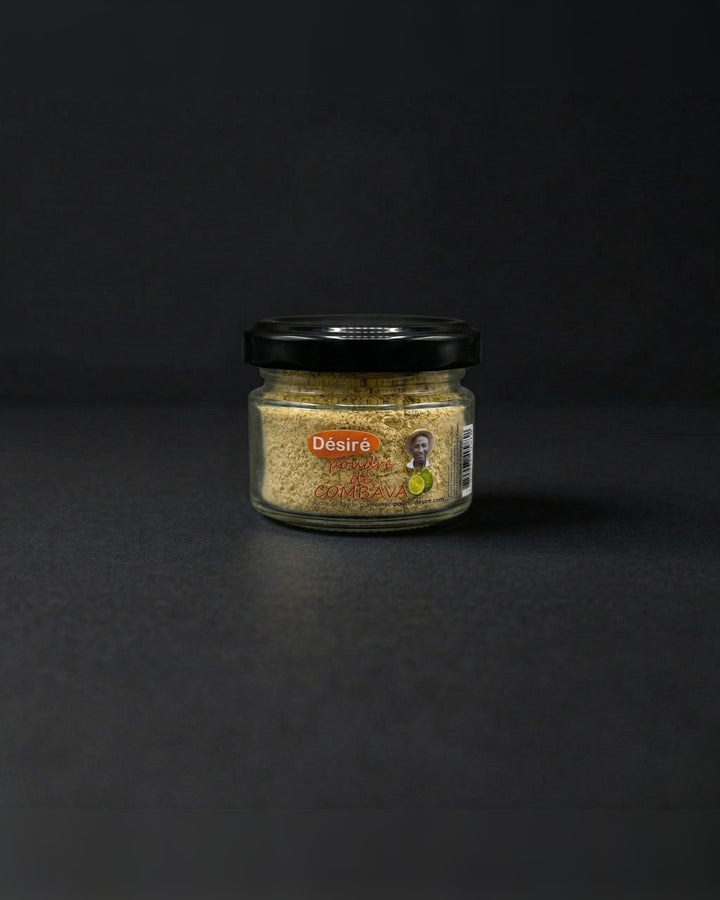
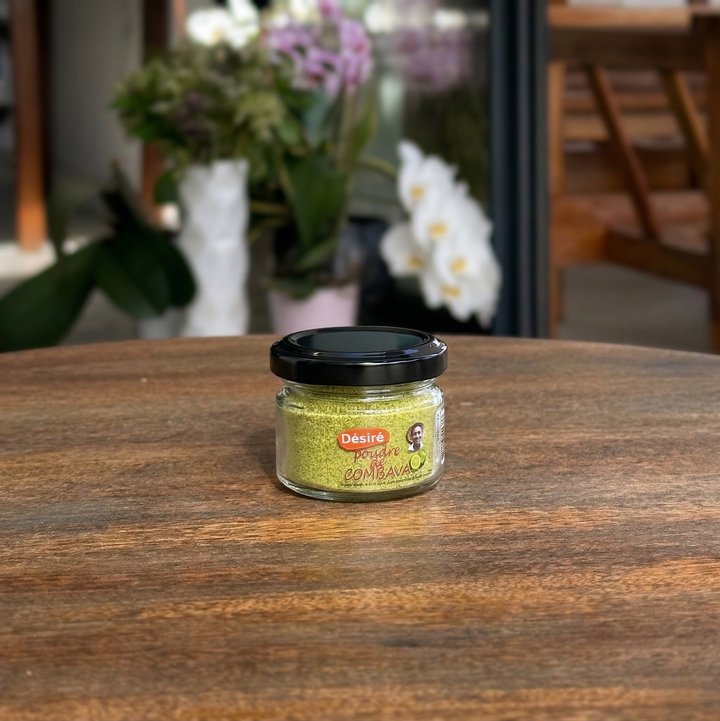
How to recognise good combava powder: - Pale to soft green colour, never brown or yellow - Fine texture, no lumps - Aroma on opening the jar: intense, lemongrass floral, alive - Volatility: simply lifting the lid should release its aroma - No white clumps (a sign of moisture)
To avoid:brown or dull looking powders (over dried, oxidised), powders with a very faint aroma (industrial quality or aged), powders with small hard fragments (poor grinding).
Storage:airtight glass jar, away from light (a closed cupboard), at a stable room temperature (18-22°C). Combava is more fragilethan most spices: its aromatic compounds are highly volatile. Optimal shelf life is 18 to 24 monthsunder good conditions, 12 months under poorer ones.
Tip: do not open the jar too often.Each opening lets aroma escape. Take out what you need for the week and keep a small working jar separate from your main stock.
For fresh combava leaves (if you find some at an Asian grocer): they keep for 1 week in the fridge wrapped in damp paper, or can be frozen whole (then sliced while still frozen straight into dishes).
See also our guide to pili pili chilli, with which combava forms a classic duo in Malagasy cooking.
7. Extended FAQ
8. Where to buy and related products
- Wild combava powder, 20 g, our combava reference
- Combava seasoned salt, a ready to use finishing salt
- Madagascar pili pili chilli, the classic pairing in Malagasy cuisine
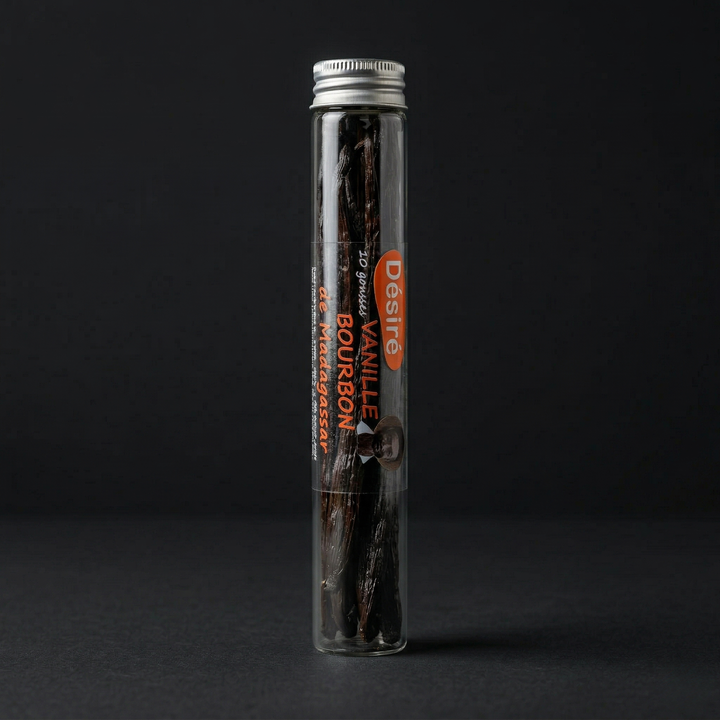
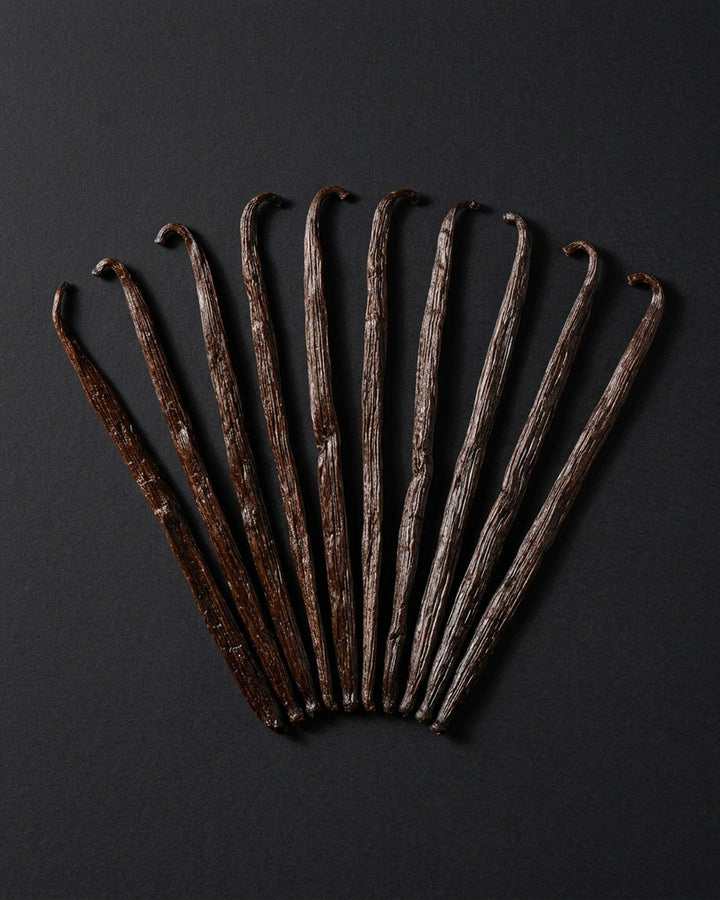
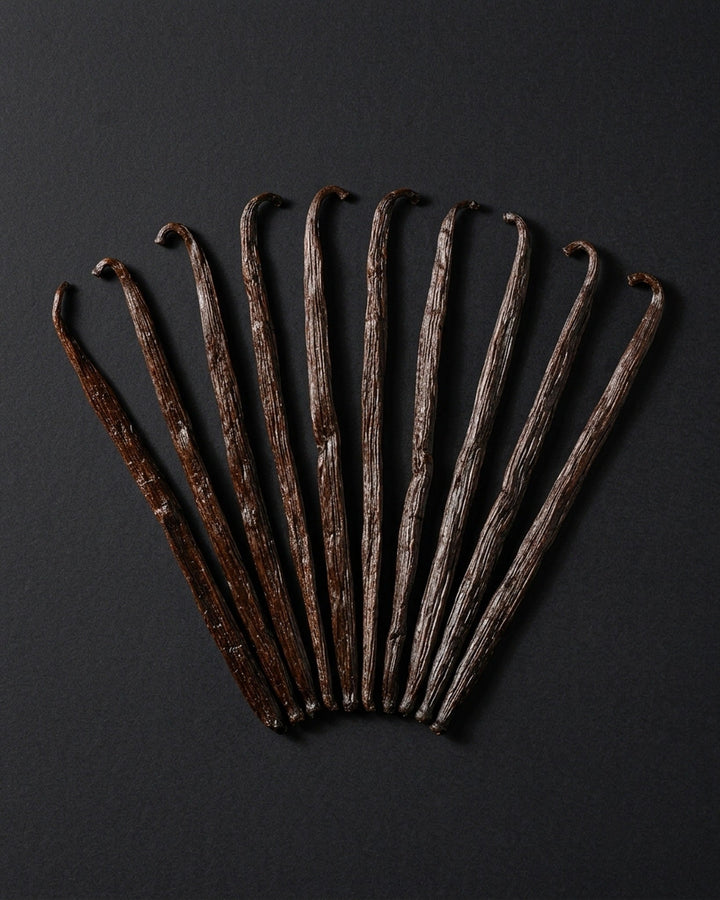
- Madagascar Bourbon vanilla, 3 beans, a bold pairing (vanilla and combava on fish)