Storing and Preparing the Vanilla Bean: The Complete Guide
Quick answer:a vanilla bean keeps for 2 to 3 yearsin an airtight glass tube, at room temperature (18-22 °C), away from light. Not in the refrigerator: humidity causes mold. To use a bean, split it lengthwise with a knife, scrape the seeds with the back of the blade, then use both seeds and bean together.
These steps apply to every bean in our Bourbon vanilla from Madagascar, whatever grade you have chosen.
1. Origin and terroir: why proper storage matters
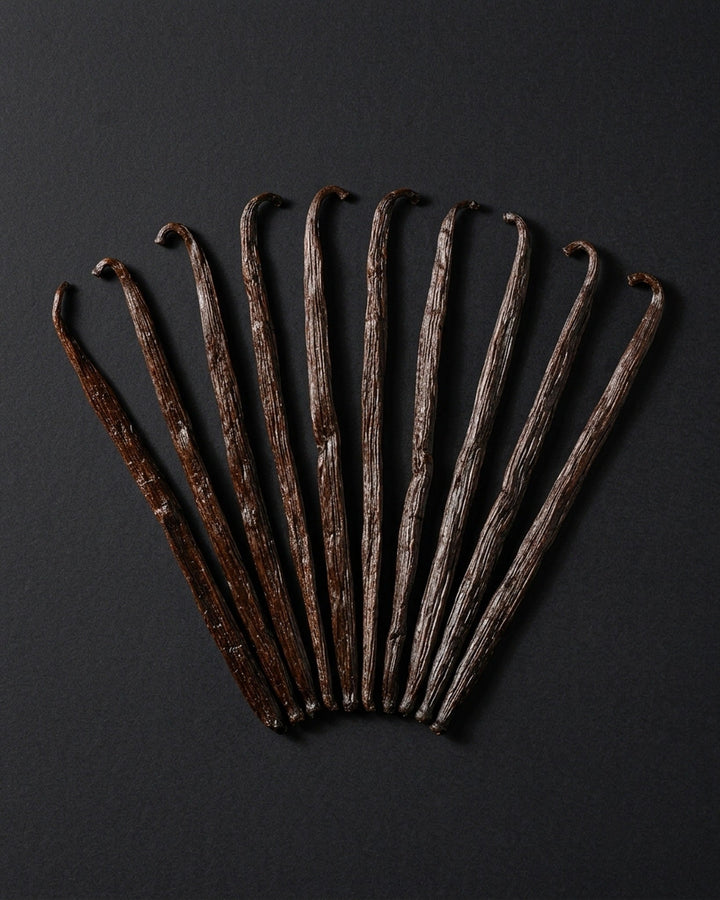
The vanilla bean in your hand carries about 18 months of history behind it: 9 months on the vine to maturity, then 6 to 9 months of post harvest processing (scalding, sweating, drying, curing). This patient work develops the 200+ aromatic compounds that make up the signature of a quality vanilla.
Poorly stored, a bean loses this richness within months. Well stored, it can keep 90 % of its aromatic potential for 2 to 3 years. The difference comes down to three factors: humidity, light, temperature.
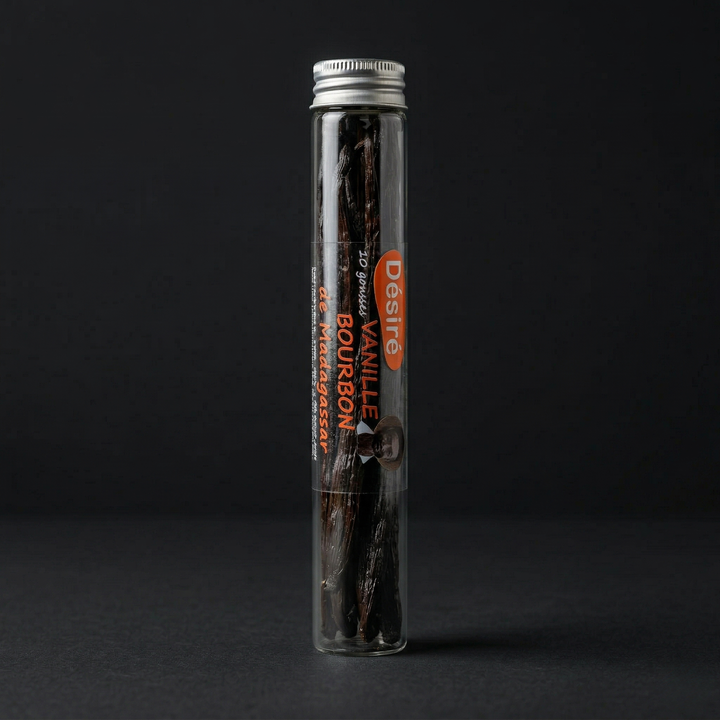
At Vanille Désiré, our beans are packed in airtight glass tubes with a silicone seal, after thorough curing that stabilizes their moisture content around 28-32 %. This stabilization is what allows for long storage. Vanilla sold in plastic pouches or cardboard boxes loses its moisture much faster, which is why storage advice is sometimes shorter at other retailers.
As our family grows and prepares its beans on site, in the SAVA region, the time between the end of curing and tubing is very short: generally 4 to 6 weeks, against 6 to 12 months for conventional supply chains. A freshly cured vanilla keeps better. PHOTO_TUBE_HERMETIQUE_GOUSSES, open Vanille Désiré glass tube showing 3 plump beans.
2. Ideal storage profile: the technical parameters
Temperature: 18 to 22 °C.Too warm (above 25 °C), the vanilla dries out and loses its volatile aromas. Too cold (below 15 °C, and even more so in the fridge at 4 °C), ambient humidity condenses and encourages mold. A cool cellar works if it stays dry.
Relative humidity: 60-70 %.Not too dry (the bean dehydrates), not too humid (risk of mold). The airtight tube naturally manages this factor by isolating the bean from ambient air.
Light: zero UV.Direct light oxidizes the aromatic compounds within weeks. A colored glass tube (amber, smoked) or storage in a closed cupboard is enough. Clear glass is fine only if the tube is kept in the dark.
Airflow: none.Unlike some spices, vanilla does not need to "breathe". On the contrary, every exchange of air with the outside dissipates its aromas. Keep the tube closed, open it briefly (10 seconds to take out a bean), and close it again right away.
Food contact:glass is neutral. Food grade plastic is acceptable but less durable (microporous). Avoid direct contact with metal (possible ion exchange) and cardboard (absorbs the bean's moisture).
3. Preparation and uses: step by step, plus quick recipes
How to split a bean correctly
Lay the bean flat on a board. With a well sharpened paring knife, pierce it 1 cm below the tip (not right at the end)and split it along its full length, keeping the blade parallel to the board. You get two half beans opened like a book. With the back of the knife (or a scraper), scrape out the seeds (black caviar) in a single pass. PHOTO_LIFESTYLE_FENDRE_GOUSSE, knife splitting a Bourbon bean.
Chef's tip: always use the scraped bean as well as the seeds. The bean still holds 60 % of the aromas (lignin, aromatic woody compounds). Drop both bean and seeds into your preparation.
Vanilla seed pastry cream (for an 8 person tart)
500 ml milk, 1 Bourbon vanilla bean (both seeds and bean), 6 egg yolks, 100 g sugar, 50 g cornstarch. Infuse the bean in the hot milk for 20 minutes, whisk the yolks with the sugar and cornstarch, pour in the milk, and cook while stirring until it thickens. Remove the bean, transfer, and cover with cling film in contact with the cream. Use our Bourbon Madagascar beans.
Homemade vanilla sugar (250 g)
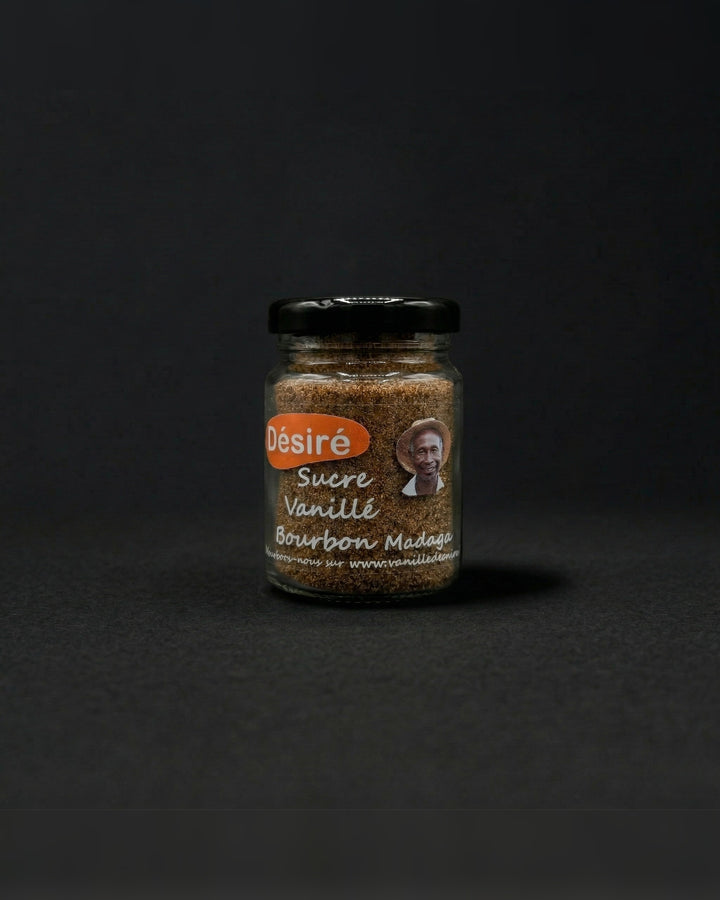
250 g caster sugar, 2 already used vanilla beans (rinsed and dried). Blend together in short pulses, then sift to obtain a fine vanilla sugar. Keeps for 1 year. More fragrant than store bought vanilla sugar. Or order our vanilla sugardirectly.
Homemade vanilla extract (250 ml)
250 ml white agricole rum (or neutral vodka), 4 finely chopped vanilla beans. Pour into an amber bottle, leave to macerate for 6 to 8 weeks minimumaway from light, shaking once a week. Strain. Keeps for 2 years. For baking, glazes, cocktails. Or see our ready to use Bourbon extract.
Vanilla finishing salt (50 g)
50 g fleur de sel, seeds from 1 vanilla bean. Mix, dry for 24 hours in open air, keep in an airtight jar. Ideal on foie gras, duck breast, dark chocolate.
Reusing an infused bean
An already infused bean can be used 2 to 3 times if it is rinsed well in clear water and dried for 24 hours in open air between uses. Keep in a dry jar. You can also drop it directly into a jar of sugar or a bottle of neutral oil to flavor it.
4. Comparison table: storage methods
| Method | Shelf life | Aroma retention | Mold risk | Practicality |
|---|---|---|---|---|
| Airtight glass tube, room temperature | 2-3 years | 95 % | Very low | Excellent |
| Closed kraft or plastic pouch | 12-18 months | 75 % | Low | Good |
| Standard glass jar | 18 months | 80 % | Low | Good |
| Refrigerator (3-5 °C) | 12 months | 60 % | High | Poor (condensation) |
| Freezer (-18 °C) | 3 years+ | 70 % | None | Mediocre (aroma loss on thawing) |
| Open metal tin | 6 months | 40 % | Medium | Poor |
| Food grade vacuum seal | 4 years+ | 90 % | None | Excellent (equipment required) |
Conclusion:the airtight glass tube at room temperature offers the best balance of simplicity and effectiveness. Vacuum sealing beats everything on pure longevity but requires dedicated equipment. The refrigerator should be avoidedexcept in a particular case (tropical climate with no air conditioning, where room temperature stays above 30 °C continuously).
5. Benefits, quality and properties worth preserving
The vanilla bean contains more than 250 identified aromatic compounds, including vanillin (1 to 2.5 % of dry weight), polyphenols, aldehydes, and terpenic compounds. These molecules are fragile: crystalline vanillin is stable, but many other compounds are volatile or prone to oxidation.
Poor storage destroys the secondary notes first(cocoa, floral, fruity) before the vanillin itself. This is why an old, poorly stored bean can still smell of "vanilla" without having its original complexity.
Vanilla polyphenols have documented antioxidant properties (see Wikipedia, Vanillin). This is one of the reasons vanilla is used as a natural preservative in certain dairy preparations and ice creams. Well stored, your bean also keeps these properties. No medical claim intended.
6. Detailed storage and quality: checklist
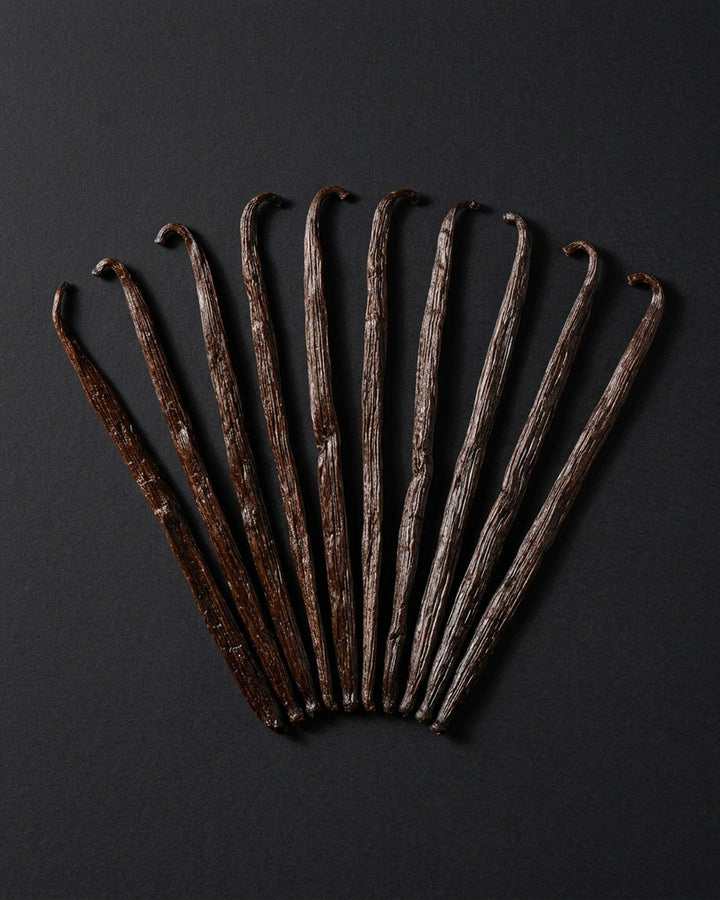
Recognizing a bean that is still good: - Flexibility: it wraps around a finger without breaking - Even color (chocolate brown for Bourbon, russet brown for Pompona) - Aroma when opening the tube: intense, complex, with no note of alcohol or mold - Moist, black seeds when cut open - Possible presence of white crystals (frosting)which means crystallized vanillin, a sign of quality, never a flaw. PHOTO_CRISTAUX_GIVRAGE, close up of a bean with white frosting.
Warning signs: - Dry, stiff bean that breaks: dehydrated, still usable for extract - White, green or gray fuzzy surface: mold, discard it - Smell of alcohol or fermentation: over cured, discard it - Uniformly black color with an oily exudate: over fermented, discard it - No aroma at all: oxidized, no aromatic value left
Telling frosting apart from mold: - Frosting equals dry, shiny crystals, aroma intact, often forming lines along the bean - Mold equals fuzzy, matte, altered aroma, rounded spots. When in doubt, rub it with a finger: frosting crushes into powder, mold leaves a damp mark.
If a bean has dried out:it remains usable. You can rehydrate it by wrapping it in a damp cloth for 24 hours (then use it quickly), grind it in a blender to make powder, or steep it in alcohol to make an extract.
See also our detailed guides on Bourbon planifolia vanillaand Pompona vanillafor the specifics of each species.
7. Extended FAQ
8. Buying and related products
- 3 Bourbon beans in an airtight glass tube, our reference format
- 10 Bourbon beans in a glass tube, more economical over time
- Pompona XXL vanilla, for chefs
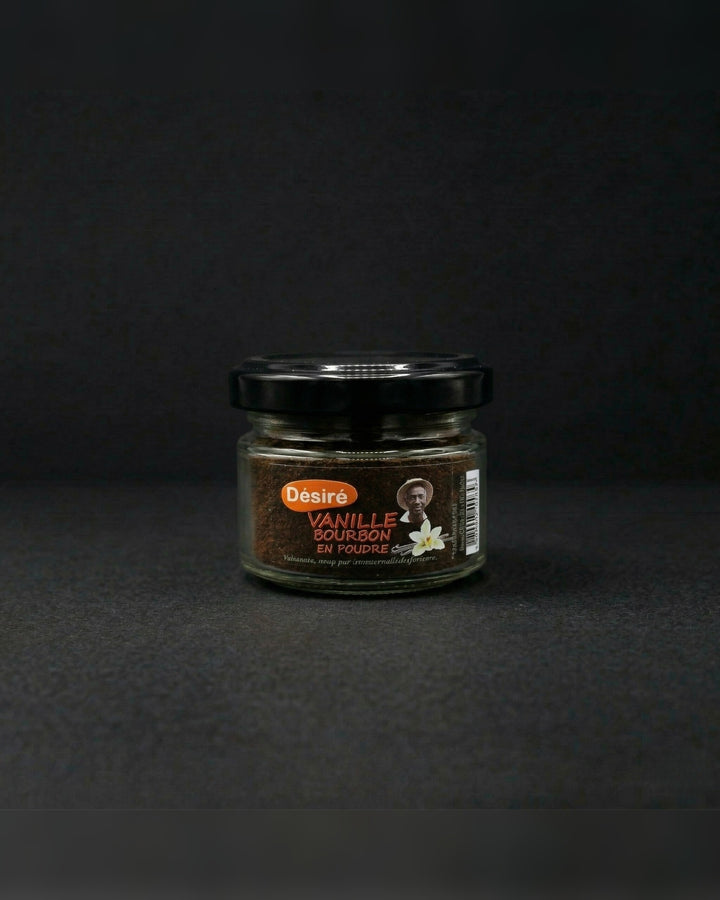
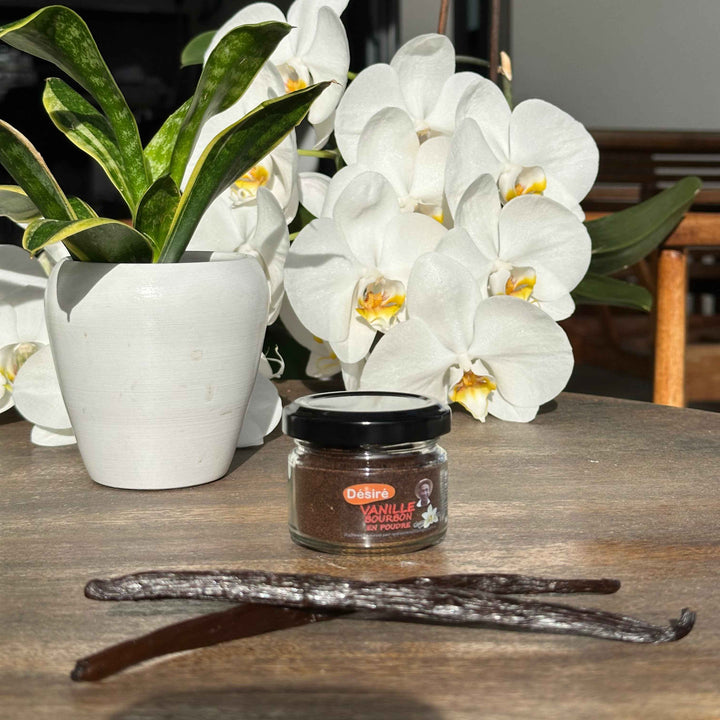
- Bourbon vanilla powder 20 g, a practical alternative
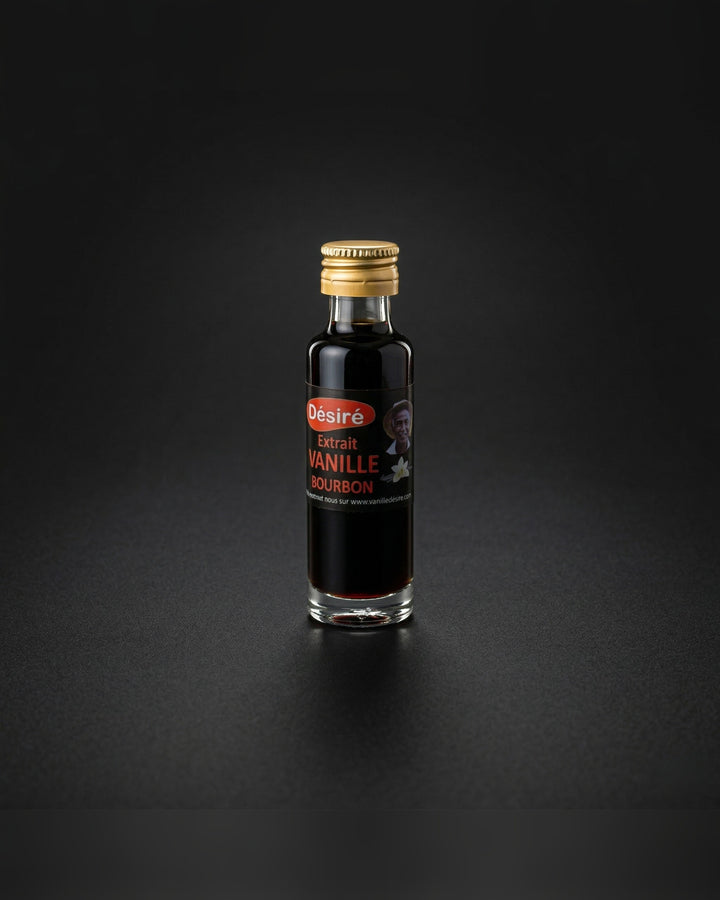
- Vanilla extract 20 ml, when you need a precise dose
- Vanilla sugar 60 g, made with our beans