Quick answer: Tonka bean and vanilla are two different spices. Tonka comes from a tree native to South America and owes its aroma to coumarin, a substance regulated under European law. Vanilla comes from an orchid and owes its aroma to vanillin. Vanille Désiré does not sell tonka beans, only vanilla from Madagascar.
Tonka bean and vanilla sometimes appear in the same baking recipes, and are easily confused: both are small, fragrant brown seeds, used in small amounts to flavour a custard or a dough. Yet they share neither the same botanical origin, nor the same use, nor the same regulatory framework. This page explains these differences, and sets out the regulations surrounding tonka bean.
Two plants, two continents
Tonka bean is the seed of a South American tree, Dipteryx odorata, found notably in the forests of the Amazon. Vanilla is the fruit of an orchid, native to Mexico and grown today in several tropical regions, including the SAVA region of Madagascar, where our family grows its own. They are therefore neither the same plant, nor the same botanical family.
Two aromas, two molecules
The characteristic aroma of tonka bean comes from a substance called coumarin, which gives off a scent close to cut hay, almond and caramel. Vanilla's comes mainly from vanillin. The two aromas can seem similar in baking, with warm, indulgent notes, but the substance that produces them is not the same, and it is not subject to the same regulatory framework.
Vanillin also exists in synthetic form, obtained through an industrial process different from extraction from a natural vanilla pod: for this difference, see our page on natural vanilla flavouring and synthetic flavouring. Coumarin, for its part, has no equivalent of this kind in our products: we sell neither tonka bean nor a synthetic flavouring that would reproduce its aroma.
Coumarin, a substance regulated under European law
Coumarin is a substance found naturally in tonka bean, but also, in smaller amounts, in certain cinnamons. In Europe, it is listed in Annex III of Regulation (EC) No 1334/2008 on flavourings: this text sets maximum levels of coumarin for certain categories of food, for example fine bakery products. The European Food Safety Authority has also established a tolerable daily intake of coumarin, of 0.1 mg per kilogram of body weight. In practice, whole tonka bean is sold mainly to businesses that use it to prepare flavourings, under this same regulation, rather than directly as a food on the grocery shelf.
Why Vanille Désiré does not sell tonka bean
Tonka bean does not come from any of the regions our family grows in, and its use is governed by regulations specific to food flavourings. Vanille Désiré therefore does not sell it: it may be mentioned as an ingredient found in some baked goods, alongside vanilla, without ever being a product in our catalogue. Our family grows vanilla, not tonka bean: so we speak here only of what we know from our own production, and of what is publicly known about coumarin regulation.
A spice also known in perfumery
The coumarin in tonka bean is not only a baking topic: this same substance is used in perfumery, where it brings a note close to cut hay and cocoa bean. Its regulation, in perfumes as in food, follows the same principle: setting maximum levels rather than simply banning the substance outright.
Can one replace the other in a recipe?
In a recipe that calls for tonka bean, vanilla will not give the same aroma: rounder, less close to cut hay or almond. It nonetheless remains a common substitute, in pod, powder or extract form, to flavour a custard, a dough or a sweet preparation. To choose the right form of vanilla for your preparation, see our page on how to use a vanilla pod, and for the quantity, vanilla dosage by preparation.
Our vanillas
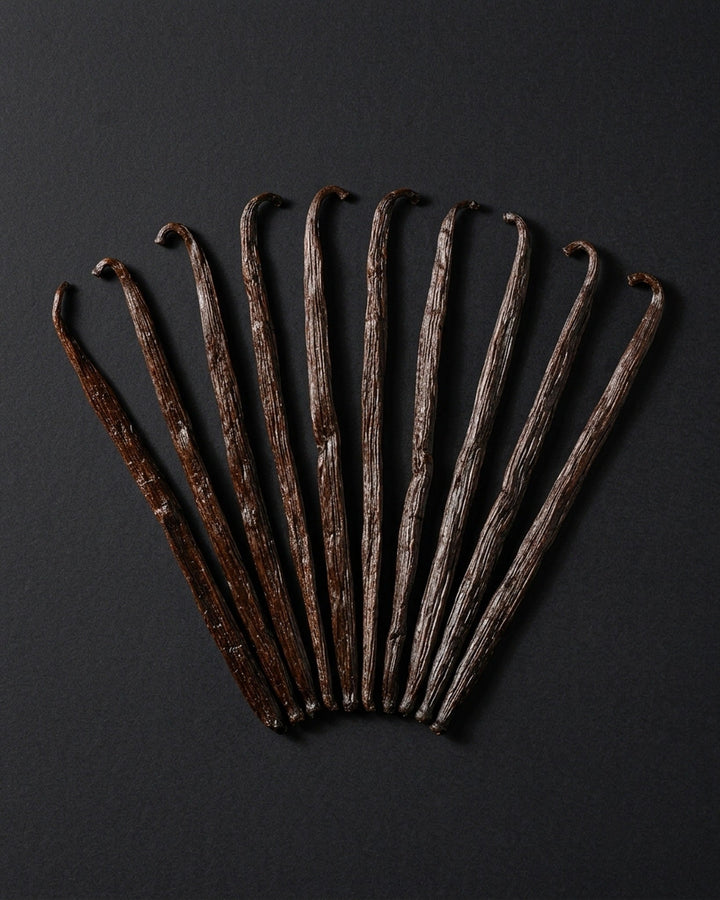
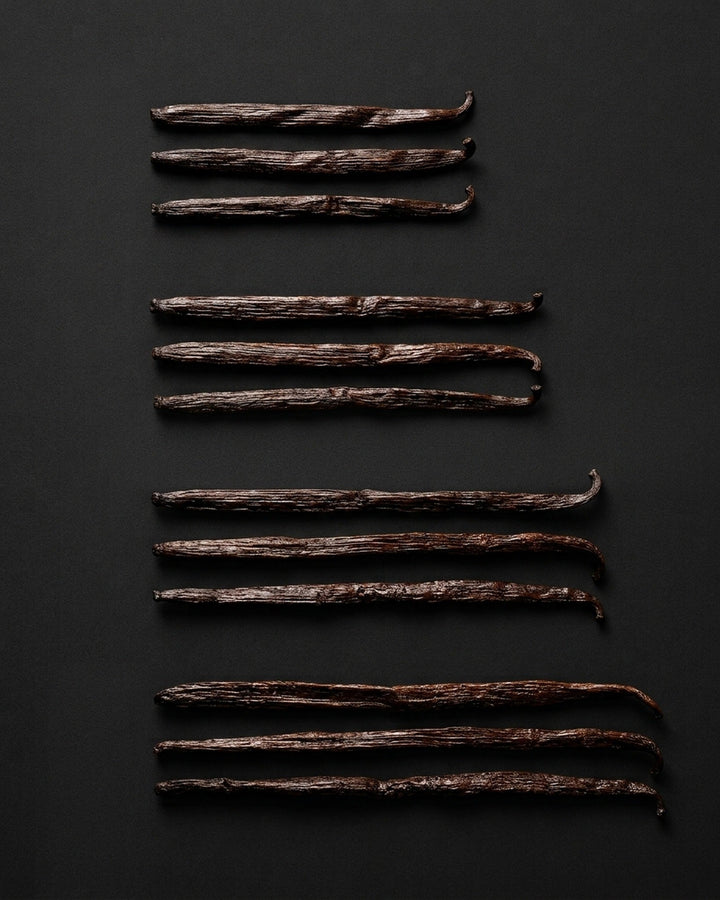
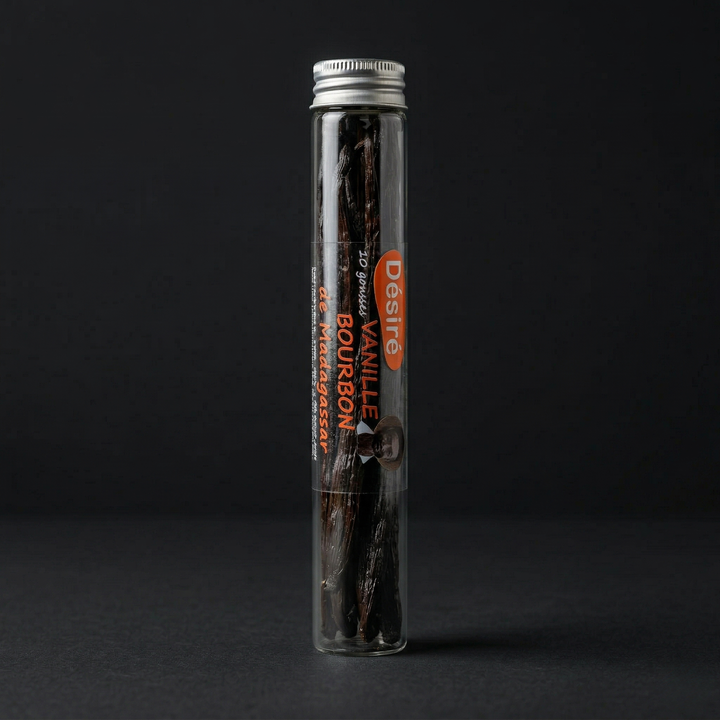
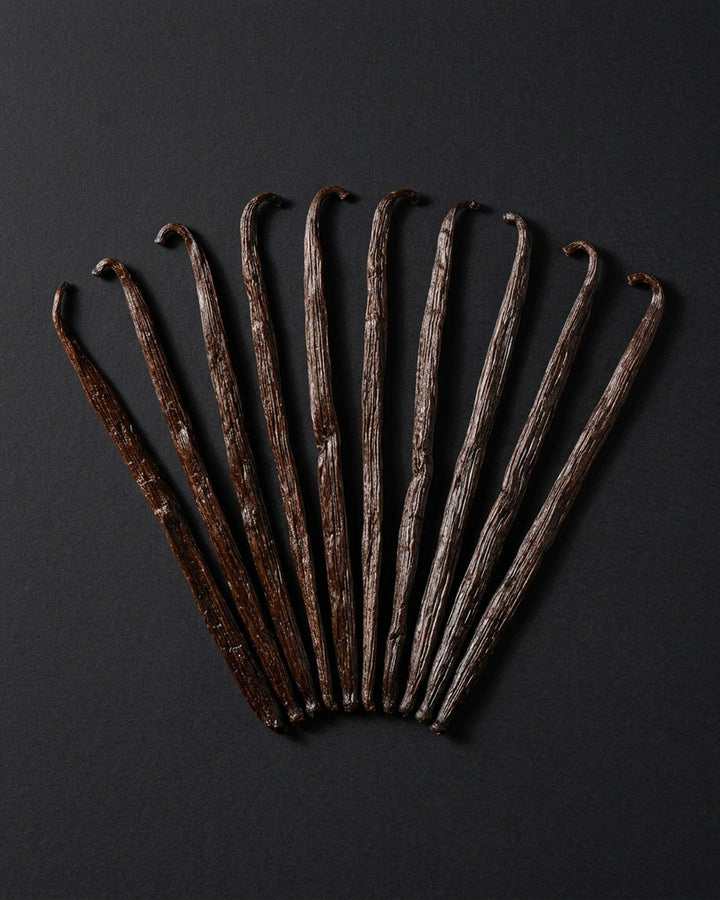
- Madagascar Bourbon vanilla pods
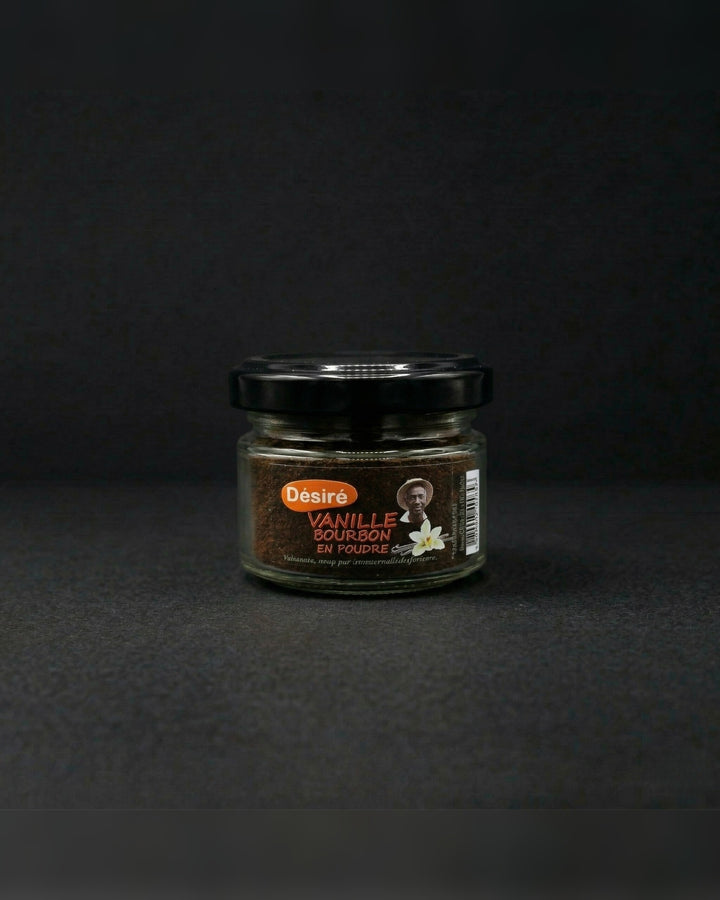
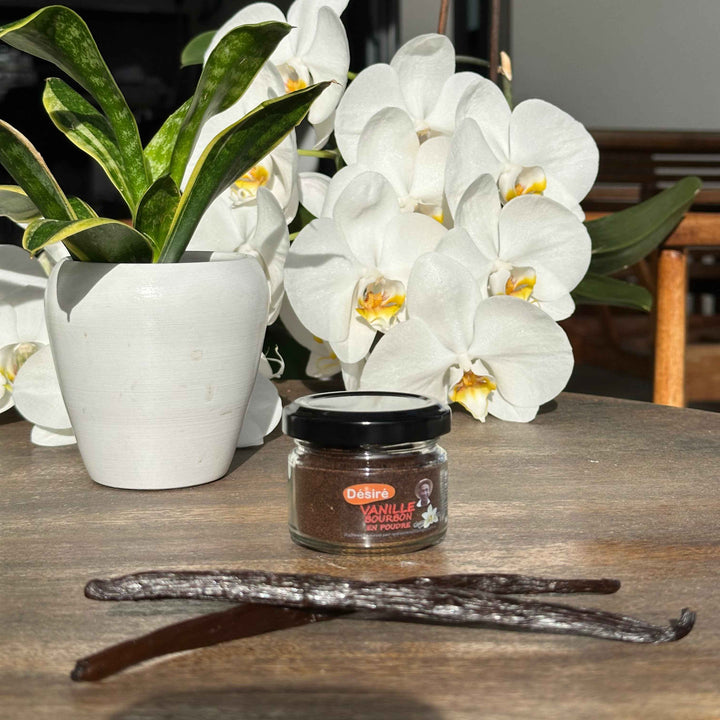
- Madagascar Bourbon vanilla powder
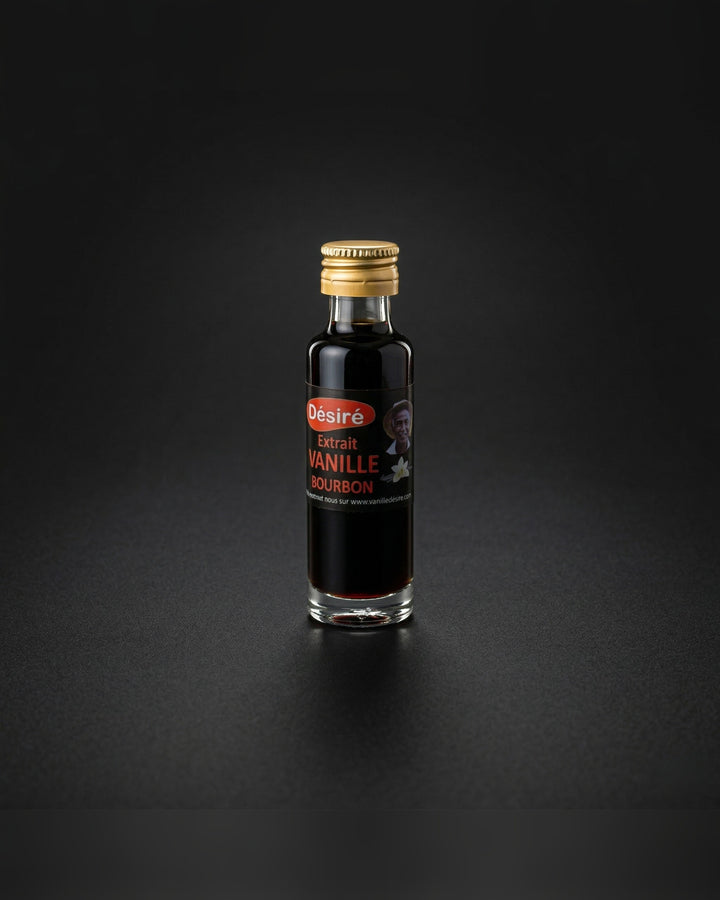
- Madagascar Bourbon vanilla extract
- Madagascar Bourbon vanilla caviar
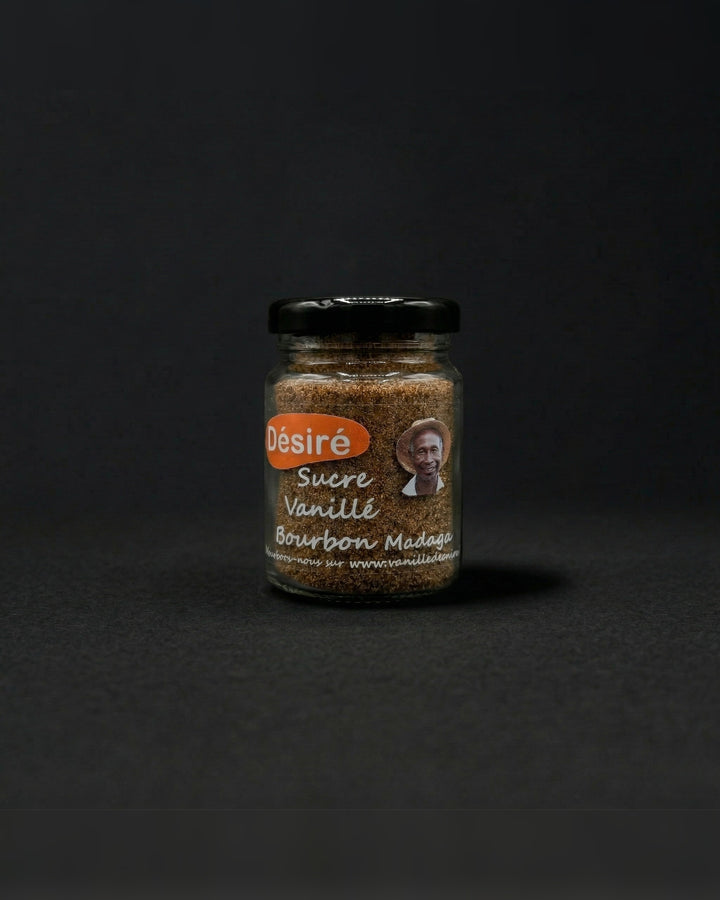
- Madagascar Bourbon vanilla sugar
Frequently asked questions
Do tonka bean and vanilla taste the same?
No. Tonka bean smells of cut hay, almond and caramel, because of coumarin; vanilla owes its aroma to vanillin, rounder and different.
Can whole tonka bean be bought freely in France?
Its sale is governed by European flavouring regulations: it is sold mainly to businesses that prepare flavourings, rather than as an everyday grocery product.
What is coumarin?
It is the substance responsible for the aroma of tonka bean, also present in smaller amounts in certain cinnamons; it is subject to maximum levels set by European food flavouring regulations.
Does Vanille Désiré sell tonka bean?
No. Vanille Désiré only sells vanilla from Madagascar, in pods, powder, extract, caviar and vanilla sugar.
The Vanille Désiré team