Quick answer: a real vanilla bean or its direct extract is the only source of natural vanilla flavour in the strict sense. The wording "natural vanilla flavour" on a label can, however, cover molecules obtained by fermenting or transforming other plant materials, with no bean ever having been used, as long as the resulting chemical also exists in nature. "Artificial flavour" or "synthetic vanillin", on the other hand, is made in a laboratory from wood or petroleum derivatives: it is the most widespread vanillin in industry, the cheapest, and the furthest from the full profile of a real bean.
Three categories, not two
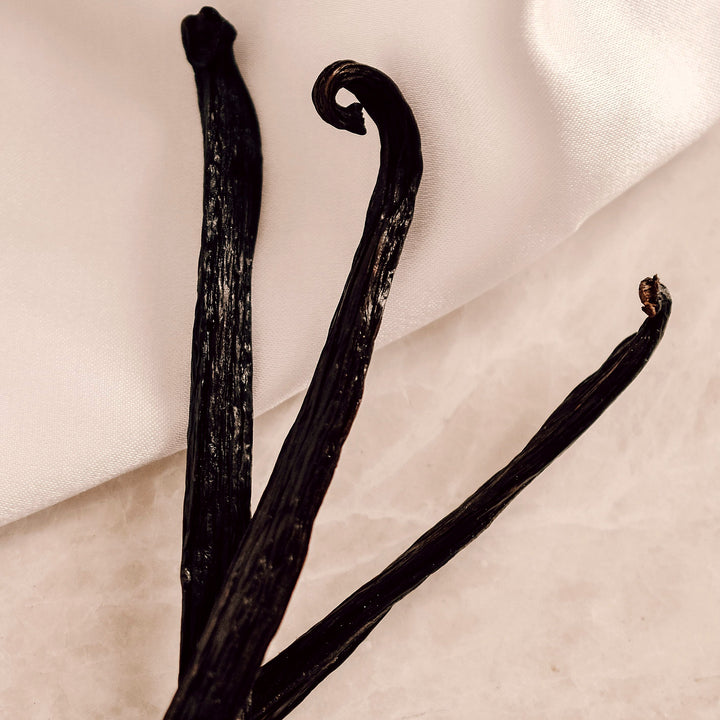
The confusion often comes from a two-way simplification, natural versus synthetic, when regulation actually distinguishes three. Natural vanilla or natural vanilla extract comes directly from the bean, through steeping or extraction, with no chemical transformation of the molecule itself. Natural vanilla flavour, in the regulatory sense, means a flavouring substance obtained by physical, enzymatic or microbiological processes from a material of plant or animal origin: the final molecule can be chemically identical to the one in the bean, without the bean being the raw material used. Synthetic vanillin, finally, is produced by full chemical synthesis in a laboratory, most often from wood derivatives or petrochemical by-products.
These three categories do not share the same cost, or the same aromatic profile. A real bean contains several hundred different aromatic compounds, of which vanillin is only one among many. A synthetic flavour, by contrast, essentially reproduces a single molecule, vanillin, which gives a simpler, more linear scent, often perceived as "flat" next to a real bean.
Why industry relies so heavily on synthesis
The answer is first of all economic. Natural vanilla is one of the most expensive spices in the world, for structural reasons we cover in detail on our page how much a vanilla bean really costs: hand pollination, a flower that lasts only one morning, nine months of ripening, several further months of curing. Synthetic vanillin, produced in a factory at large scale, costs a tiny fraction of that price. For a low-cost industrial product, cheap ice cream, supermarket biscuits, flavoured yoghurt, the cost gap makes synthesis almost automatic.
This is also why the periods of sharp rises in the world vanilla price, described on our page about the vanilla market, mechanically push some manufacturers to shift further towards synthesis: when the natural raw material becomes too expensive, substitution speeds up.
How to read a label
European regulation sets rules for labelling wording, which gives a few reliable landmarks. The wording "vanilla" or "vanilla extract" alone implies an origin coming directly from the bean. The wording "natural vanilla flavour" may come from a bean or from another natural material transformed to obtain the same molecule, with no legal obligation to say which. The word "flavour" on its own, without "natural", signals an artificial or synthetic flavour, the cheapest wording and the most common in supermarkets.
A simple rule of thumb: if the price of a product claiming vanilla is very low compared to the real bean market, there is a strong chance the flavour used does not come from a whole bean, even if the label mentions natural vanilla. This is not necessarily misleading in the legal sense, but it is also not the real bean you may be picturing when you read the word vanilla.
What it changes in the kitchen
For home cooking, the difference is felt mostly in how long the flavour lingers on the palate. A real bean leaves a rounder, more lasting impression, with floral and woody nuances depending on the lot. A synthetic flavour gives a more immediate note that fades faster, and that can feel a little artificial once you have tasted the difference against a real infusion.
Our page on vanilla dosage per preparation details the amounts of real bean to use depending on the recipe, a reference with no direct equivalent for a synthetic flavour, where the dosage depends solely on the concentration stated by the manufacturer.
Our position on this subject
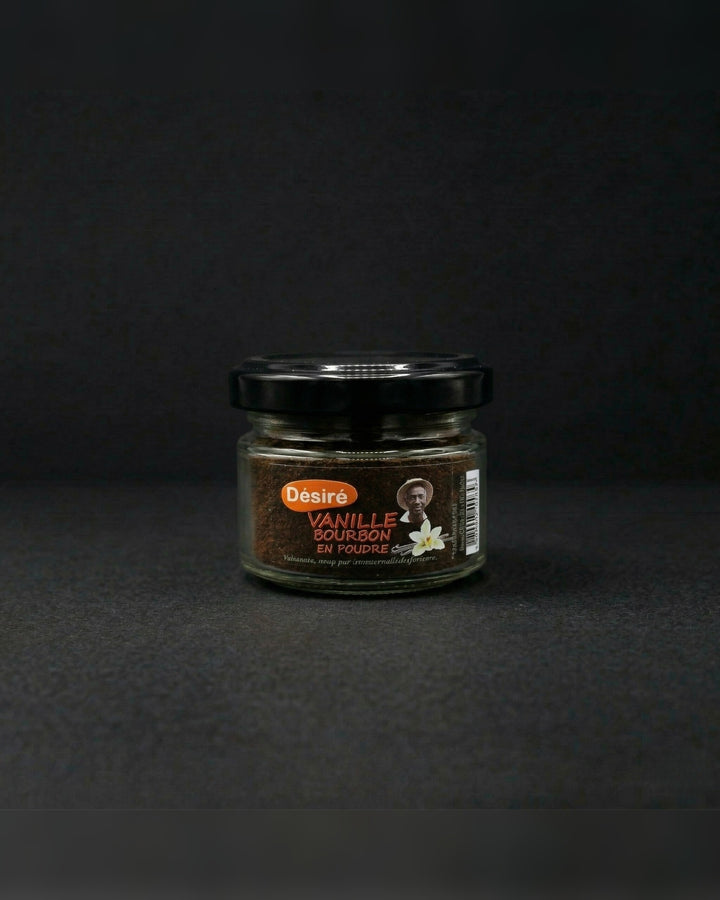
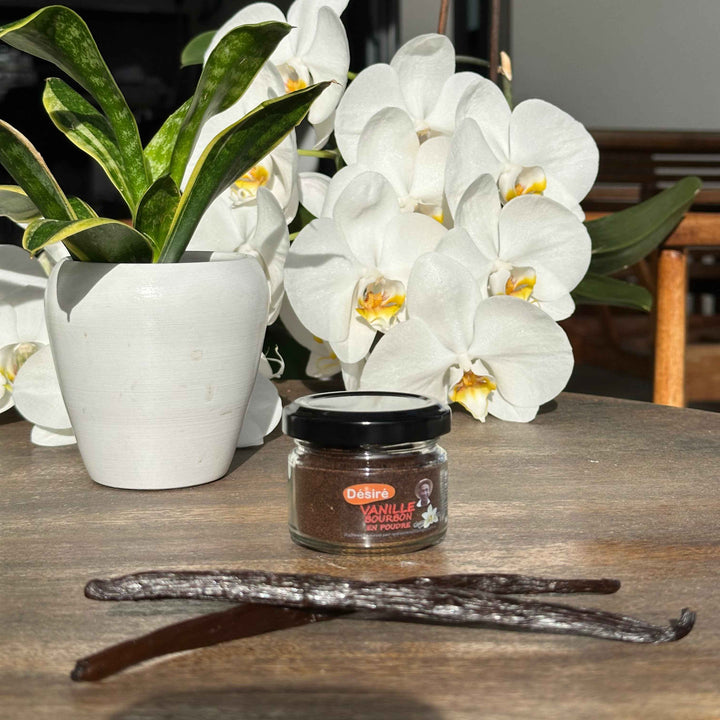
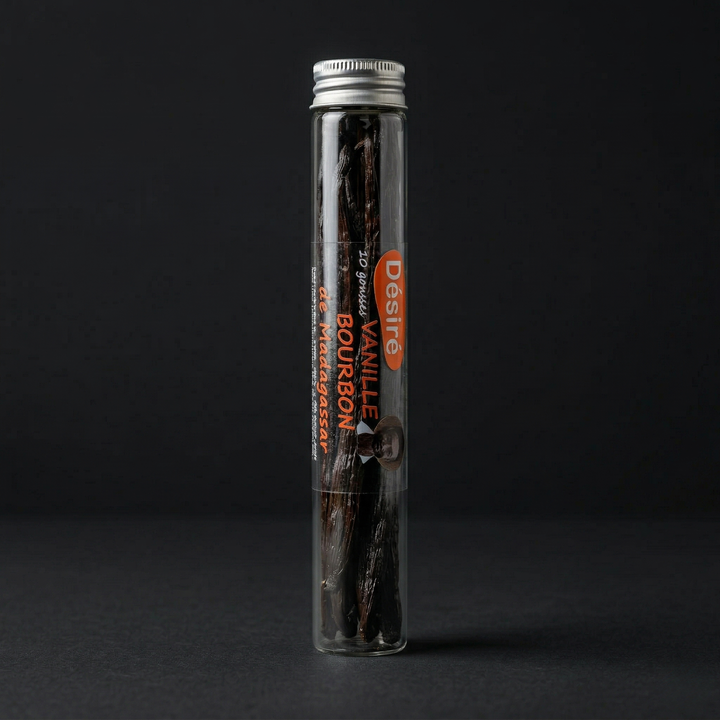
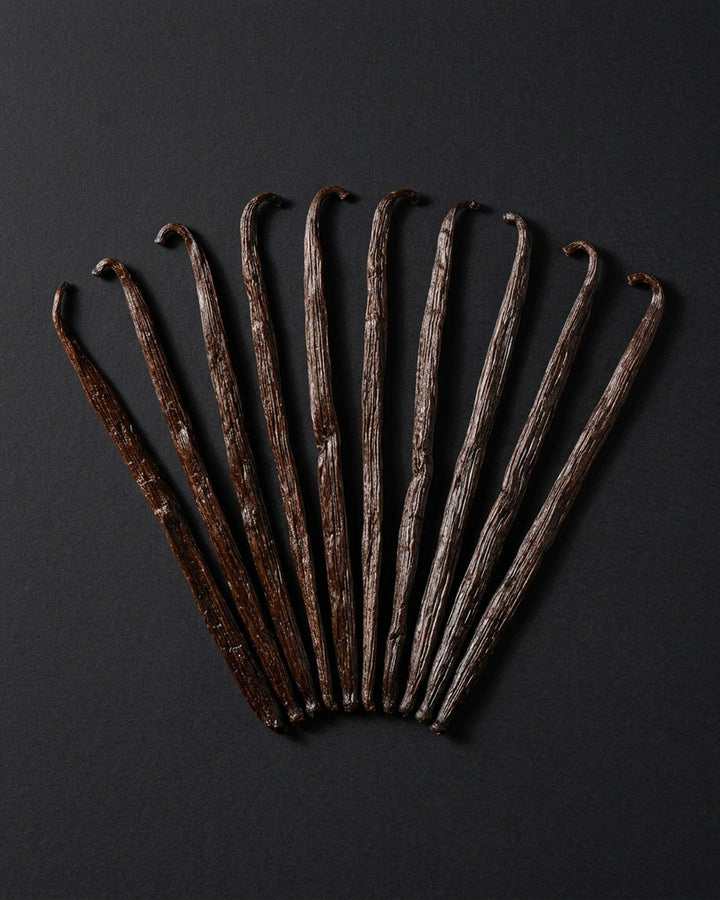
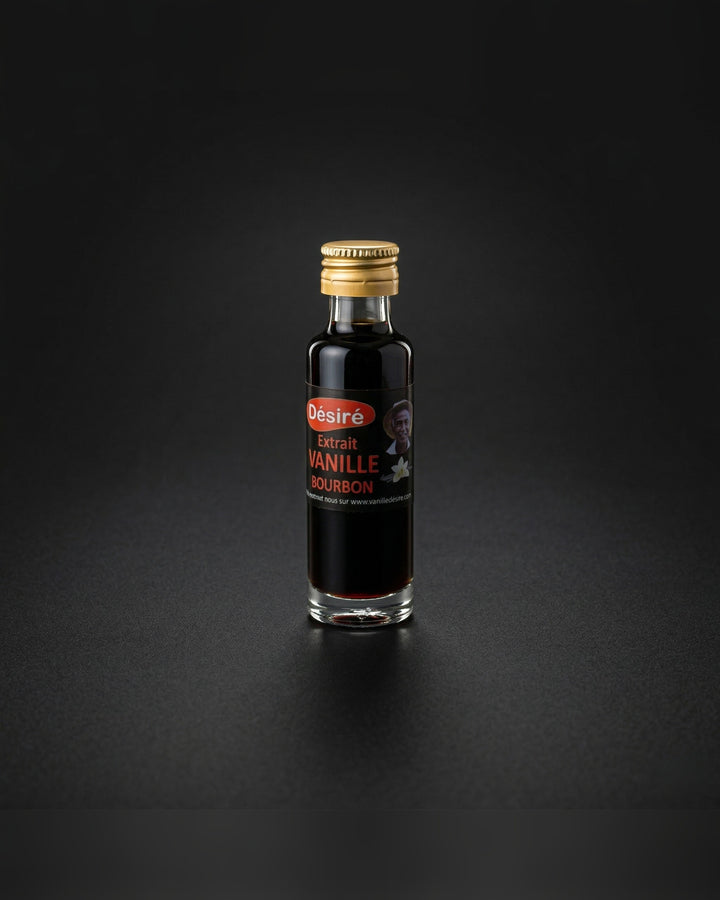
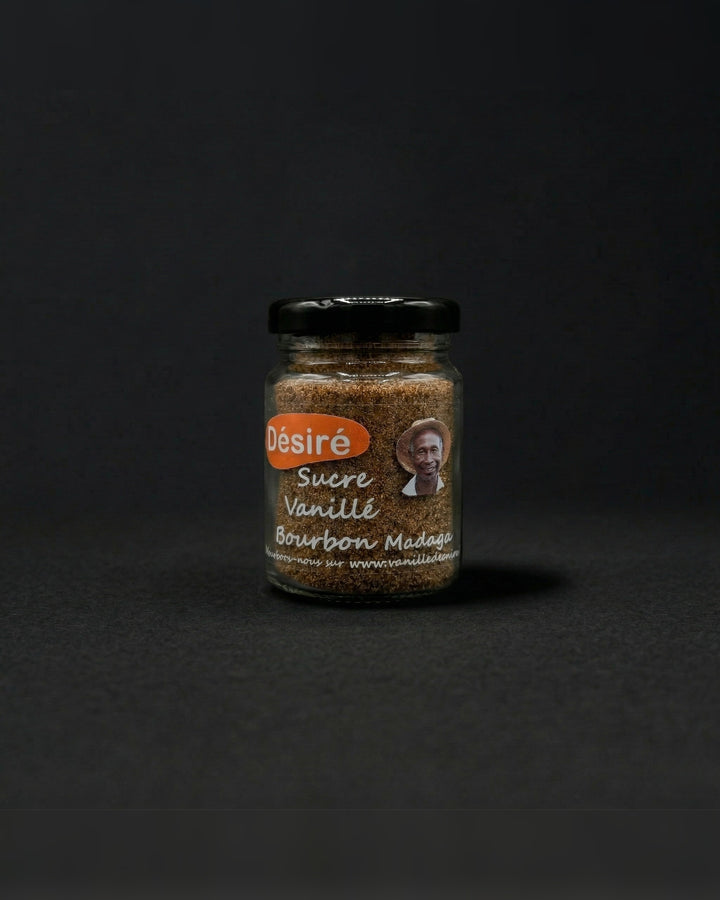
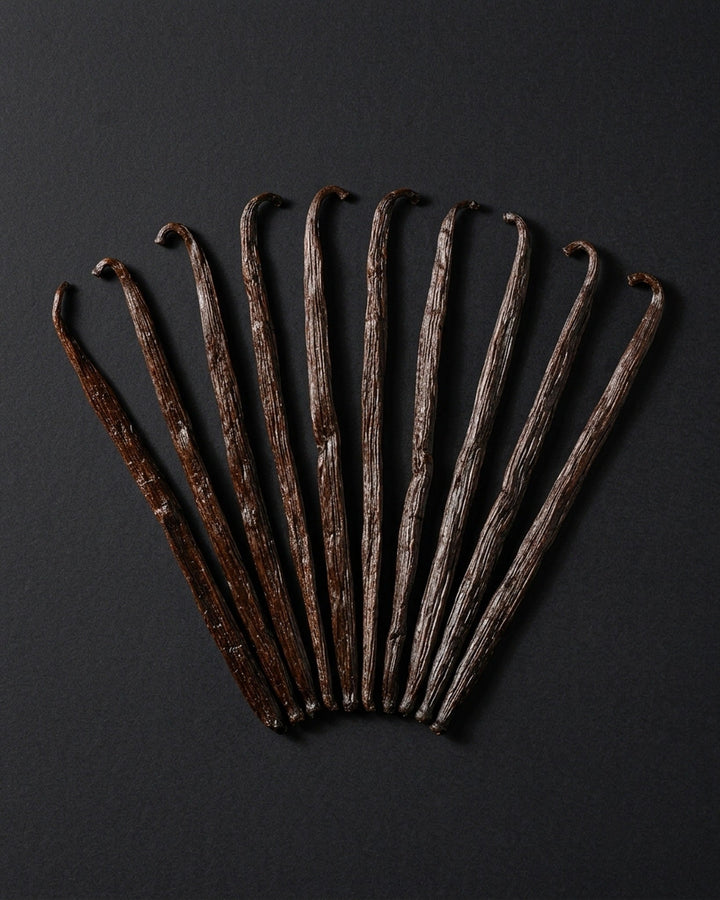
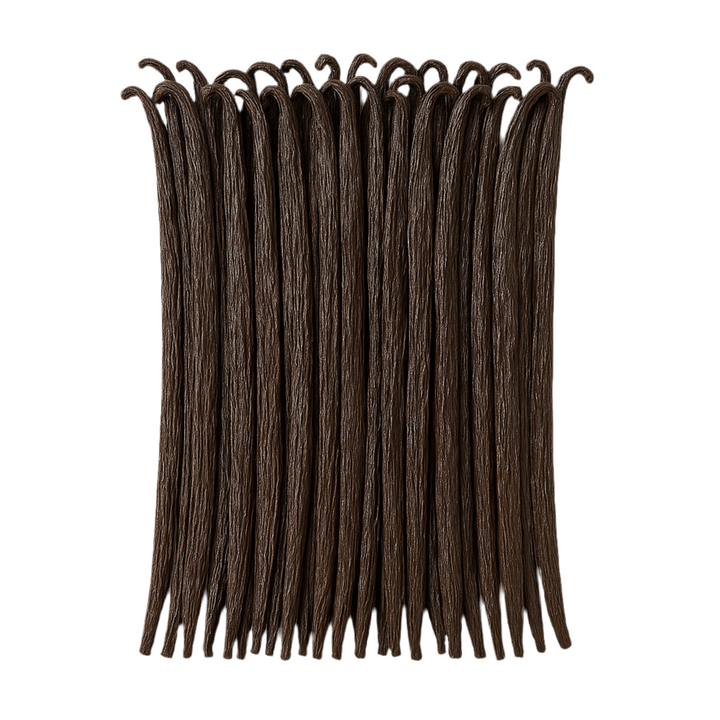
We only sell the real bean and what comes directly from it, scraped caviar, powder ground from whole beans, extract made by steeping our own beans. None of our products contains any synthetic flavour. It is a fundamental choice, consistent with our role as growers: our family grows and cures this vanilla in the SAVA region, in north-eastern Madagascar, and we would rather sell a smaller volume than dilute what we produce with a laboratory molecule. Find our full range of beans in the Bourbon vanilla collection.
A vocabulary point that matters for export
In English, the distinction is found in the wordings natural vanilla extract, natural vanilla flavor and artificial vanilla flavor, which follow a logic close to European regulation. And for the bean itself, the correct English word is bean, never pod and never clove, the latter meaning the spice clove. A point we cover in detail on our page about vanilla grades.
Frequently asked questions
Does natural vanilla flavour necessarily come from a bean?
Not necessarily. Regulation allows this term for substances obtained by transforming other materials of natural origin, as long as the final molecule also exists in nature, with no obligation for the manufacturer to state whether a bean was actually used.
Is synthetic vanillin harmful to health?
This is not something we cover here: we are not in a position to give an opinion on a toxicological assessment, which falls to the relevant health authorities. Our position is about taste and origin, not a safety assessment we are not qualified to make.
How can I be sure I am buying a real bean and not a flavour?
Check that the product is sold as a whole bean, with a stated size, or as an extract or caviar clearly stating its direct origin. A total absence of any mention of origin or size is often a sign of a processed product rather than a real bean.