Quick answer: A quality spice is judged first by its smell and colour rather than its packaging: a clear, recognisable scent as soon as it is opened, a bright colour rather than a dull one, and a fine powder free of lumps. Online, a precise origin and a short ingredients list give the same clues as an examination in a shop.
Recognising a good spice does not call for any particular expertise: a few simple criteria, which can be checked with the senses or by reading a product page, are enough to form a view. This page goes through them, for a purchase in a shop as much as online, without aiming at any particular retailer.
Smell, the first clue
A fresh spice gives off a clear, strong scent, recognisable as soon as the sachet or jar is opened, or by rubbing a small amount between the fingers. A faint or stale smell signals a spice that has aged or been poorly stored. This is the simplest criterion to check in a shop, even before looking at the label.
Colour, a clue that changes over time
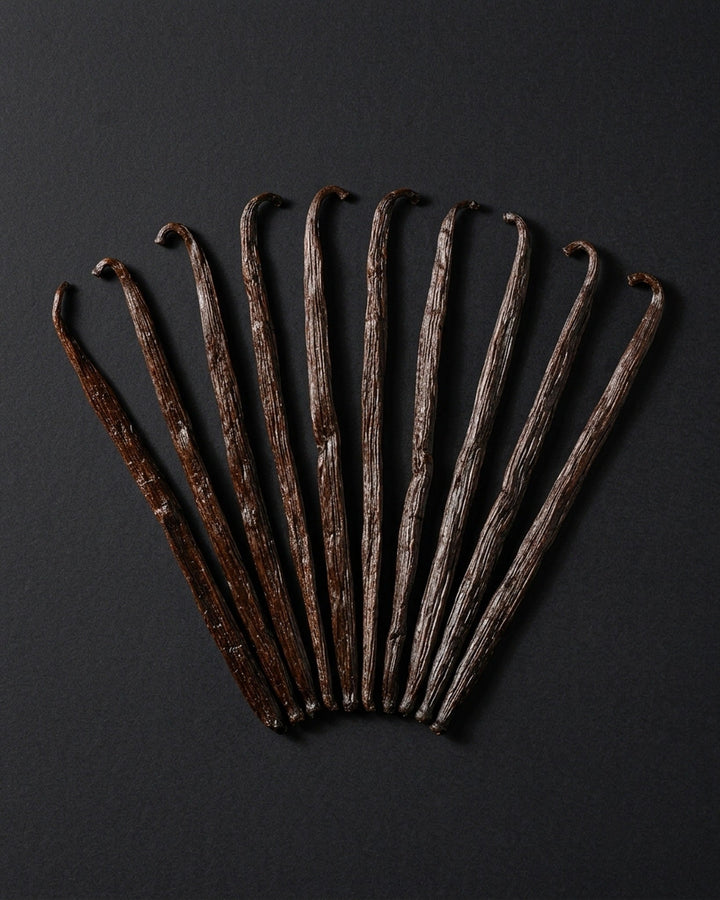
Spices lose their colour with age and exposure to light. A quality spice has a bright, deep colour: a clear orange-yellow turmeric, a strong red paprika, a warm reddish-brown cinnamon. Dull brown, pale yellow or greyish shades instead point to a spice that is old or has been poorly stored.
Texture, especially for a powder
A quality spice powder is fine, even and flows freely. Lumps indicate moisture absorption, a sign of packaging or storage that has let in air or water. Rubbed between the fingers, a spice that has kept its essential oils feels slightly oily to the touch.
Whole or ground: a choice that matters
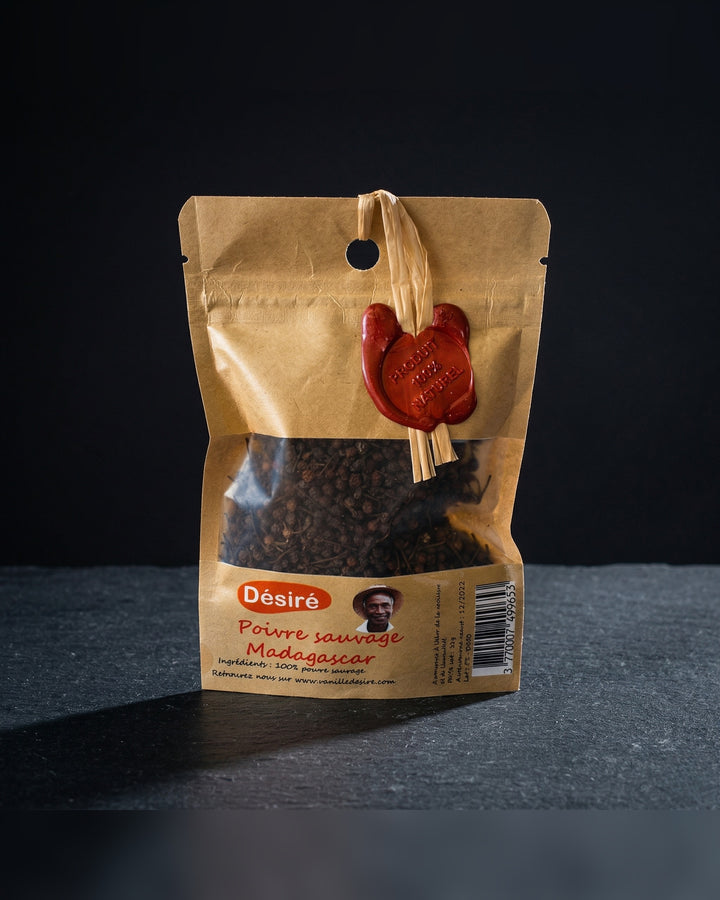
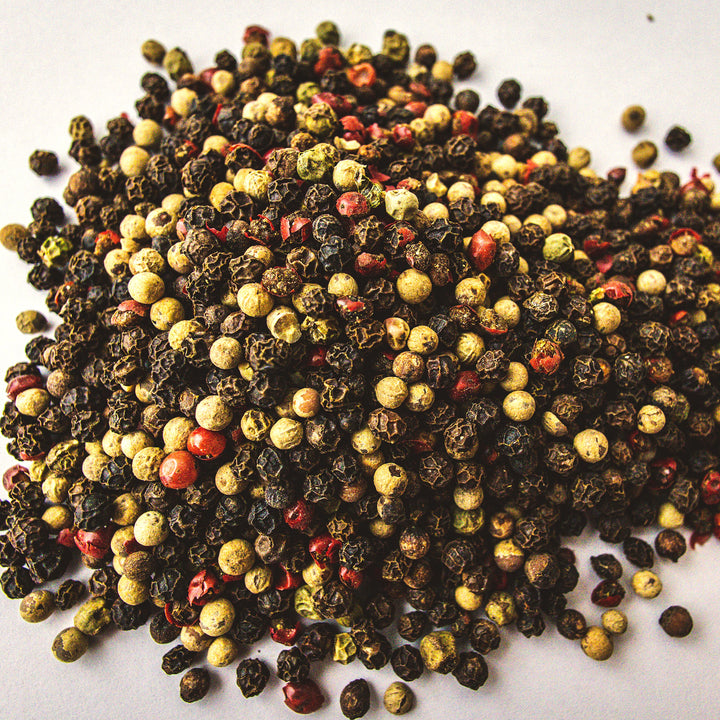
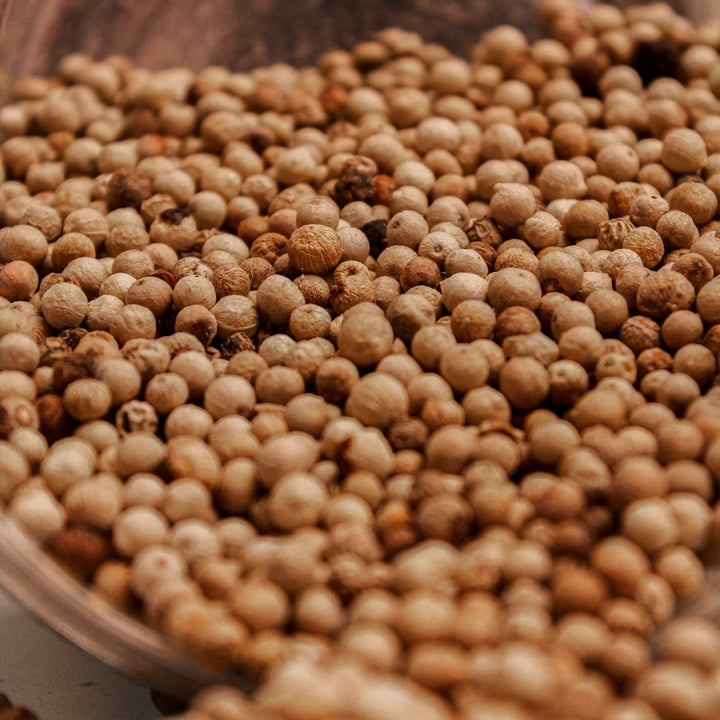
A whole spice protects its aromatic oils better: they escape more slowly from an intact berry or seed than from a powder, whose surface exposed to the air is far larger. Choosing a whole spice, when the use allows it, and grinding it at the moment of use, gives a stronger scent than a powder bought long ago.
Origin and the ingredients list
A serious product page states the precise geographic origin (region and country) rather than a vague mention, and gives a short ingredients list, with no hidden addition behind the spice's name. This information can be checked just as well in a shop, on the label, as online, on the product page: it does not depend on the sales channel. A name given with no further detail is worth no more than a clearly named region and variety: it is the precision of the information that matters, not the wording used to present it.
Small amounts, renewed regularly
A large stock of spices sitting in a cupboard for several years loses its scent before it is ever used. It is better to buy an amount suited to how often you cook and to renew it regularly, rather than stocking up on a large quantity.
What buying online does not let you check yourself
In a shop, nothing stops you smelling a spice sold loose before buying it, when the retailer allows it, or looking at its colour in daylight. Online, this direct check does not exist: the decision is made solely on what the photos show and what the product page says. This is why a precise product page (origin, variety if named, whole or ground form) matters more online than in a shop, where the eye and the nose can make up for a shorter description.
Buying in larger quantities: other clues
For a larger purchase, intended for example for professional use, the clues become more specific still: checking that batches resemble each other from one purchase to the next, that the fineness of the grind stays consistent, and that the flavour profile does not vary too much from one season to another. A comparative tasting, both hot and cold, on a neutral base, remains the most reliable test before committing to a large quantity. Cross-checking smell, taste and colour gives a fuller picture than any one of these criteria taken on its own: a bright colour on a spice with no scent at all does not say much that is good, and conversely a slightly faded colour can sometimes go with a scent that is still very much present.
Our spices, to compare these criteria
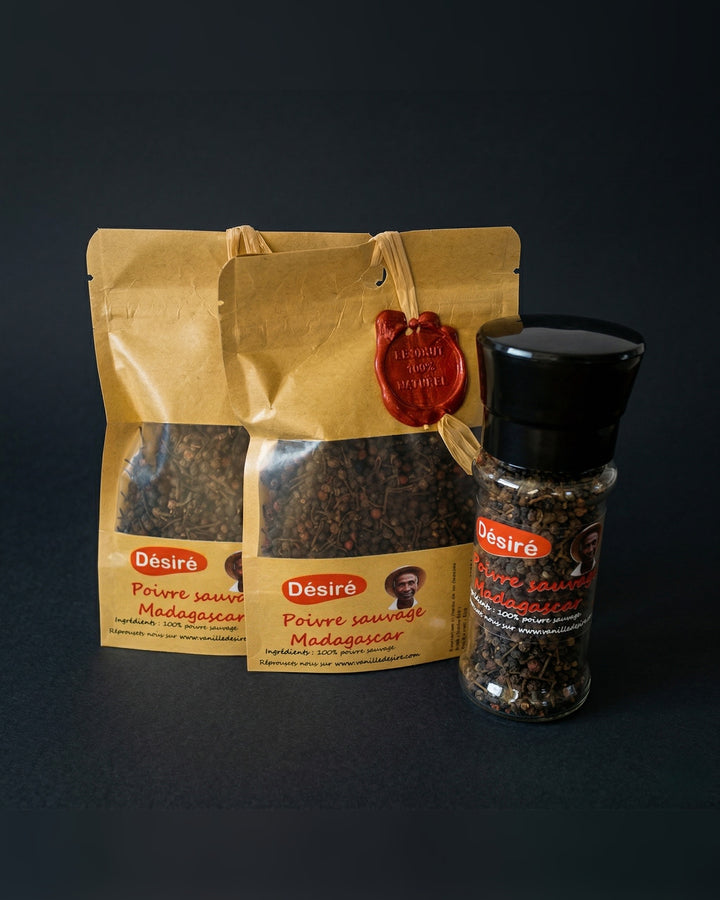
Our family grows and prepares its spices in Vangaindrano, in south-eastern Madagascar, and states this on every one of our product pages. See our pages on Madagascar cinnamon and Madagascar turmeric, or the whole range at Madagascar spices.
Frequently asked questions
How can you tell a spice is fresh by its smell?
A fresh spice gives off a clear, recognisable scent as soon as the container is opened; a faint or stale smell signals a spice that has aged.
Is it better to buy a whole spice or an already ground one?
The whole spice protects its aromatic oils better, as they escape faster once the seed or berry is ground; a recently ground, well-packaged powder nonetheless remains a practical choice.
What information should you look for on an online product page before buying spices?
A precise geographic origin and a short ingredients list, with no hidden addition, give the same clues as an examination in a shop.
Should you buy spices in large quantities to save money?
Not if the spice degrades before it is used: a small amount renewed regularly keeps more aroma than a large stock sitting in the cupboard.
The Vanille Désiré team