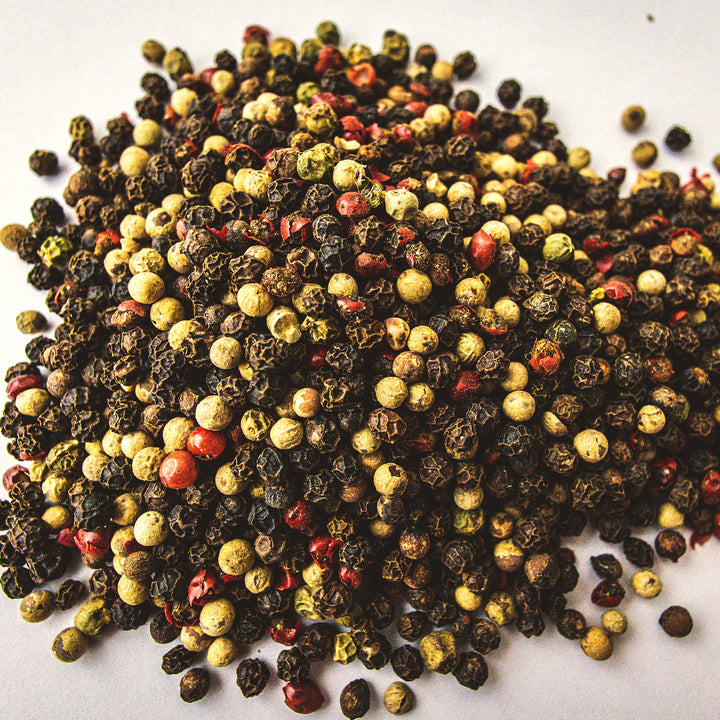
Quick answer: The mortar and pestle let you crush or grind whole spices by hand, while preserving their aromas. The technique changes with the spice: a circular motion for a fine powder, firmer strikes to break a hard grain. Our peppers, our cloves and our pink peppercorns, all whole, suit this tool well.
Before the electric mill, the mortar and pestle were the reference tool for reducing a whole spice to powder or flakes. Many cooks still prefer it, for the technique as much as for the result. This article explains how to use it with Vanille Désiré's whole Madagascar spices.
Why a mortar rather than an electric mill
A mortar crushes the spice by pressure and friction, without heating it or chopping it at high speed. This gentler method preserves the natural aromas better than fast electric grinding, and it needs no electricity or motor noise. A mill remains faster for large quantities; the mortar keeps the advantage for small quantities, ground just before cooking.
The technique: circular motion or striking
Two motions combine depending on the spice and the result sought. The circular motion, pestle placed at the bottom of the mortar and turned against the sides, suits a fine, even grind. The striking motion, pestle raised then lowered, suits breaking a hard grain first before reducing it to powder with a circular motion. It is better to keep one hand over the mortar during the first strikes, until the grains stop bouncing.
Which spice, which technique
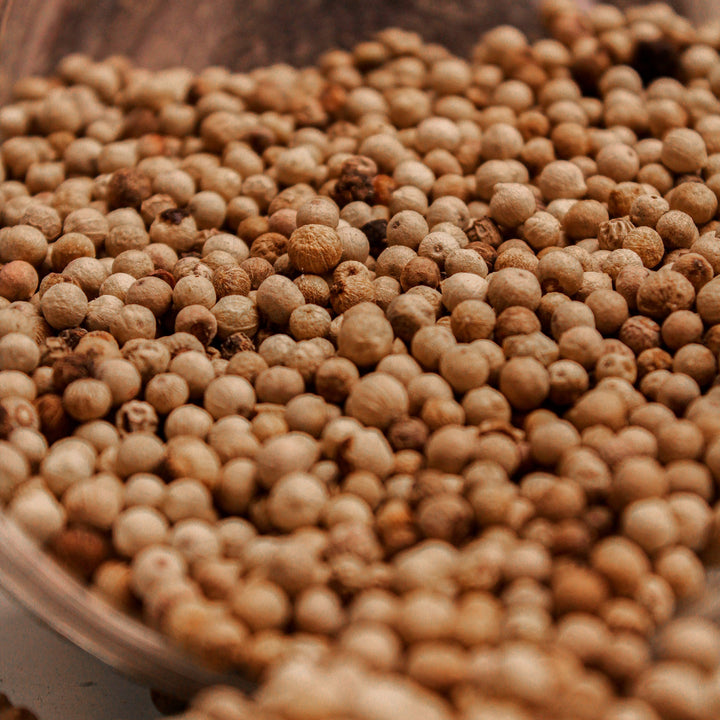
Black pepper and white pepper are first cracked with a few firm strikes, then ground finer with a circular motion, depending on the texture wanted. Cloves are harder: they need firmer strikes before giving way. Pink peppercorns are fragile and hollow: too firm a motion reduces them to dust and scatters them out of the mortar; a light motion, almost a simple crush, is enough.
Wild pepper, a special case
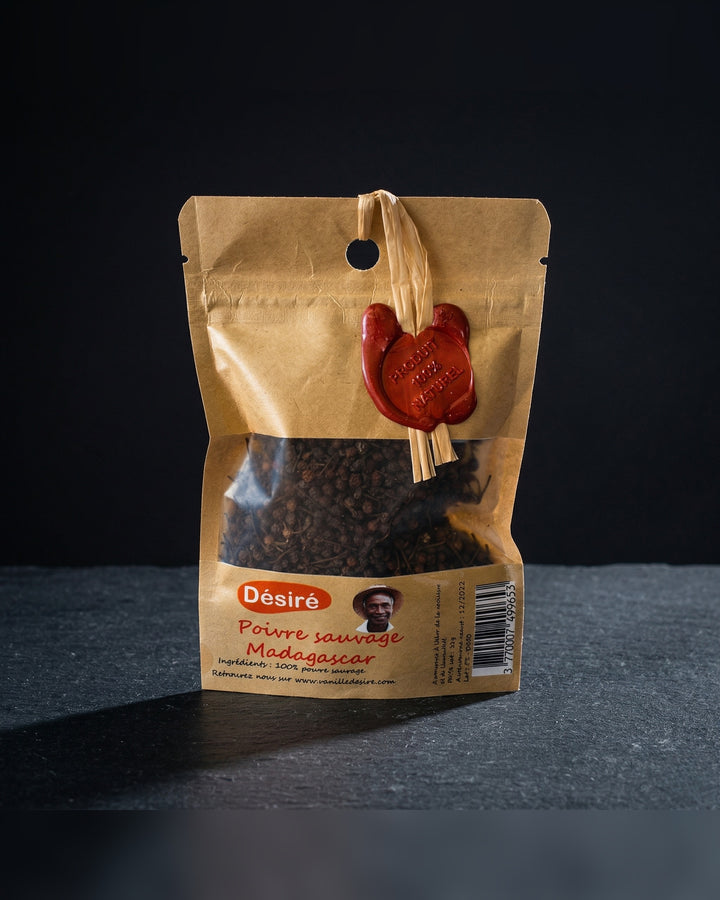
Voatsiperifery wild pepper, picked in the forest and not cultivated, has a smaller grain and a thin tail that grinds quickly. It needs a lighter touch than black pepper, so as not to lose all its structure. See Voatsiperifery wild pepper: grinding it by mortar or mill for the detail of this technique.
How much to put in at a time
An overfilled mortar stops the pestle moving and sends grains over the edges. It is better not to fill it past a third of its capacity, and to work one spice at a time rather than several together: each spice has its own hardness, and mixing them too soon gives an uneven powder.
Caring for the mortar
A mortar is washed by hand, in hot water, with a mild soap, then dried straight away with a clean cloth. A wooden mortar benefits, from time to time, from a thin coat of food grade oil so it does not crack. A stone or marble mortar does not need this care, but stays heavier to move.
Mortar, mill or cracked pepper: which to choose
The mortar suits small quantities prepared just before cooking. For everyday, regular use, a refillable mill stays more practical: see refillable pepper mill: filling, adjusting, maintaining. For an in-between texture, without reducing the spice to a fine powder, see mignonnette and cracked pepper: preparing and using. The mortar is also useful for preparing a homemade spice blend before grinding it all together; see composing your own homemade spice blend.
Before grinding, sometimes toasting
Some whole spices are dry toasted in a pan before being crushed in the mortar: this step changes their flavour and makes the pestle's work easier on a grain that has become drier and more brittle. See dry toasting whole spices: the technique and its pitfalls.
Our whole spices to grind yourself
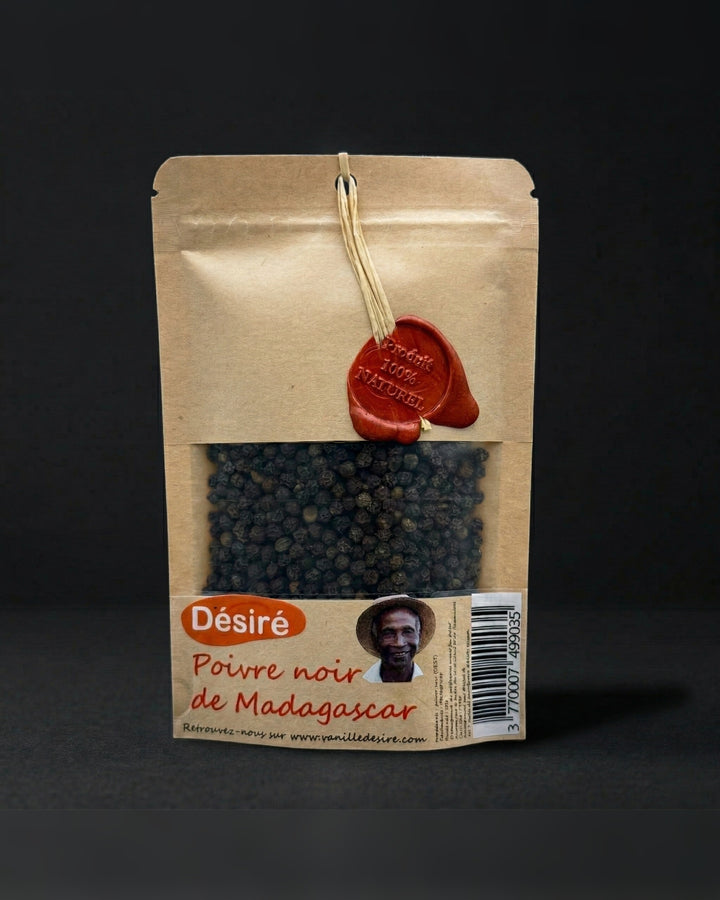
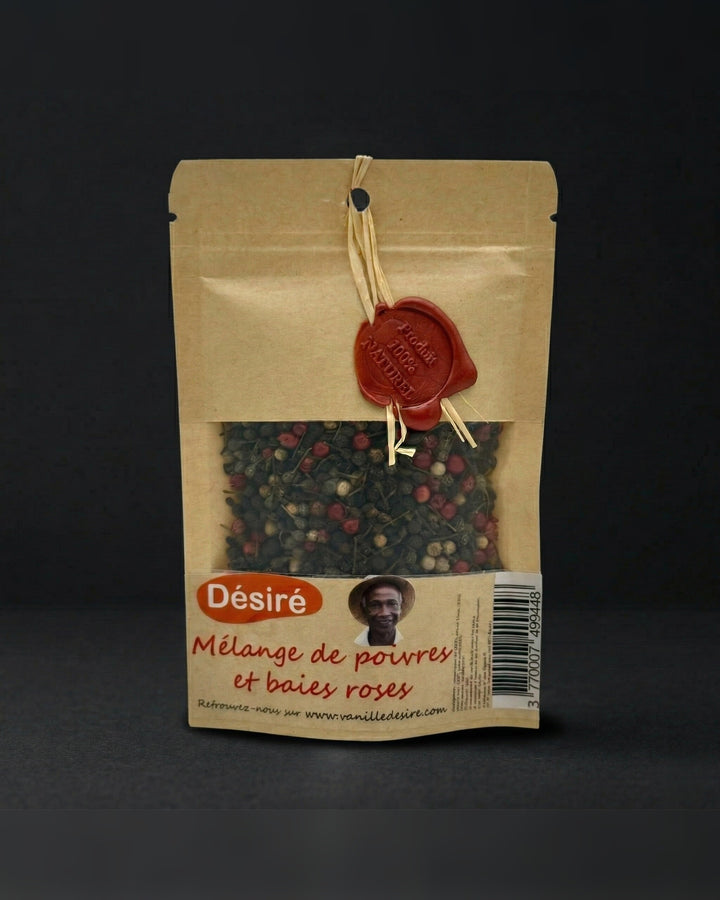
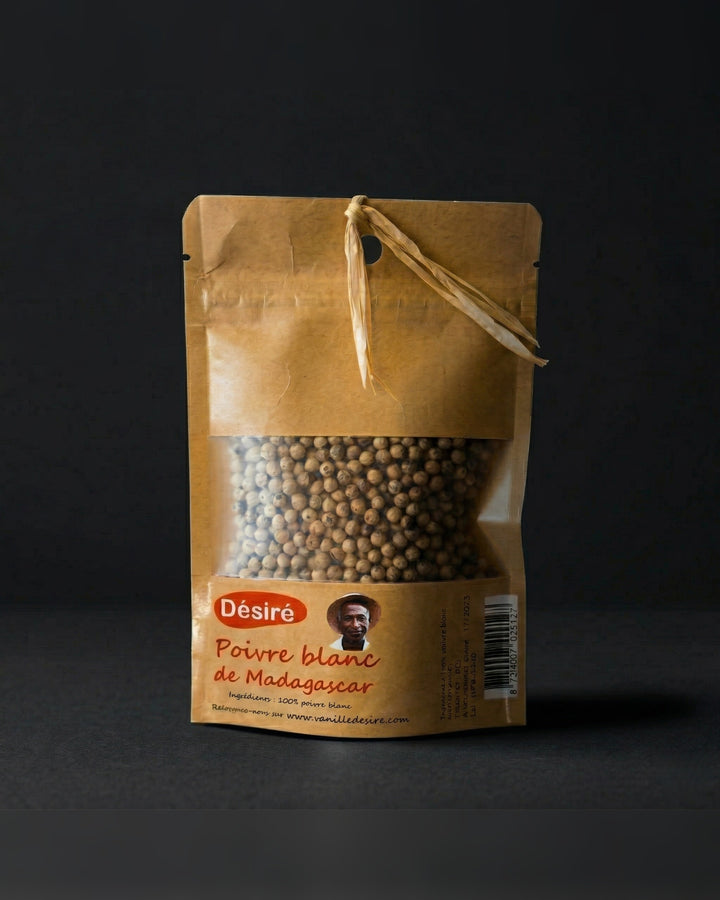
Madagascar black pepper, white pepper and wild pepper, Madagascar cloves and Madagascar pink peppercorns are all sold as whole grains or buds, ready for the mortar. Our family grows the black pepper, white pepper, cloves and pink peppercorns in Vangaindrano, in south-east Madagascar; wild pepper is picked there in the forest, it is not cultivated.
Frequently asked questions
Does the mortar harm the taste of spices compared with an electric mill?
No, it is rather the opposite: grinding by pressure and friction in the mortar heats the spice less than fast electric grinding, which preserves its aromas better.
Can several spices be ground together in the same mortar?
It is better to work one spice at a time, as each spice has its own hardness; mixing them too soon gives an uneven powder.
How do you clean a wooden mortar after crushing strong spices?
Washing by hand, in hot water with a mild soap, followed by immediate drying, is enough; a thin coat of food grade oil from time to time keeps the wood from cracking.
Do you need a different mortar depending on the spice?
No, the same mortar suits every spice; only the technique changes, lighter for a fragile berry such as a pink peppercorn, firmer for a clove.
The Vanille Désiré team