Quick answer: "Mignonnette" pepper refers to pepper coarsely cracked into irregular flecks, not a particular variety. It is prepared with a mortar, a knife or a rolling pin rather than a mill, using black, white or wild pepper, and suits a pepper crust or a pepper sauce above all.
"Mignonnette" is a word you read on a menu or in a steak au poivre recipe, without always knowing what it means. This page explains the term, the technique for getting it, and when to prefer cracked pepper over ground pepper.
What "mignonnette" means
The word comes from "mignon", which once meant small and delicate. In cooking, a mignonnette originally referred to a small sachet of spices steeped in a stock, rather like a concentrated bouquet garni. The word has shifted in meaning: today, "mignonnette pepper" simply means pepper coarsely cracked into irregular flecks, rather than a particular variety of pepper.
Mignonnette and cracked pepper: the same thing
In practice, both words describe the same result: peppercorns broken into pieces, neither whole nor ground to a powder. "Mignonnette" is used mainly for pepper intended for a crust or a sauce; "cracked" is used more broadly, for any spice broken coarsely.
How to prepare it
- With a mortar: a few berries at a time, one brief blow of the pestle, just enough to split them into two or three pieces.
- With the bottom of a saucepan: the berries placed on a board, crushed under the bottom of a saucepan or the flat of a knife, with a firm motion.
- With a rolling pin: the berries wrapped in a tea towel, crushed with a few passes of the rolling pin.
A classic pepper mill, by contrast, aims for a fine, even grind: it is less suited to mignonnette pepper, which calls for larger, irregular flecks.
With which pepper
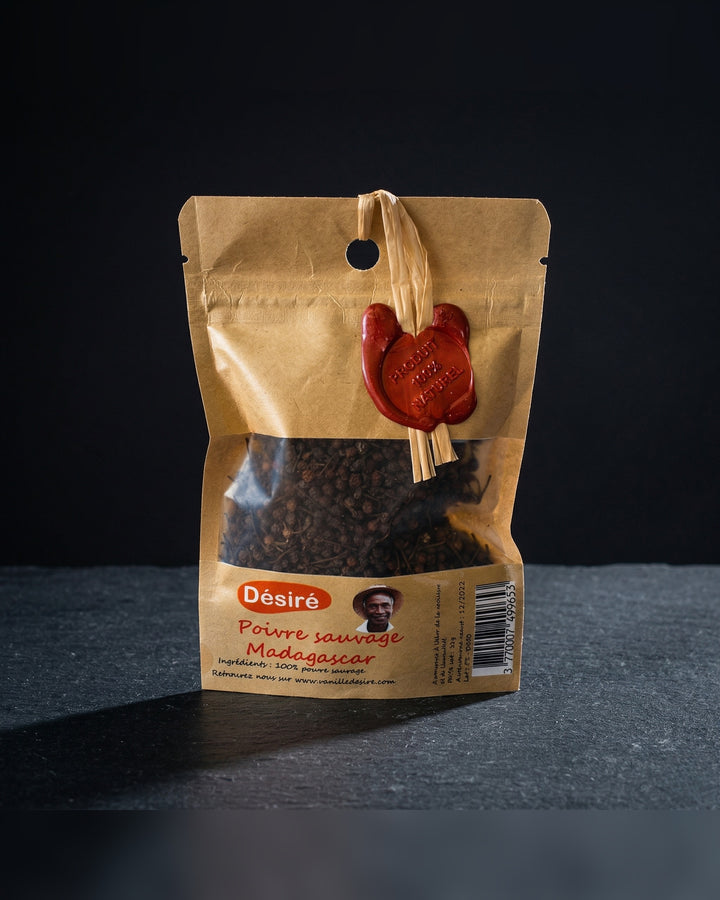
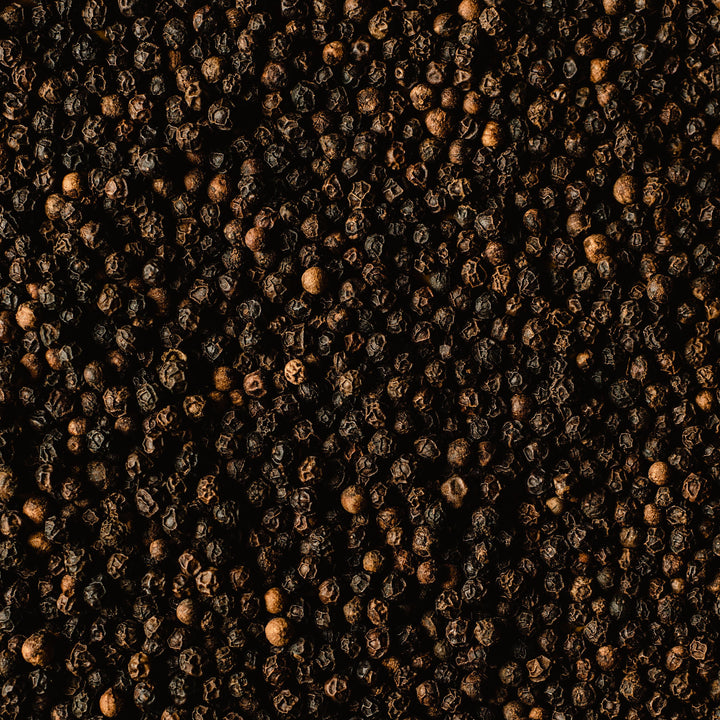
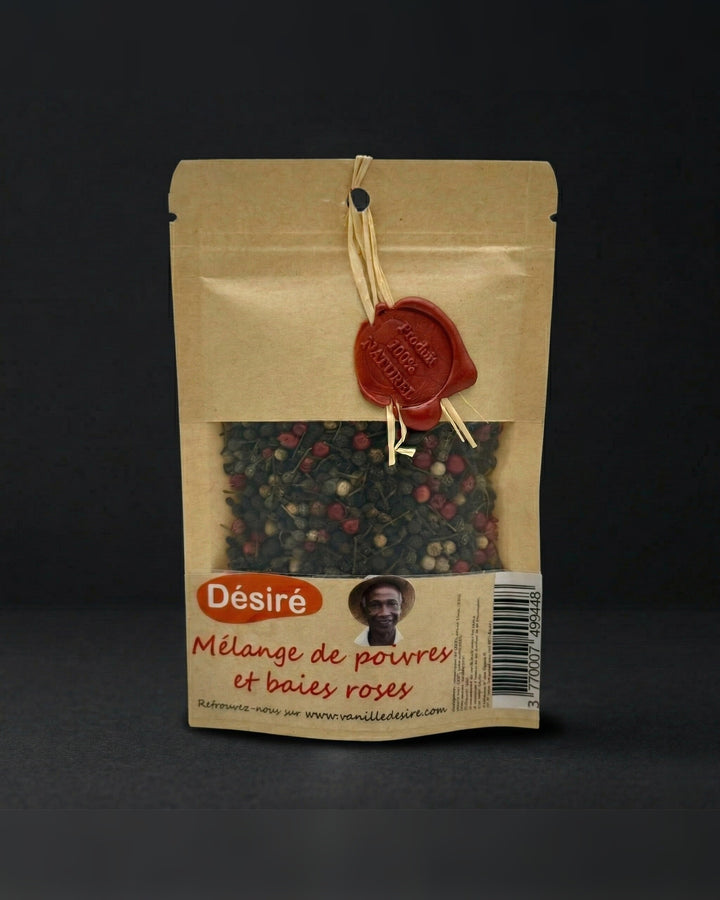
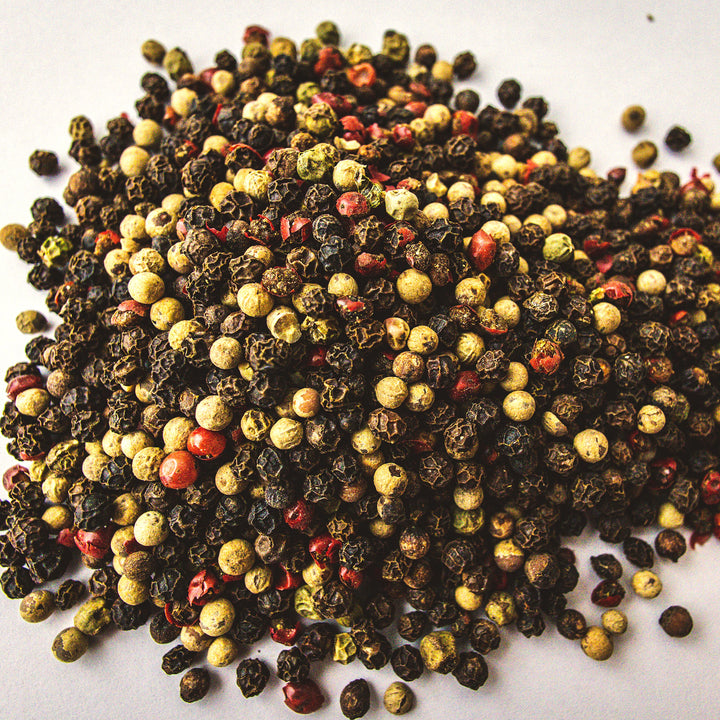
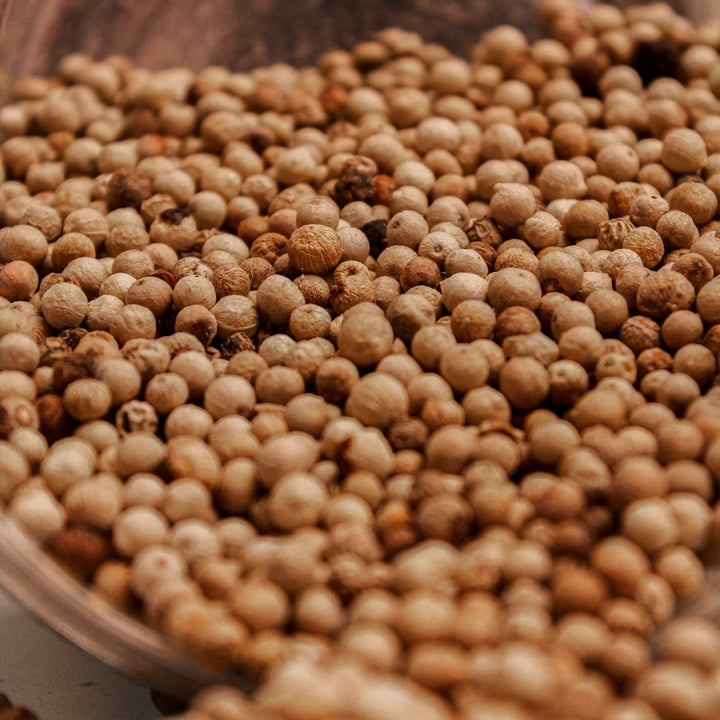
Mignonnette pepper can be made with any whole peppercorn: black pepper, for a bold heat and a well-marked crust; white pepper, for a milder, paler version; wild Voatsiperifery pepper, for a more fragrant and less fiery mignonnette. For the technique specific to wild pepper, with a mortar or a mill, see our page on grinding it.
When to prefer mignonnette pepper
- for coating a fillet or a steak before cooking, as a crust;
- for a pepper sauce, where the flecks infuse without dissolving like a powder;
- for a texture that crunches under the tooth, on a fresh cheese or a fish;
- for a bolder aroma than a fine grind, which loses its aromas quickly.
To know when in the cooking to add pepper, whole, cracked or ground, see our page on the right moment to add pepper.
During cooking
As a crust on meat, mignonnette pepper holds up better than a powder: it clings to the surface without burning before the meat does. In a sauce, it is left to infuse and then strained, or left as it is, depending on the result wanted.
Summary in a few lines
- Mignonnette: pepper coarsely cracked into irregular flecks.
- Prepared with a mortar, a knife or a rolling pin, not a classic mill.
- Suits black, white or wild pepper, depending on the intensity wanted.
Frequently asked questions
What does 'mignonnette pepper' mean?
The word refers to pepper coarsely cracked into irregular flecks, not a particular variety of pepper; it comes from "mignon", which once meant small and delicate.
How do you prepare mignonnette pepper without a mill?
With a mortar, in a few brief blows of the pestle; with the bottom of a saucepan, crushing the berries under the bottom of the pan or the flat of a knife; or with a rolling pin, with the berries wrapped in a tea towel.
Which pepper should you use for a mignonnette?
Any whole peppercorn: black pepper for a bold heat, white pepper for a milder version, or wild Voatsiperifery pepper for a more fragrant and less fiery mignonnette.
When should you prefer mignonnette pepper to a fine powder?
For coating meat in a crust before cooking, for a pepper sauce where the flecks infuse without dissolving, or for a texture that crunches under the tooth on a fresh cheese or a fish.
Our peppers for mignonnette
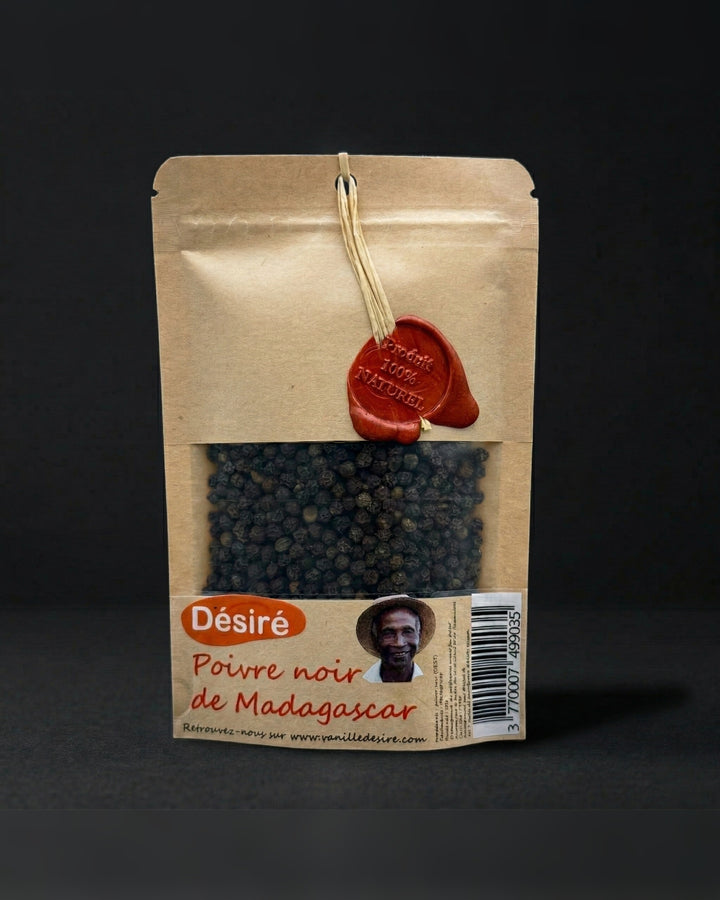
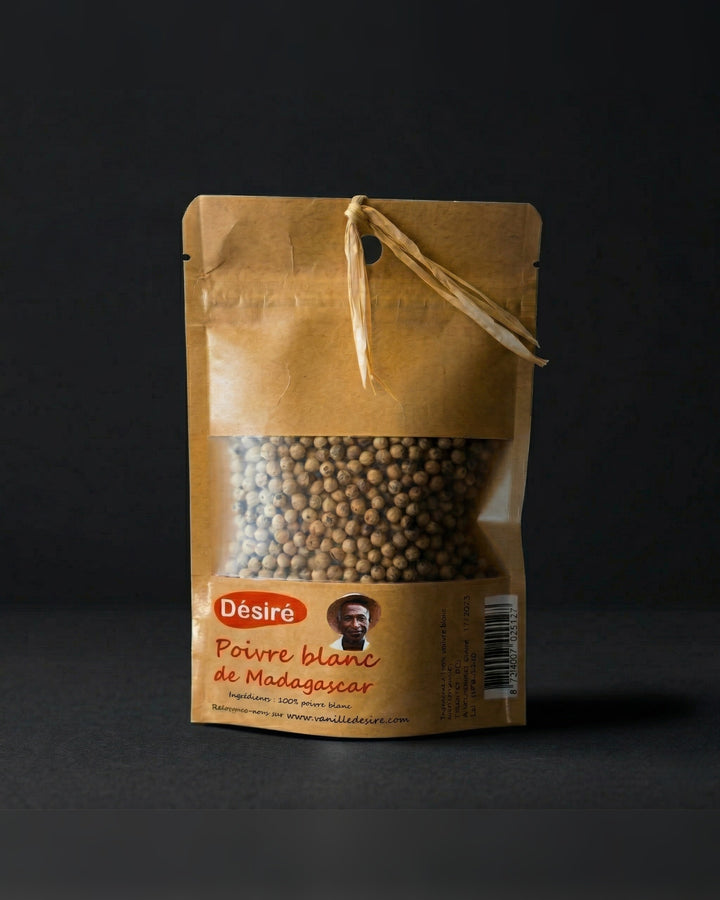
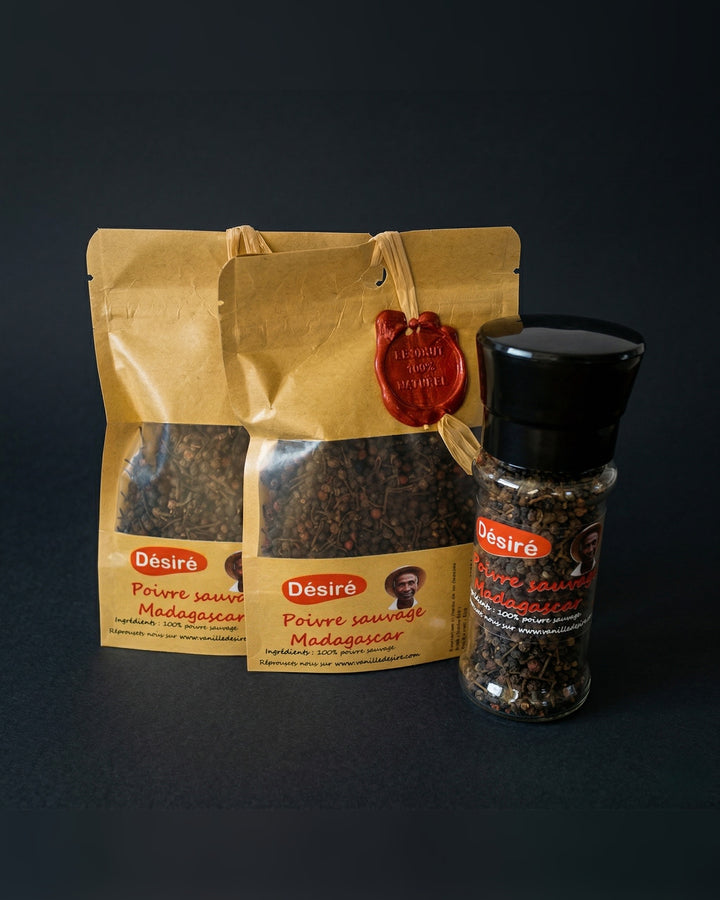
Our family grows black pepper and white pepper in Vangaindrano, in south-eastern Madagascar; wild pepper is gathered there in the forest, it is not cultivated. We prepare and ship them ourselves, with no middleman.
The Vanille Désiré team