Quick answer
Choosing a good vanilla comes down to five criteria: the variety (Madagascar Bourbon for classic pastry, Tahiti for floral profiles, Pompona for long infusions), the grade (Gourmet/A for cooking, TK for extraction), the suppleness (the bean should wrap around a finger without breaking), the fragranceon opening the tube (cocoa, prune, butter for Bourbon, anise, flowers for Tahiti) and the formatsuited to your use (bean, caviar, powder, extract).
For nearly all everyday sweet recipes, pastry cream, crème brûlée, financiers, ice creams, chocolate, a 14 to 16 cm Madagascar Bourbon Gourmet vanillais the most versatile choice. Expect 3 to 7 € per bean depending on size. Below 2 €, be wary: it is usually an industrial vanilla or a repackaged product.
The bean format is unbeatable for visual appeal (black caviar) and aromatic complexity. Powdersuits cases where you need quick, precise dosing (dry preparations, ganaches). Extractis practical for liquid batters (crêpes, glazes) and cocktails. Pure caviaris a finishing product, to be kept for moments when you want the full visual and aroma at 100%.
If you are discovering quality vanilla, start with a discovery set of 1, 3 or 5 Bourbon beans. One recipe will show you what sets a true bean apart from a supermarket vanilla.
1. Why choosing your vanilla really matters
Vanilla is one of the most counterfeited spices in the world. More than 95% of the "vanilla" aroma consumed on the planet is synthetic vanillin, made from wood lignin or petrochemicals, and not extracted from a bean . The sensory difference is immediate from the first tasting: a natural vanilla develops more than 200 identified aromatic compounds (cocoa, prune, tobacco, flowers, wood, cooked fruit), whereas synthetic vanillin offers only one.
Beyond taste, choosing your vanilla carries an economic and ethical dimension. A Madagascar Bourbon bean goes through nine months of ripening on the vine, then six to nine months of post harvest processing (blanching, sweating, drying, curing). It takes roughly 600 flowers pollinated by hand, one by one, to produce 1 kg of prepared vanilla. Behind a bean, there is a family of producers in the Sava region, in northeastern Madagascar, who devotes the entire year to this product.
Traceability also makes a difference. Vanilla bought through a short supply chain (producer to importer to specialist retailer) guarantees genuine curing time, correct moisture content (25-35% for a Gourmet grade) and a high natural vanillin content (1.8 to 2.5% for a Bourbon). A generic vanilla that has passed through 4 or 5 intermediaries often arrives over dried, under cured, or repackaged from several blended origins.
It is this difference, sensory, economic, ethical, that justifies taking the time to choose well. The right reflex: ask your supplier three questions. Which variety? Which grade? Which harvest year? If the answers are precise, you have found a good contact. If they are vague, look elsewhere.
2. The four main varieties to know
The genus Vanillaincludes more than 100 botanical species, but only three produce commercially aromatic beans: V. planifolia (the "Bourbon"), V. tahitensis (the "Tahiti") and V. pompona (the "banana"). To this trio is often added voatsiperifery, which is not a vanilla in the botanical sense, it is a wild pepper from Madagascar, but it deserves a mention in any vanilla guide because it is often compared to vanilla like profiles.
2.1 Bourbon vanilla (Vanilla planifolia)
This is the world reference and 80% of production. The species originates from the Gulf of Mexico, imported to Réunion (then Île Bourbon) in the 19th century and later spread to Madagascar, where it found its terroir of excellence: the Sava region (Sambava, Antalaha, Andapa, Vohémar) now concentrates 80% of world production .
Aromatic profile: a warm, sweet vanillin dominance (1.8 to 2.5% vanillin by dry weight), notes of roasted cocoa, stewed prune, raisin, brown butter, precious wood. Long, buttery persistence on the retronasal finish.
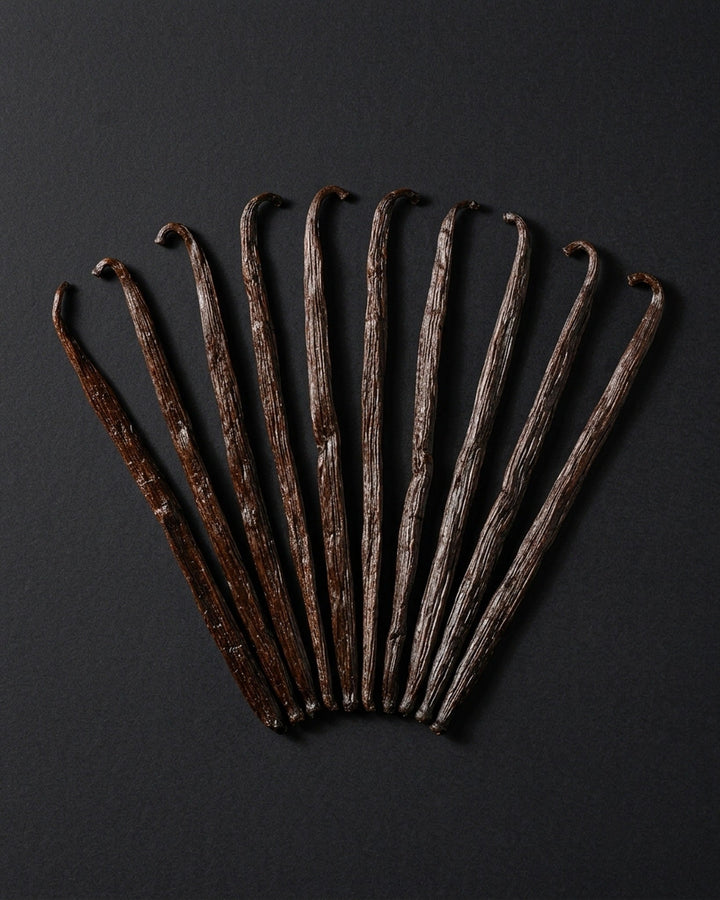
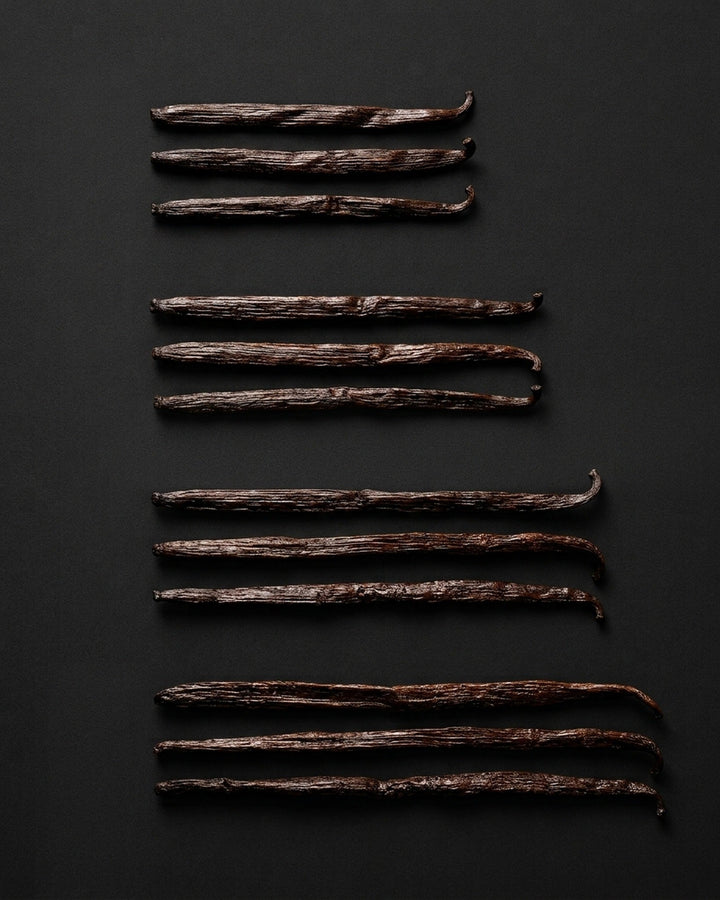
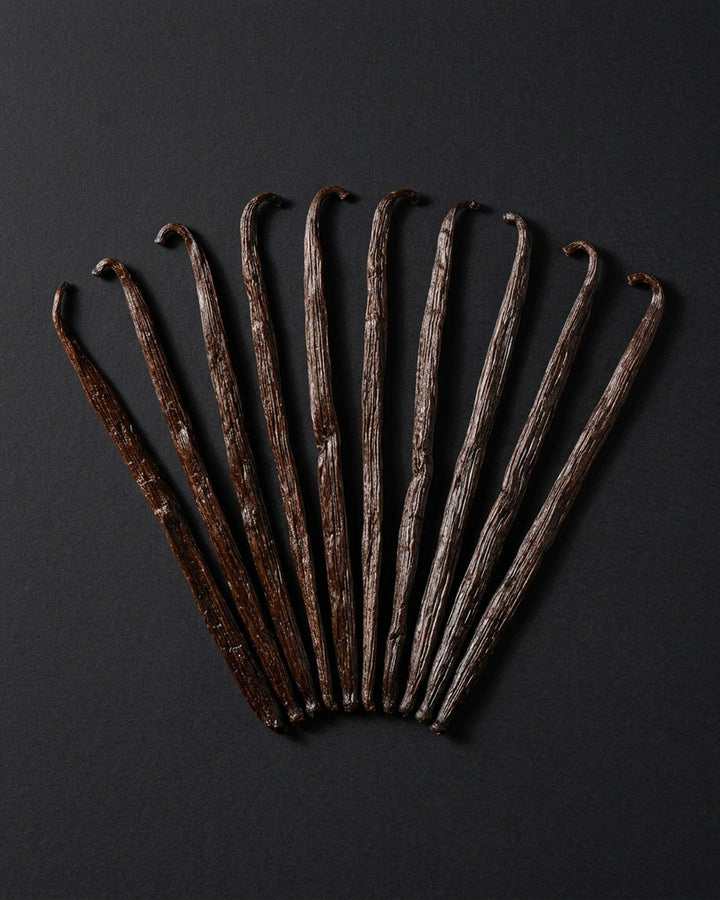
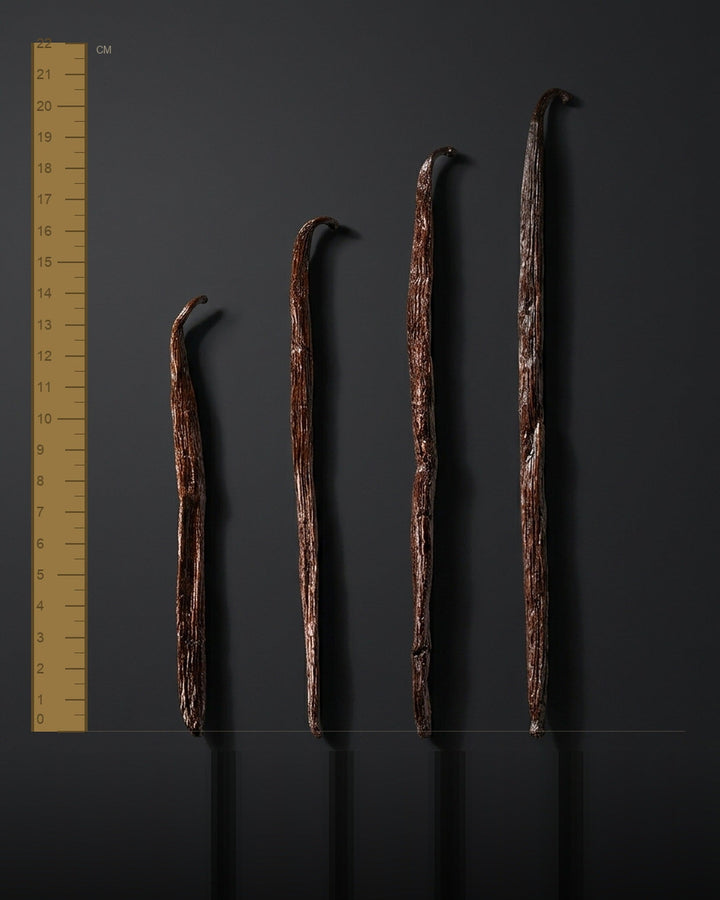
Appearance: a thin, long bean, chocolate brown almost black, supple, plump, slightly oily to the touch. Standard size 14-16 cm; extra long sizes (16-22 cm) are rarer and more expensive per gram.
Signature uses: pastry cream, crème brûlée, financiers, shortbread, whipped ganache, chocolates, ice creams, macarons, whipped cream. It is the versatile vanilla par excellence.
To go further, see our complete guide to Bourbon planifolia vanillaand our Bourbon vs Tahiti vs Pompona comparison.
2.2 Tahitian vanilla (Vanilla tahitensis)
Tahiti is in fact a natural hybriddiscovered in Polynesia in the 19th century. It is the rarest vanilla and the most expensive per gram .
Aromatic profile: less vanillin (1.5 to 2%) but more secondary aromatic compounds, notably anisaldehyde, which gives it floral notes (heliotrope, anise), fruity notes (stewed plum, black cherry) and a lightly caramelized character. Almost musky finish. Much more aromatic on raw smelling, but fades faster during cooking.
Appearance: a shorter bean (12-15 cm), oilier, reddish brown, with a softer skin. Distinctive feature: its beans do not open spontaneously at maturity (non dehiscence), which makes harvesting easier.
Signature uses: panna cotta, red berry tart, fruity sorbets, but also savory cooking, pan seared scallops, spiny lobster, beurre blanc, foie gras. Ideal wherever vanilla should dialogue with a fruity or floral fragrance rather than overpower it.
Note: Vanille Désiré does not (yet) offer Tahitian vanilla: our family production is centered on Madagascar. We mention this variety here to give you a complete picture.
2.3 Pompona vanilla (Vanilla pompona)
Pompona, also called "banana vanilla" or "vanillon," is the hardiest species of the three. Native to Central America and the Amazon Basin, it is now grown on a smaller scale in Madagascar, Guadeloupe and Mexico. Less than 1% of world production.
Aromatic profile: lower vanillin (1.2 to 1.7%), but unique complex aromas, cherry, honey, anise, tonka bean, blond tobacco, dried flowers, undergrowth. A more diffuse, rounder profile, less striking than Bourbon but with remarkable persistence in long infusions.
Appearance: this is the XXL bean, 18 to 25 cm long, much thicker and plumper, reddish brown to light brown. A Pompona bean sometimes weighs twice as much as a standard Bourbon.
Signature uses: long macerations (infused rum, syrups, liqueurs), artisan ice creams infused overnight, jams, flavoring for melting chocolates, hot infusions (milk, cream). Also excellent in sweet savory pairings.
For more detail, see our complete guide to Pompona vanilla.
2.4 Voatsiperifery (Piper borbonense)
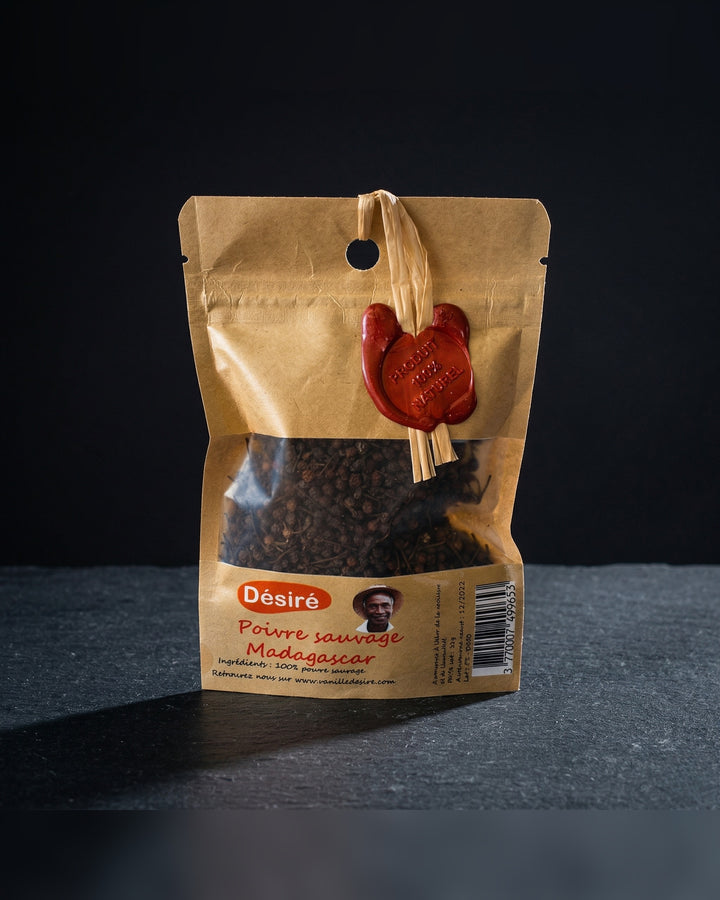
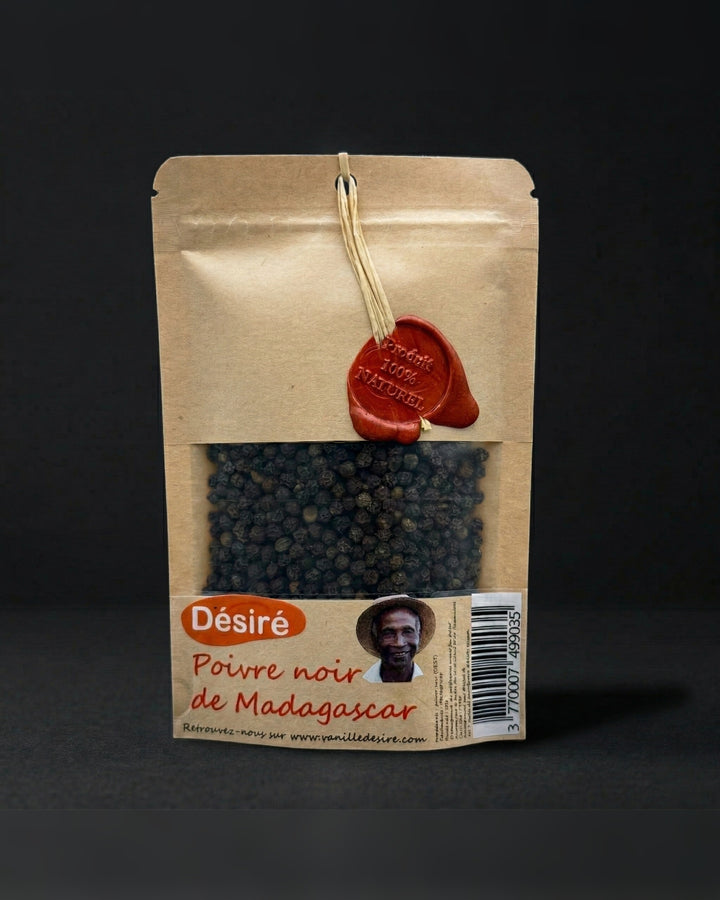
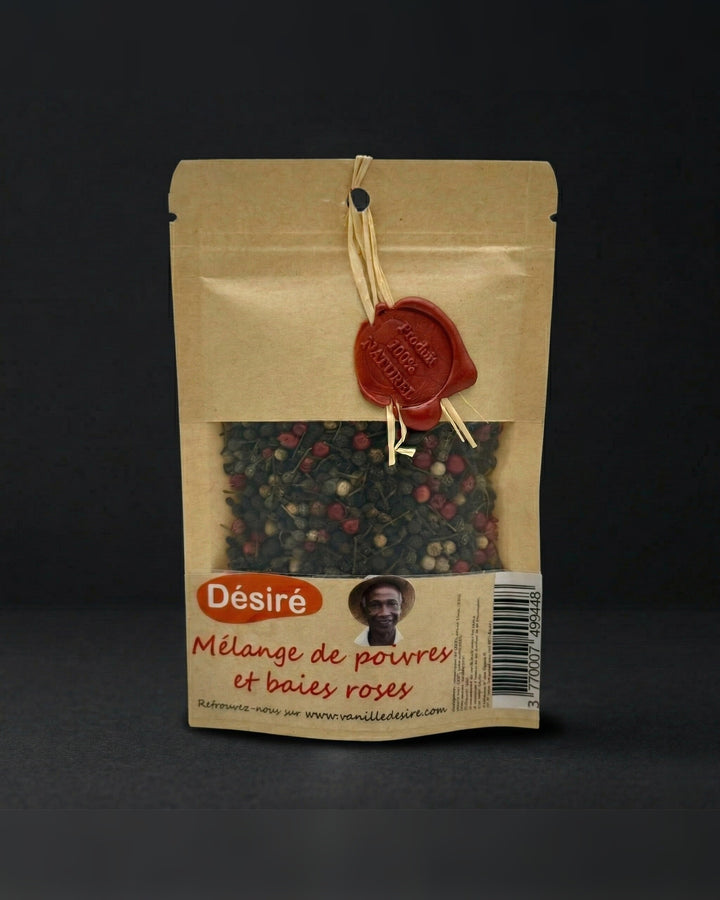
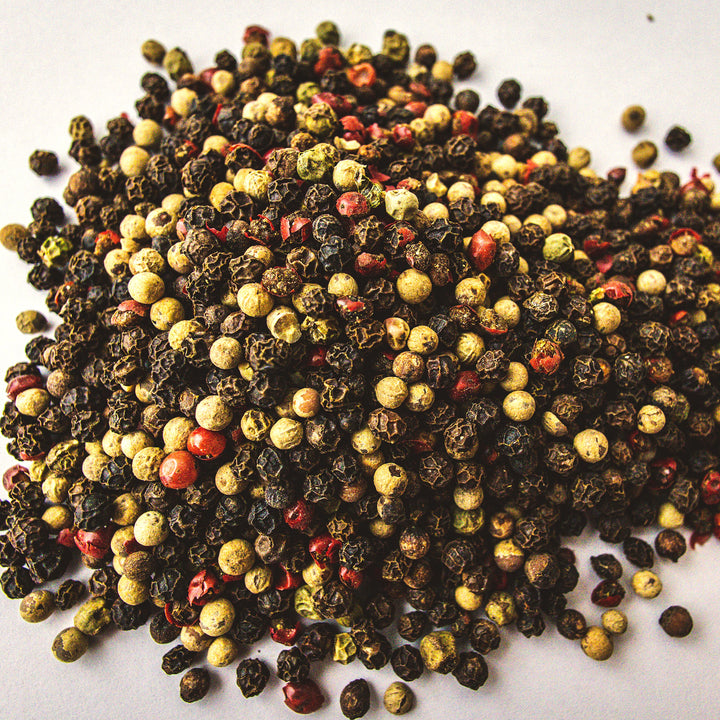
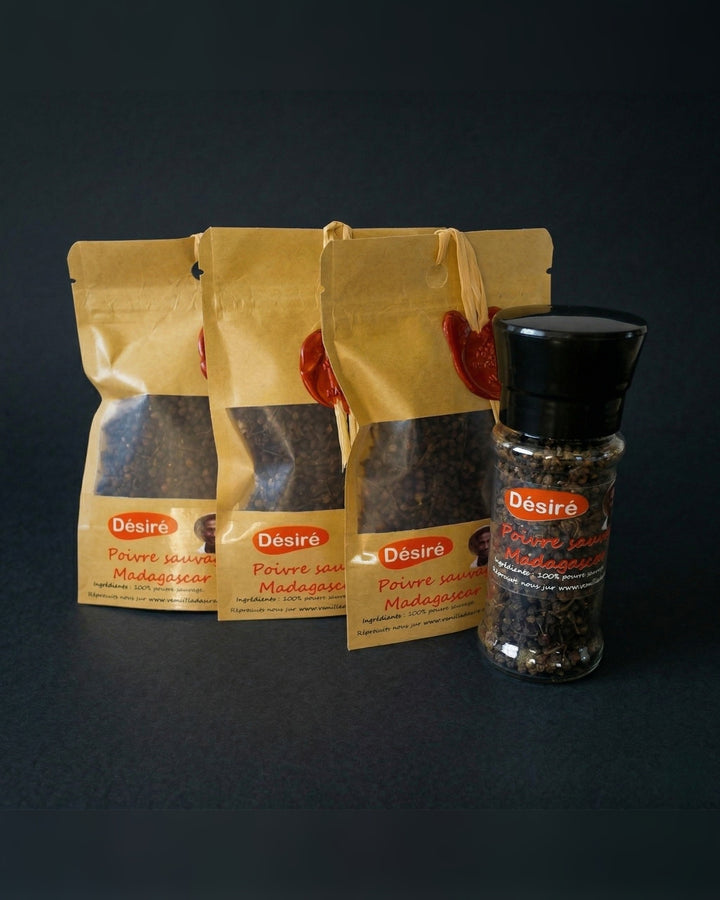
Voatsiperifery is not a vanilla, it is a wild Malagasy pepper. We mention it here because it is regularly compared to vanilla like profiles. Harvested at 20-25 m high on tree climbing vines in the forests of southeastern Madagascar, it develops a citrus, flowers, precious woodprofile that pairs remarkably with vanilla desserts. Our voatsiperifery guidedetails its use. If you like vanilla, you will also like voatsiperifery, and the reverse is true.
Comparison table of varieties
| Criterion | Bourbon (Madagascar) | Tahiti | Pompona (Madagascar) |
|---|---|---|---|
| Species | V. planifolia | V. tahitensis | V. pompona |
| Vanillin (dry weight) | 1.8 to 2.5% | 1.5 to 2% | 1.2 to 1.7% |
| Dominant profile | Cocoa, prune, butter | Anise, flowers, cooked fruit | Cherry, honey, anise |
| Bean length | 14-22 cm | 12-15 cm | 18-25 cm |
| Color | Chocolate brown | Reddish brown | Light reddish brown |
| Persistence | Long, buttery | Medium, floral | Very long, round |
| Indicative price | 3-8 €/bean | 5-12 €/bean | 4-9 €/bean |
| Typical use | Classic pastry | Sweet savory, floral | Long infusions, rum |
| Storage | 2-3 years | 18 months | 2 years |
3. Grades and quality: what "Gourmet," "TK" and "Red" mean
A vanilla's grade indicates its final quality and its target use. Three broad categories structure the world market.
3.1 Grade A / Gourmet (often called "black")
This is culinary quality. Moisture content 25 to 35%, supple, plump, glossy bean, intense fragrance on opening. It is the only grade that allows you to split, scrape and obtain abundant, black caviar. All pastry, cooking and infusion uses start from this grade.
Common sub classifications of grade A in Madagascar: - Premium Gourmet / Out of class: >30% moisture, vanillin >2%, size 16 cm+. For Michelin starred chefs. - Standard Gourmet: 25-30% moisture, vanillin 1.8-2%, size 14-16 cm. The pastry standard. - Extra long Gourmet: size 16-20 cm or even 22 cm. Visual appeal and gift boxes. See our extra long 16-20 cm vanilla guide.
3.2 Grade B / TK ("Red")
Moisture content 18 to 25%, a drier bean, less supple, sometimes split or stained. Intended for industrial extraction (extract, powder, flavorings) where appearance matters little but vanillin content stays decent (1.5-2%).
You can use a TK bean in cooking, it flavors a cream or a syrup very well, but you will not get the visual result of a Gourmet bean. The price to quantity ratio is better if you make your own extract at home.
3.3 "Cuts" / industrial grade
Very dry beans (15% moisture), fragmented, sometimes mildewed on the surface. Reserved for industry (large scale vanillin extraction, mass flavoring). Should never be sold to the general public under the name "vanilla bean."
3.4 How to assess grade without seeing it
If you are buying online, the grade is rarely stated clearly (serious retailers announce "Gourmet," "Premium" or "Black"). If in doubt: - Ask the explicit question: what moisture content? - Ask for the minimum size (14 cm for a proper Gourmet) - Find out the harvest year (ideally N-1 or N-2, beyond that, the aromatic potential fades)
A vanilla that arrives brittle, split every which way, dry, with a weak fragrance, is TK or cuts grade sold at the price of a Gourmet. Complain or change supplier.
3.5 Frosting: a sign of quality, not a defect
On the best beans, you will sometimes see white crystals appear on the surface, particularly along the ridges. This is crystallized vanillinmigrating outward, a natural phenomenon on very concentrated vanillas (vanillin >2%), considered a sign of superior quality by chefs.
Do not confuse it with mold: frosting is dry, glossy, perfectly edible and the fragrance stays intact. Mold is fuzzy, dull, accompanied by an off odor. If in doubt: rub it with your finger. Frosting crumbles into powder, mold leaves a damp mark.
4. Bean, powder, extract, caviar: which format to choose for which use
Format changes everything. The same variety, the same grade, will give very different results depending on whether you use the whole bean, powder, extract or pure caviar. Here is how to choose.
4.1 The whole bean
The king format.You split it, scrape out the caviar, infuse both halves. You get maximum aroma and the visual result of the black flecks.
Ideal for: pastry cream, crème brûlée, custard, artisan ice creams, syrups, hot infusions (milk, cream, broth), infused rum, shortbread, jams.
Why it is better: the bean contains 60% of the aromas (lignin, woody compounds), the caviar concentrates the other 40%. Using only the caviar and throwing away the bean means wasting half the potential.
Typical dosage: 1 bean for 500 ml of liquid or for 4-6 servings. For very vanilla forward recipes (artisan ice cream, ganache), increase to 1.5 or 2 beans.
See our complete guide to using a vanilla bean.
4.2 Vanilla powder
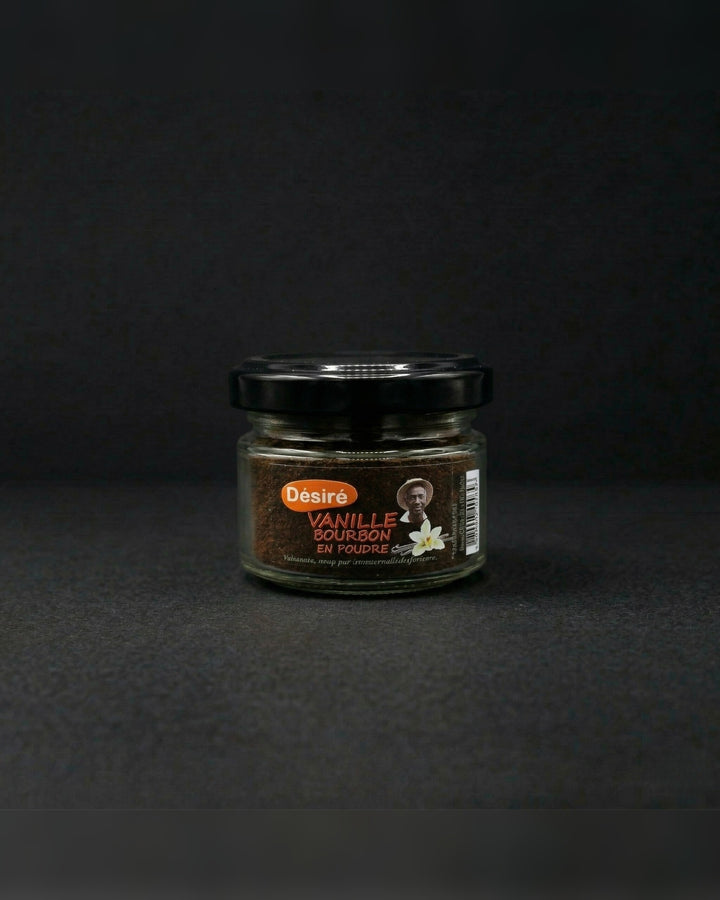
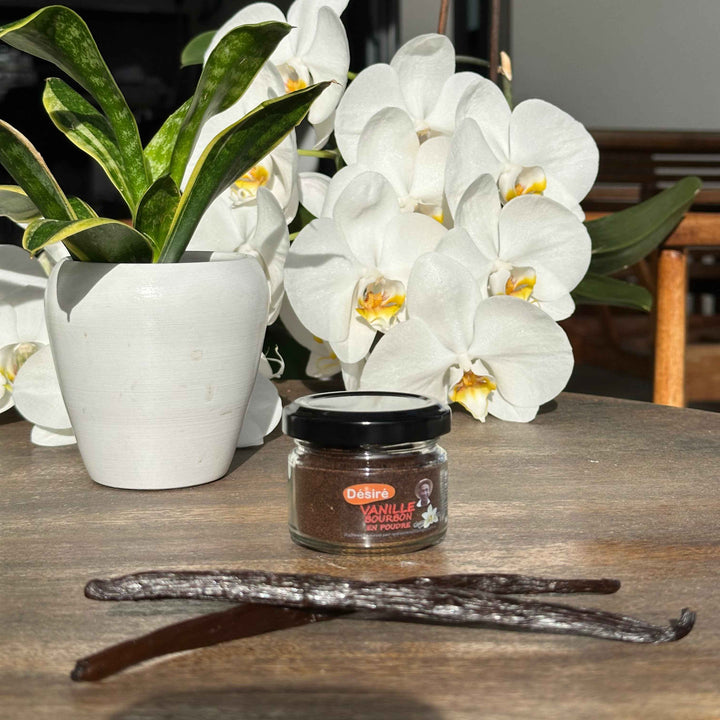
A practical format for precise dosing.Obtained by finely grinding whole Gourmet beans (not just the caviar). No added water, 100% pure vanilla.
Ideal for: dry preparations (sugar and flour mixes, biscuits, sweet coatings, pancakes), finishing dusting (on fruit, on mousse, on chocolates), ganaches where you want to avoid adding liquid, baking dosages where you need to weigh the aroma.
Typical dosage: 1 g of powder ≈ 1/2 bean in aromatic equivalent. 2 g for 500 ml of liquid.
To avoid: confusing it with commercial "vanilla sugar," which contains 95% sugar and 5% synthetic vanillin. Our Bourbon vanilla powder, 20 gis 100% ground bean.
4.3 Liquid vanilla extract
A practical format for liquids.Beans macerated in a neutral alcohol (rum, vodka) for a minimum of 6 to 12 weeks. Concentration varies by brand.
Ideal for: crêpe batters, waffle batters, glazes, cocktail bases (porn star martini, vanilla mojito), cookie dough, dough proofing (adds aroma plus a small alcohol boost), recipes where adding a whole bean would be disproportionate.
Typical dosage: 1 teaspoon of extract ≈ 1 bean in aromatic equivalent. 1/2 teaspoon for a family recipe.
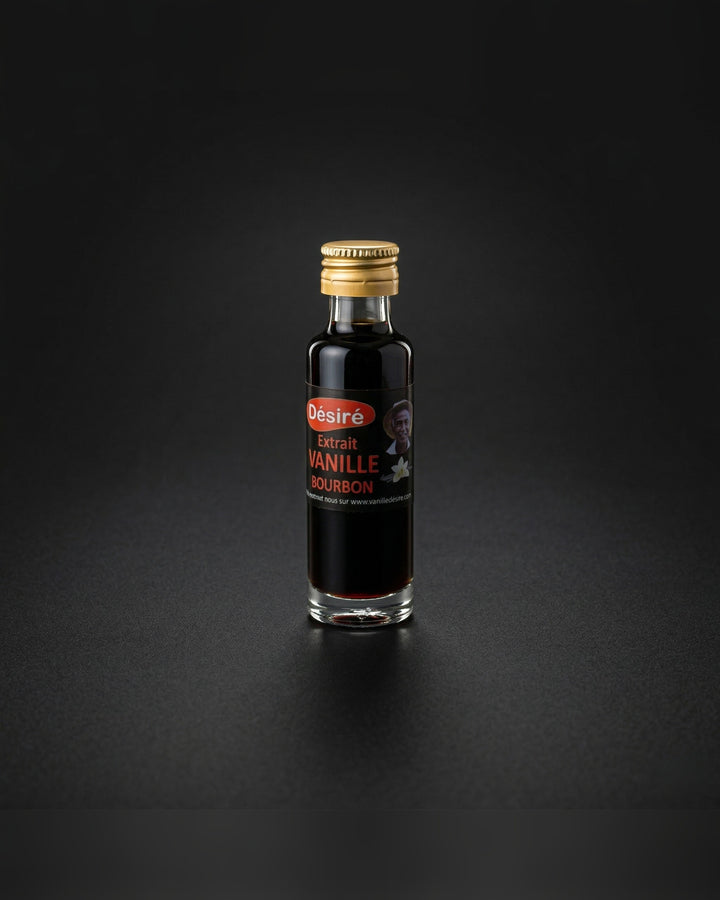
Watch out for the trap: a "extract" priced at 2 € for a 20 ml bottle is almost always synthetic flavoring. A genuine premium extract costs 8-15 € for 20 ml. Our Bourbon Madagascar extract, 20 mlis macerated from our own Gourmet beans.
4.4 Pure caviar
A luxury finishing format.Only the caviar (the black seeds), without the bean. Pasty texture, maximum visual intensity, easy dosing.
Ideal for: finishing whipped cream, mascarpone, whipped ganache, glazes, panna cotta. Wherever you want the visual of black flecks without the effort of splitting a bean.
Limit: you lose the bean's 60% of aroma. Pure caviar has a "cleaner" but less complex profile than a full bean infusion.
Typical dosage: 1 teaspoon of caviar ≈ 1 bean in visual terms and 60% of the aroma. Our Bourbon caviar, 20 gis equivalent to roughly 8-10 concentrated beans.
4.5 Homemade vanilla sugar
Not a format in itself but a trick.Slip 2 split beans (new or already infused) into 250 g of caster sugar, shake once a week for 3 weeks. Flavored sugar, ideal for everyday baking, coffee, yogurts.
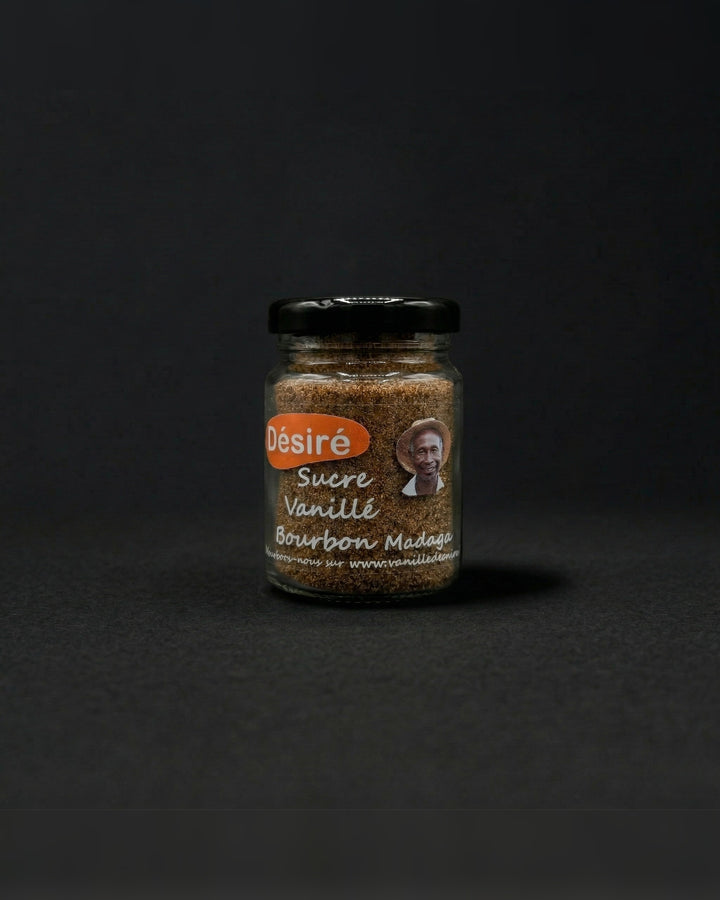
You can also buy our Bourbon vanilla sugar, 60 g, made from our own beans.
Table: which format for which use
| Use | Optimal format | Substitute format |
|---|---|---|
| Crème brûlée, pastry cream | Whole bean | Caviar (acceptable) |
| Artisan ice cream | Bean (long infusion) | Powder + caviar |
| Cookie dough, pancake batter | Liquid extract | Powder |
| Ganache, whipped cream | Caviar | Bean |
| Syrup, infused rum | Whole bean | No valid alternative |
| Cocktails | Liquid extract | Homemade syrup |
| Waffle batter, crêpes | Extract | Powder |
| Yogurt, fromage blanc | Vanilla sugar | Caviar |
| Visual finish (plated dessert) | Pure caviar | Split bean laid on top |
5. How to assess quality at purchase: 10 point checklist
Whether you buy online, at a fine food shop or at a market, here is the checklist to check systematically.
5.1 Is the variety stated precisely?
A serious seller states species plus origin: "Bourbon vanilla (V. planifolia) from Madagascar, Sava region." Not just "vanilla from Madagascar" (which could be planifolia or pompona).
5.2 Is the grade indicated?
Look for mentions of "Gourmet," "Premium," "Black," "Grade A," or an explicit moisture content (25-35%). If nothing is indicated, ask.
5.3 Is the size specified?
A proper Gourmet bean is 14 cm minimum. Extra long ones start at 16 cm. If the size is not specified, a blend is probably being sold, sometimes acceptable, sometimes not.
5.4 Is the harvest year mentioned?
Ideally N-1 or N-2. A vanilla that is 4-5 years old can still be good if well stored, but the aromatic potential fades. Serious sellers state their vintage.
5.5 The fold test
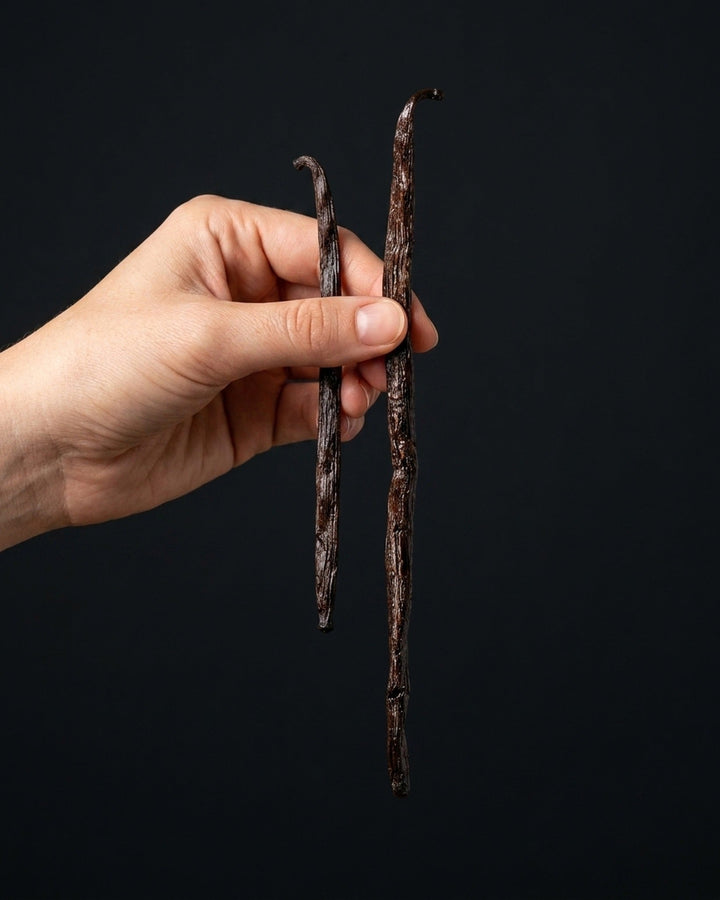
This is test number one on receipt. A good Gourmet bean wraps around a finger without breaking or cracking. If it cracks or splits, it is too dry (TK or over dried Gourmet). If it is soft and sticky, it is too moist (mold risk).
5.6 Color
Uniform chocolate brownfor Bourbon, reddish brownfor Pompona, reddish brownfor Tahiti. A color that is too black and oily means over fermented. A gray or greenish color means mold or a drying problem. A very pale color means under cured.
5.7 Surface
Slightly oily to the touch, glossy, sometimes with white vanillin crystals (frosting, a good sign). A dull, dry surface means over dried. A fuzzy surface means moldy, throw it away.
5.8 Fragrance on opening
This is the most telling element. On opening the tube, you should immediately smell cocoa, prune, butter, woodfor a Bourbon. Anise, flowers, cooked fruitfor a Tahiti. Honey, cherry, tobaccofor a Pompona. A weak fragrance means a tired vanilla. A fragrance of alcohol or fermentation means over cured, throw it away.
5.9 The caviar when cut
Split a bean as a test. The caviar should be abundant, black, moist, and come away easily with the back of the blade. Pale or dry caviar means a poorly cured or too old bean.
5.10 Packaging
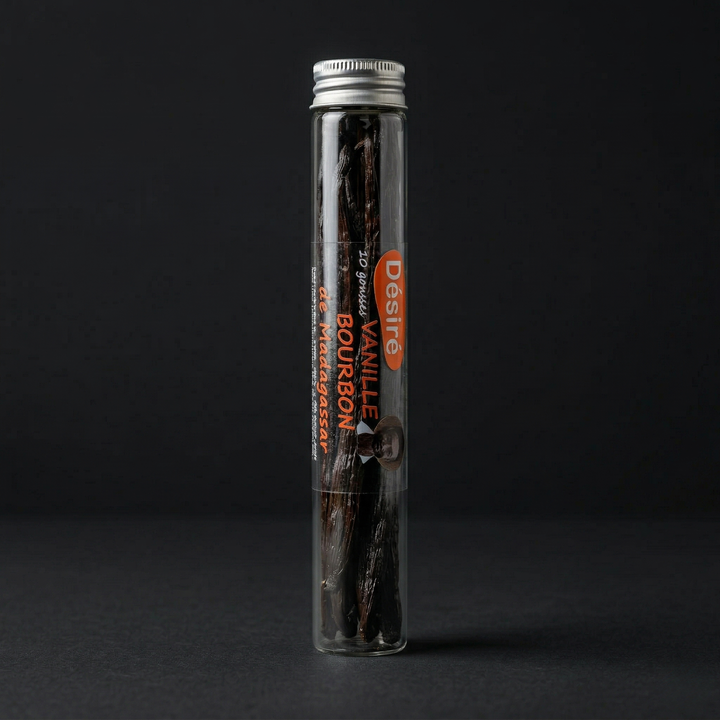
Airtight glass tube = ideal (preserves moisture, isolates from light and air). Kraft pouch = acceptable (12-18 months of storage). Open cardboard box = poor (rapid aroma loss). Open air, clear plastic bag = avoid.
6. Storage and shelf life: making it last 3 years
A well stored bean keeps 90% of its aromatic potential for 2 to 3 years. Three parameters govern the equation: moisture, light, temperature.
Good practices
- Airtight glass tubewith a silicone seal. This is the gold standard.
- Room temperature, 18-22°C. A cool cellar works if it is dry.
- Away from light (closed cupboard or tinted glass).
- No airing out. Brief opening (10 seconds) then close again.
- Away from other spices. Vanilla absorbs odors.
What NOT to do
- No refrigerator. This is the most common mistake. The fridge's humidity (90%+) causes condensation every time it is opened and creates mold.
- No freezing. Long storage (3 years+) but massive loss of volatile aromas on thawing.
- No thin plastic bag. Microporous, dries out within a few months.
- No direct metal box. Possible ionic exchange with the essential oils.
If your beans arrived a little dry
Leave the closed tube for 48 h at 20-22°C: internal moisture redistributes. If they remain truly brittle after that time, either rehydrate them for 24 h in a damp cloth, or transform them (homemade powder in a blender, homemade extract in rum).
Shelf life by format
| Format | Optimal duration | Maximum usable duration |
|---|---|---|
| Bourbon bean in an airtight tube | 2-3 years | 5 years (with gradual loss) |
| Pompona bean in an airtight tube | 18-24 months | 3 years |
| Powder in an airtight jar | 12 months | 18 months |
| Liquid extract in an amber bottle | 2 years | 4 years |
| Pure caviar in an airtight jar | 6-12 months | 18 months |
| Homemade vanilla sugar | 12 months | 2 years |
To go further, our complete guide to storage and preparation.
7. Price: how much does a genuine quality vanilla cost?
The price of vanilla has seen spectacular swings over the last decade. In 2017-2018, following cyclone Enawo which devastated the Sava, the price of green vanilla rose to as much as 600 USD/kgon world markets . In 2024-2025, the market has stabilized at around 80 to 150 USD/kg for prepared Gourmet vanilla .
Retail price ranges in France (2026)
| Format | Low price (warning) | Fair price | Premium price |
|---|---|---|---|
| Bourbon Gourmet bean, 14-16 cm (unit) | <2 € | 3-5 € | 6-10 € |
| Bourbon Gourmet bean, extra long 16-20 cm | <4 € | 6-9 € | 10-15 € |
| Pompona XXL bean, 18-25 cm | <5 € | 7-10 € | 12-18 € |
| Tube of 3 Bourbon Gourmet beans | <8 € | 12-18 € | 20-30 € |
| Tube of 10 Bourbon Gourmet beans | <25 € | 35-55 € | 60-90 € |
| Bourbon powder, 20 g | <6 € | 10-15 € | 18-25 € |
| Pure caviar, 20 g | <12 € | 18-28 € | 30-45 € |
| Bourbon extract, 20 ml | <4 € | 8-14 € | 15-22 € |
| Vanilla sugar, 60 g | <3 € | 5-9 € | 10-14 € |
Anti scam warnings
- Bourbon Gourmet beans at 1 €/bean: economically impossible. Either it is downgraded TK sold as Gourmet, or it is repackaged vanilla of blended origin, or it is old stock being cleared (>5 years old).
- "Vanilla extract" at 2 € a bottle: 99% of the time this is synthetic flavoring with a misleading label. Read the ingredients list: if you see "flavoring" without "natural extract" or "macerated vanilla beans," pass.
- Discounted supermarket "vanilla sugar": generally 95% sugar plus 5% synthetic vanillin. For genuine vanilla sugar, check for the mention "vanilla beans" in the ingredients list.
- Very cheap "bourbon" vanilla with no variety specified: "Bourbon" has become a vague commercial term. Without mention of the species (planifolia), the precise origin (Madagascar Sava, for example) and the grade, be wary.
Why quality vanilla costs this much
Three structural factors: 1. Labor intensive: hand pollination flower by flower (a pollinator handles 1,500 flowers a day at most). 2. Long cycle: 9 months on the vine plus 6-9 months of post harvest processing, 15-18 months between flower and sellable bean. 3. Low yield: it takes roughly 600 pollinated flowers to produce 1 kg of prepared vanilla .
Add climate instability (Sava cyclones), intermediary margins (importers, distributors, retailers) and traceability when it is ensured, and you understand why a proper bean cannot go below 3 €.
8. FAQ: the 15 most asked questions
9. Our Vanille Désiré selection
At Vanille Désiré, the vanilla comes from our own plants: our family grows it in the SAVA, in northeastern Madagascar, and handles the preparation itself. All our beans are Gourmet grade, packaged in airtight glass tubes after thorough curing.
To start or round out your kitchen:
- Discovery set, 1, 3 or 5 Bourbon beans, to test with no commitment
- Tube of 3 Bourbon Gourmet beans, the everyday format
- Tube of 10 Bourbon beans in glass, for enthusiasts
- Tube of sizes S, M, L, XL, 10 beans, compare the sizes
- Pro format, 30 to 100 beans, for restaurateurs, pastry chefs, bakers
- Pompona XXL vanilla, 2 to 10 beans, for infusions and infused rum
- Bourbon vanilla powder, 20 g, easy dosing
- Pure caviar, 20 g, luxury finishing
- Bourbon extract, 20 ml, for liquid batters and cocktails
- Vanilla sugar, 60 g, everyday use, made with our beans
Our entire vanilla collection: available as Bourbon vanillas, rare vanillas (Pompona, extra long)and extracts & derivatives.
Sources and references
- Wikipedia FR, Vanilla
- Wikipedia FR, Vanilla planifolia
- Wikipedia FR, Vanilla tahitensis
- Wikipedia FR, Vanillin
- Wikipedia FR, Edmond Albius
- INRAE, Research on vanilla and aromatic plants
- CIRAD, Vanilla industry and cooperation with Madagascar
- ANSES, Recommendations for storing spices and flavorings
Article written by the Vanille Désiré team, a family of vanilla, pepper and spice producers in Madagascar. Last updated: May 2026.