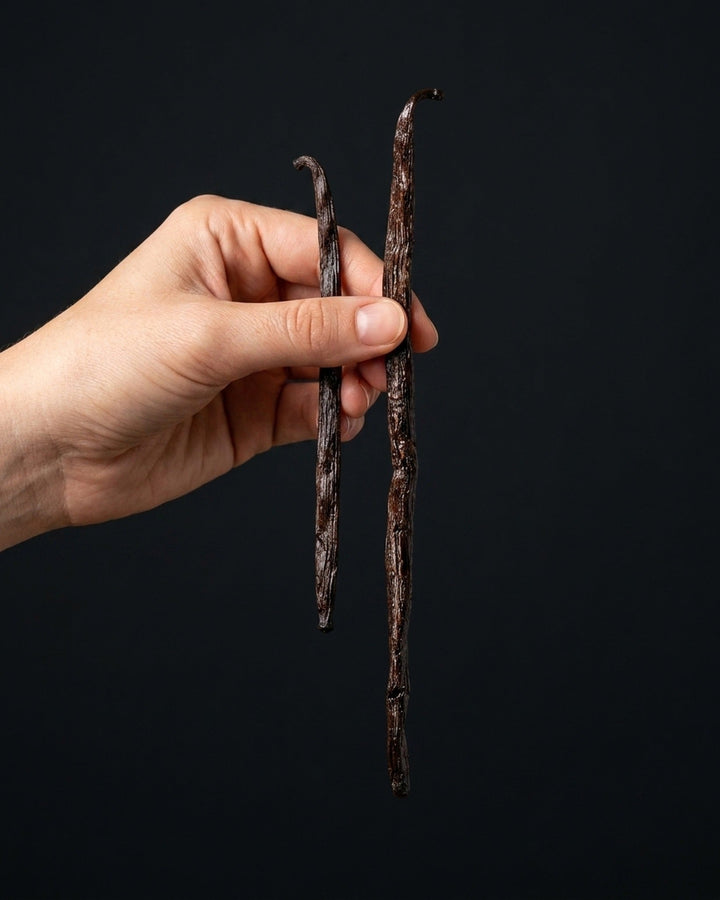
Quick answer:A Bourbon vanilla bean from Madagascar is used in three steps: split it lengthwise with the tip of a paring knife, scrape out the caviar (the black seeds) with the back of the blade, then infuse both halves in a hot liquid (milk, cream, syrup) for 15 to 30 minutes. The scraped bean can be reused to flavour sugar, rum or a syrup.
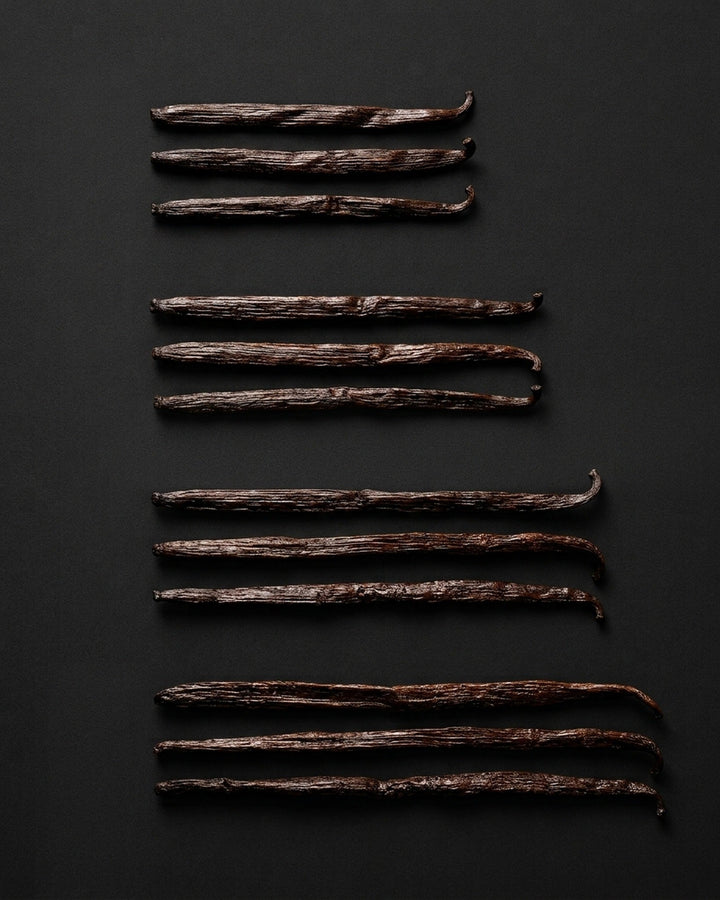
All these techniques are done with a whole bean from our Bourbon vanilla from Madagascar, sold by grade.
1. Origin and terroir: Madagascar
[PHOTO_PLANTATION_VANILLE]
The vanilla bean you hold between your fingers has travelled an extraordinary path. It all begins on the northeast coast of Madagascar, in the SAVA region (Sambava, Antalaha, Vohémar, Andapa), where nearly 80% of the world's vanilla is produced. Under the humid canopy of the coastal forests, the vines of Vanilla planifoliacoil around living supports, at 1.50 m from the ground, at the height where the grower can reach the flowers without climbing.
Each vanilla flower opens for only a single morning. In the absence of the Melipona bee, the pollinating insect native to Mexico, which is absent from Madagascar, every flower must be pollinated by hand, one by one, using a thin bamboo needle. This gesture, passed down since the 19th century, determines the whole harvest: a day's delay, a heavy rain, and the window is lost.
Nine months later, the green beans are harvested , then enter a curing cycle that lasts six to nine months: scalding (a hot water bath to stop ripening), sweating wrapped in jute blankets, sun drying by day and boxed at night, and finally finishing in scented trunks. It is during this preparation that vanillin develops and the complex aromas, woody, cocoa, prune, blond tobacco, take shape.
At Vanille Désiré, all this work stays in house: our vanilla plants grow in the SAVA region, in northeastern Madagascar, and our family carries the curing through to the end, with no middleman in between. This traceability guarantees that every bean has been cured according to the rules of the craft, with a natural vanillin content between 1.8% and 2.5%, in line with the standard for premium Bourbon vanillas.
2. Profile and characteristics of a good bean
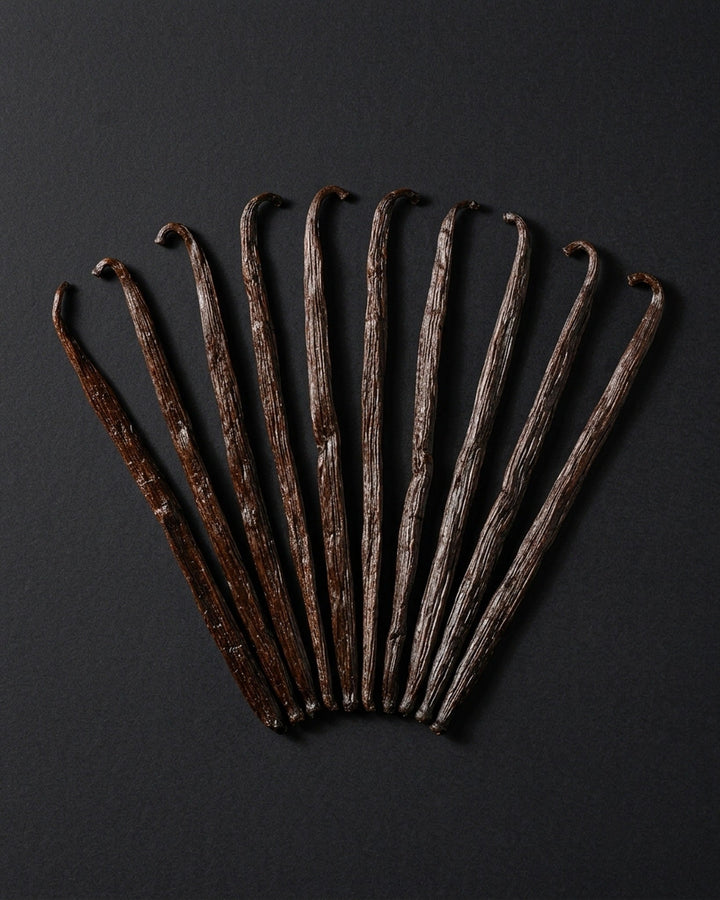
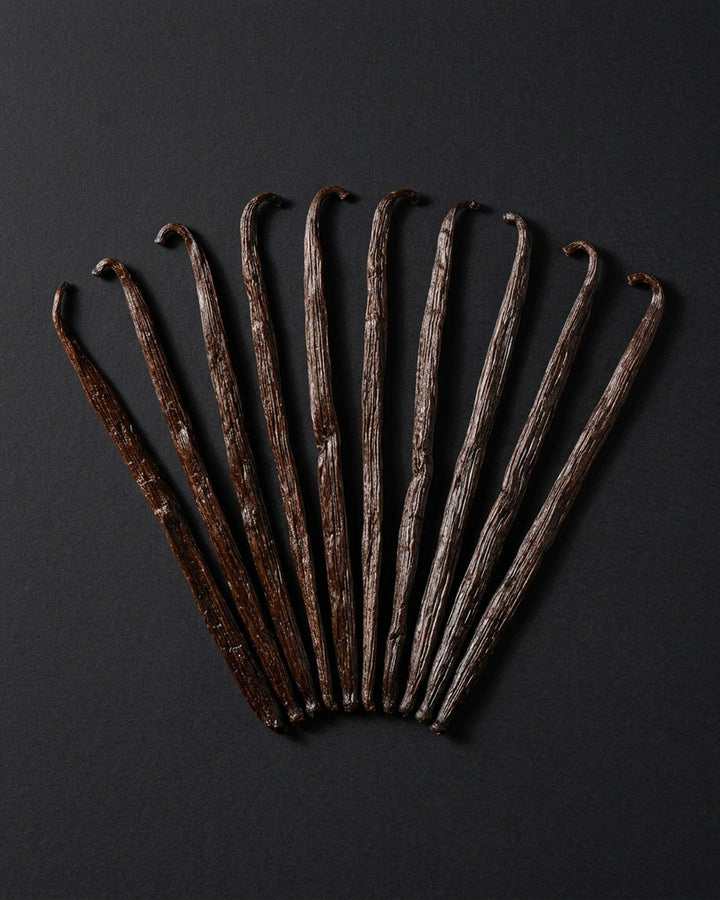
A quality vanilla bean can be recognised even before it is opened. Visually, it should be supple, plump, a dark brown almost black, with a slightly oily sheen on the surface. A brittle, dry bean that breaks under the fingers has lost some of its aroma. Conversely, a bean that is too soft or marked with white on the surface may be frosted, a natural crystallisation of vanillin that is not a flaw, quite the opposite: chefs see it as a sign of aromatic maturity.
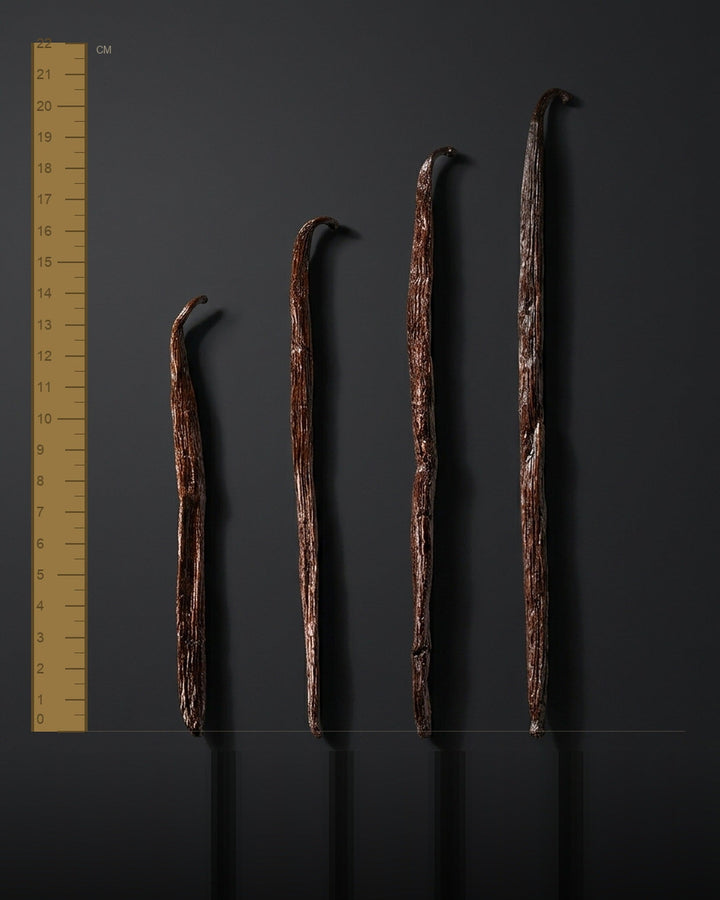
Size is another indicator. A standard Bourbon bean measures between 14 and 16 cm. Beyond that, 16 to 20 cm, or even 22 cm for exceptional grades, these are called extra long beans, rarer, plumper, and logically more expensive per gram. The average weight of a premium bean is between 5 and 7 g.
On the aroma side, Bourbon vanilla from Madagascar offers a profile recognisable among all others: dominant vanillin notes (warm, sweet, indulgent), secondary woody, lightly smoky notes, with a finish on cocoa and dried prune. It is this signature that makes it the most widely used vanilla in the world in pastry.
3. Uses and applied recipes
[PHOTO_GOUSSE_FENDUE_COUTEAU]
Step 1: splitting the bean
Lay the bean flat on a board. Hold the thin end between thumb and index finger, and with the tip of a sharp paring knife, split it lengthwise, from one end to the other. There is no need to press hard: the blade should glide under the skin, not cut it clean in two. Once open, the bean reveals two half cylinders lined with the caviar, those tiny black seeds that hold most of the aroma.
Step 2: scraping the caviar
Turn the knife so the blunt back edge faces down, and firmly scrape the inside of each half, from top to bottom. The caviar gathers into a small black paste, glossy and intensely fragrant. This paste can be folded directly into cold preparations (whipped cream, mascarpone, whipped ganache) or added at the end of cooking to hot preparations to preserve the most volatile aromas.
Recipe 1: vanilla pastry cream (makes 500 g)
Bring 50 cl of whole milk to a simmer with 1 split and scraped bean. Turn off the heat, cover, and leave to infuse for 20 minutes. In a bowl, whisk 4 egg yolks with 100 g sugar until pale, add 40 g cornflour. Pour in the strained hot milk, mix, return to gentle heat and whisk constantly until thickened (3 to 4 minutes). Off the heat, stir in the caviar. Transfer to a container, cover with cling film pressed to the surface, and chill.
Recipe 2: homemade vanilla sugar
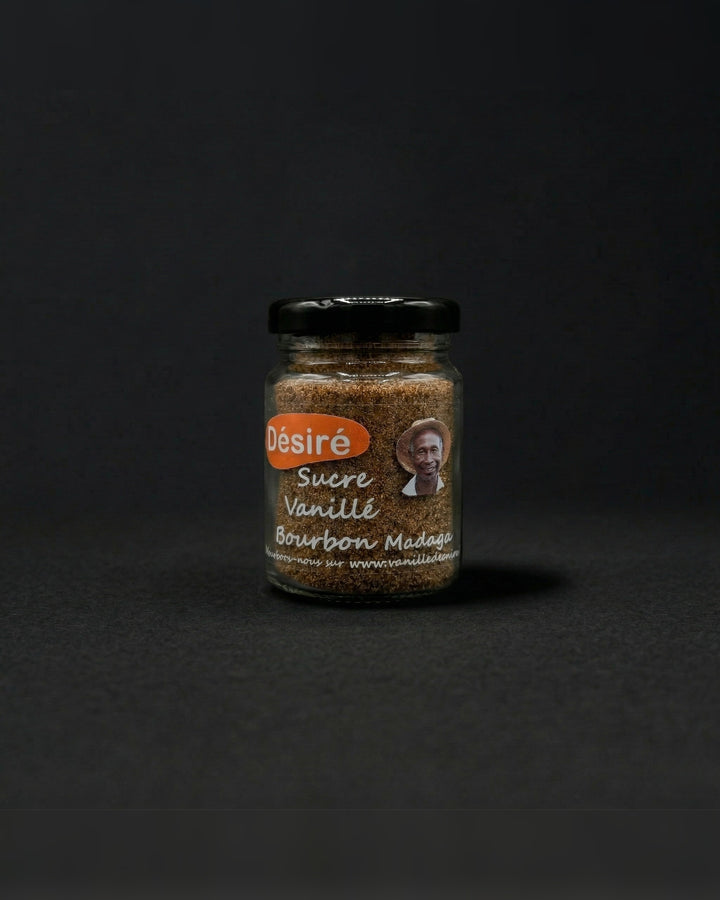
Slip 2 split beans (already used for infusion or new) into an airtight jar with 500 g caster sugar. Shake every two days for 3 weeks. The sugar takes on an ivory tint and a deep scent. It keeps for a year and can be topped up with more sugar as it is used. For a more intense version, add a little vanilla powder.
Recipe 3: vanilla syrup
Boil 25 cl water and 250 g sugar. Add 1 split, scraped bean, both halves included. Let it simmer for 5 minutes, remove from the heat, cover and infuse for 1 hour. Pour into a bottle with the bean. Ideal for flavouring a coffee, a plain yoghurt, a fruit salad or a cocktail.
Recipe 4: infused milk for ice cream
For a vanilla ice cream base, infuse 2 beans in 75 cl of whole milk plus 25 cl of cream brought to 85°C, off the heat, covered, for 1 hour. This low temperature infusion extracts the most delicate notes without cooking off the aromas.
Recipe 5: vanilla infused rum
Into a 70 cl bottle of agricultural rum, slip 2 split and scraped beans, 2 tablespoons of cane sugar, and optionally a cinnamon stick. Leave to macerate for at least 2 months, in a cool place, away from light. Strain or not, as preferred.
4. Comparison table of vanilla formats
| Format | Useful for | Advantage | Relative price |
|---|---|---|---|
| Whole bean | Traditional recipes, long infusions | Maximum aroma, pure caviar | €€€ |
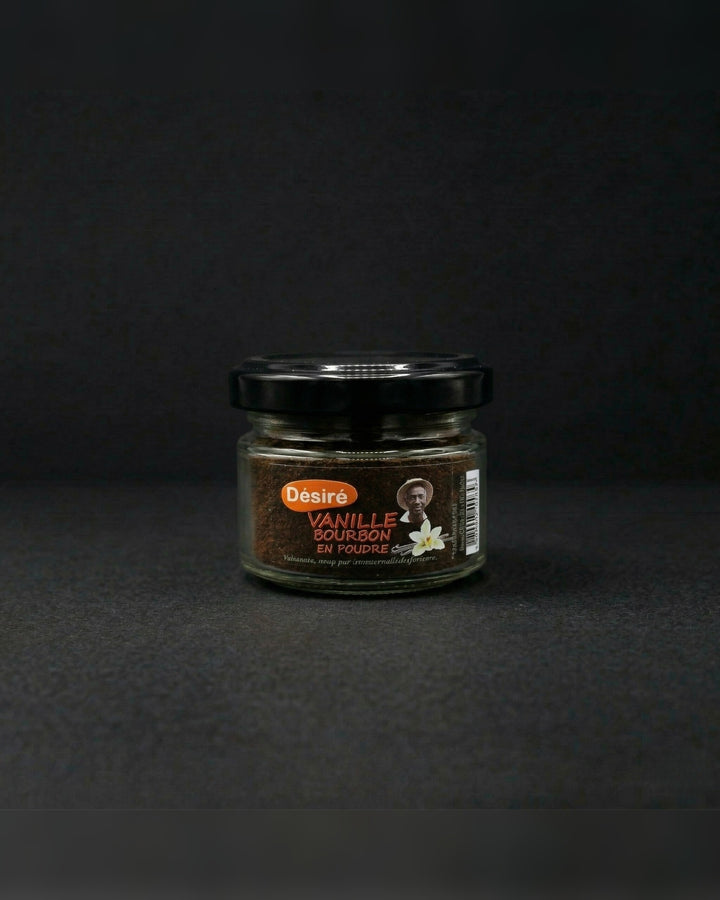
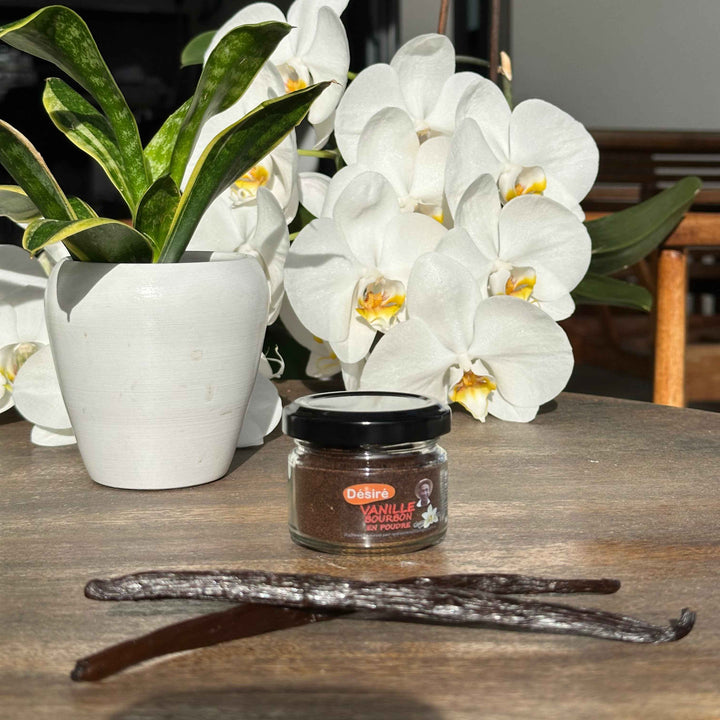
| Powder 20g | Pastries, ganaches, macarons | Precise dosage, direct integration | €€ |
| Vanilla sugar 60g | Yoghurts, coffee, shortbread | Ready to use, long shelf life | € |
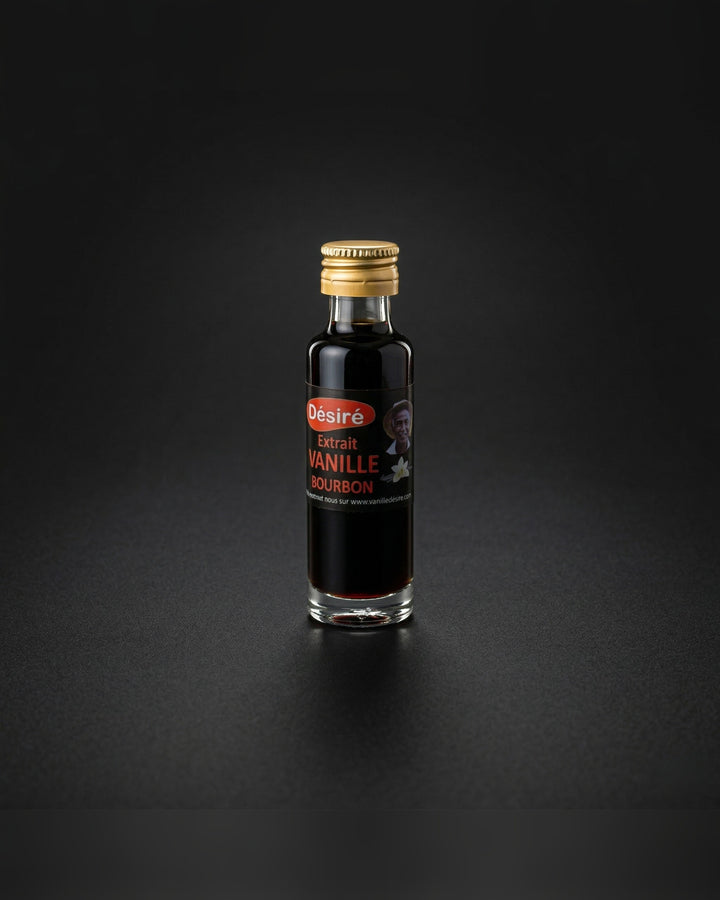
| Extract 20ml | Creams, doughs, glazes | No preparation, drop by drop dosing | €€ |
| Caviar 20g | Visual finishes, whipped creams | No preparation, chef grade look | €€€€ |
5. Benefits and properties
Vanilla is traditionally recognised for its soothing and antioxidant properties. Its signature molecule, vanillin, is studied for its antioxidant and anti-inflammatory effects, as noted by the Wikipedia article on vanillin, which draws on several scientific publications. Vanilla also contains polyphenols and trace minerals (potassium, magnesium, calcium), but in negligible amounts given typical culinary doses.
In traditional aromatherapy, the scent of vanilla is associated with a relaxing and comforting effect, a property that explains its historical use in perfumery and confectionery.
6. Storage and quality
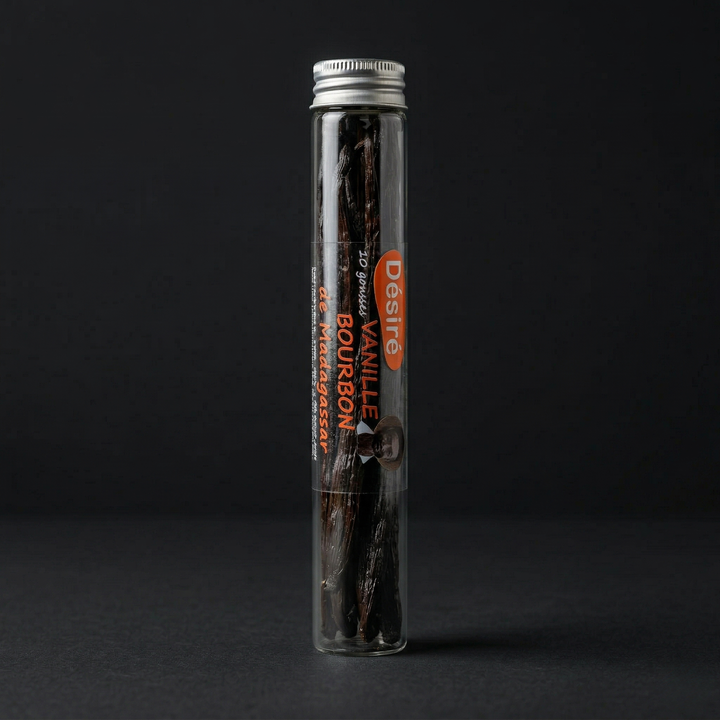
Store your beans in an airtight tube, preferably glass, away from light and at room temperature (18 to 22°C). Never use the fridge: cold and humidity degrade the aromas and encourage the growth of mould. The freezer, on the other hand, is acceptable for long term stock, provided a vacuum sealed packaging is used.
If your beans dry out, you can rehydrate them by placing them for 24 hours in a container with a pad soaked in dark rum. They will regain their suppleness and their scent.
Frosting (the appearance of white crystals on the surface) is not a flaw: these are vanillin crystals migrating to the surface, a sign of a ripe and rich vanilla.
A quality bean, well stored, keeps the bulk of its aroma for 18 to 24 months.
7. Extended FAQ
Can a vanilla bean be used more than once?
Yes. Once the bean has been used for infusion, rinse it, dry it and drop it into a jar of sugar, into rum or a syrup. It will keep releasing its aroma for several months.
Is it always necessary to scrape the caviar?
No. For an infusion (milk, cream, syrup), a simply split bean is enough. The caviar is mostly useful for cold preparations where you want a speckled look and a direct scent.
How many beans for 1 litre of milk?
Allow 1 to 2 beans per litre of milk depending on the intensity you want. In professional pastry, 2 beans is the standard for a rich custard.
What is the difference between vanilla extract and vanilla flavouring?
Natural extract is obtained by alcoholic maceration of real beans. Flavouring can be synthetic (industrial vanillin derived from lignin or eugenol). Extract is always preferable in quality pastry.
Can extract replace a bean?
Yes. 1 bean is roughly equivalent to 1 teaspoon (5 ml) of natural vanilla extract. But extract should be added at the end of a preparation to preserve its aroma.
My bean is hard and dry, what should I do?
Rehydrate it for 24 hours in an airtight box with a cotton pad soaked in rum or simply warm water. It will become supple and usable again.
Is the white frosting mould?
No. These are crystals of natural vanillin. It is a positive sign. Real mould is greenish, fuzzy, and gives off a musty smell: in that case, discard the bean.
Can a bean be baked in the oven?
Yes, infused in a custard, a flan, a rice pudding. Avoid exposing it to more than 180°C in dry cooking: the most delicate aromas evaporate.
How long should a bean infuse in hot milk?
20 to 30 minutes off the heat, covered. Beyond that, the aromas remain stable. For an ice cream base, you can infuse overnight in the fridge.
Which vanilla for which use?
Bourbon for classic pastry (cocoa, indulgent notes). Tahiti for floral and fruity pastry. Pompona for scented uses (syrups, ice creams). See our detailed comparison.
8. Buying and related products
- Discovery set of 1, 3, 5 Bourbon beans from Madagascar, ideal for getting started
- Glass tube of 10 Bourbon beans, long term storage format
- Vanilla powder 20g, for ganaches and macarons
- Vanilla sugar 60g, ready to use
- Vanilla caviar 20g, chef grade finishing