


Madagascar Bourbon Vanilla Beans
€33,90
- Variety
- Vanilla planifolia, Bourbon
- Terroir
- SAVA region, north-east of Madagascar
- Preparation
- Hand-pollinated, blanched, sun-dried, cured
- Size
- Measured with a gauge, written on the pouch: S, M, L, XL
- Aromatic notes
- Cocoa · Prune · Butter · Woody
- Best for
- Custards, ice creams, flans, spiced rum
Bourbon vanilla beans from Madagascar bought direct from the grower: our family grows and prepares them in the SAVA region, in north-eastern Madagascar, and we ship them to you ourselves. There is nobody between the vine and your kitchen.
One page, two questions: which bean length, and how many. The price per bean is written next to each format, so you compare without doing the maths. The whole range is in the Bourbon vanilla from Madagascar collection.
Size
S · 10 to 12 cm
Quantity
50 beans
Packaging
Frequently added together
What our customers say
4.9Out of 5
14 verified reviews
Fast and efficient delivery. Excellent vanilla beans that filled our whole house with fragrance as soon as we opened the parcel. The beans are very fresh. Many thanks...
We are very satisfied with the products ordered. Very good quality.
Review left without comment.
Our vanilla beans ship from France within 48 hours, tracked, and the bag is vacuum sealed.
The price per bean drops from two items
Size decides everything
For the same variety and the same harvest, a 19 cm bean carries twice as many seeds as an 11 cm bean. That is the only difference between our four sizes: it is the same Bourbon vanilla, Vanilla planifolia, from the same harvest, grown and prepared by our family in the SAVA region, in north-eastern Madagascar.
- S, 10 to 12 cm: for infusing, for a homemade vanilla sugar, for an infused rum. The least expensive bean each.
- M, 13 to 15 cm: the size for everyday baking. Custards, baked creams, ice creams.
- L, 16 to 18 cm: when vanilla is the subject of the dessert and the caviar has to show.
- XL, 19 to 20 cm: the exceptional bean, for a menu or for a gift.
Origin
SAVA region, north-eastern Madagascar. From hand pollination through to the conditioning of the beans, everything is done by us: there is nobody between our land and your kitchen.
Quantities
- Custards, baked creams, ice creams: 2 to 4 beans per litre
- Drinks and infusions: 1 to 2 beans per litre
- Infused rum: 3 to 5 beans per litre
Storage
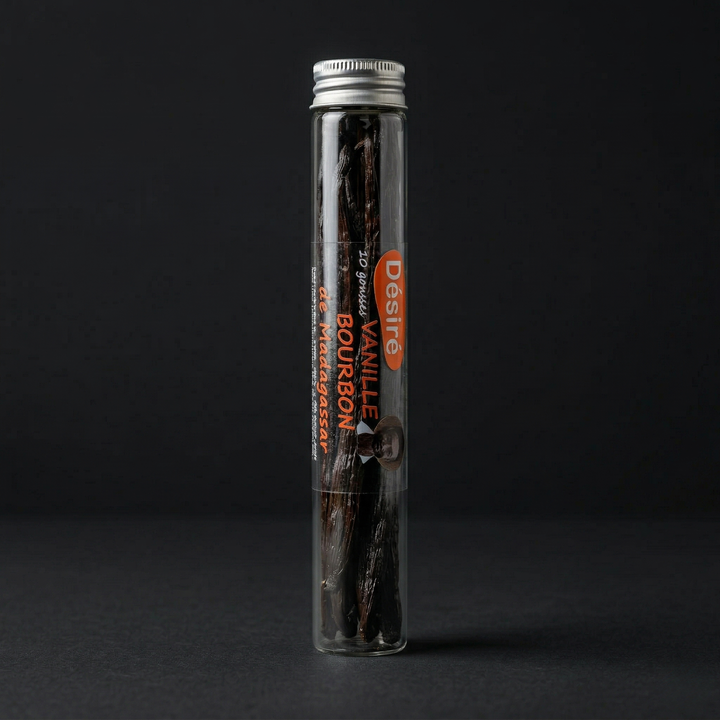
In its resealed pouch or a glass tube, at room temperature, away from light. Never in the fridge. The white bloom that may appear is crystallised vanillin, a sign of richness, never mould.
In the same collection
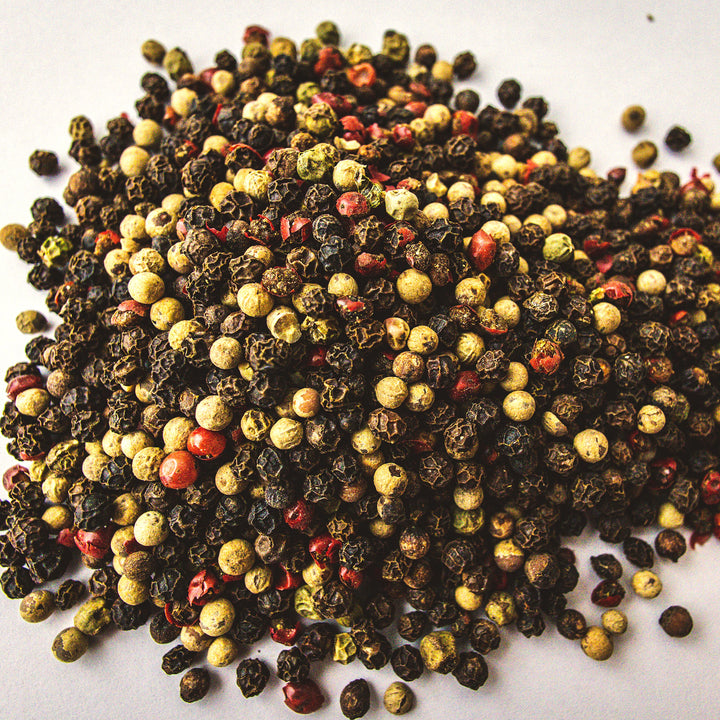
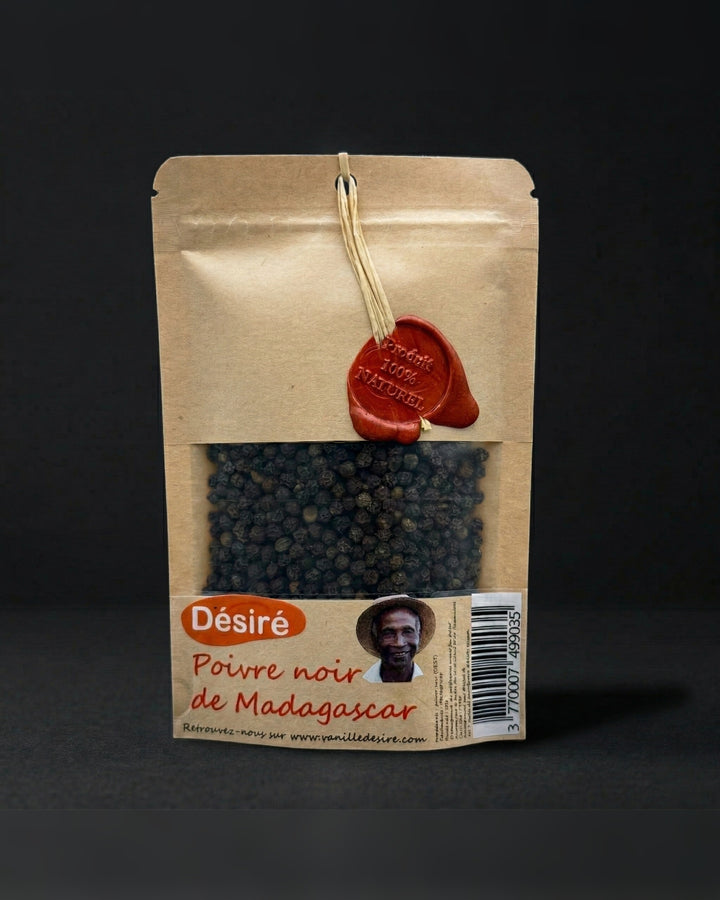
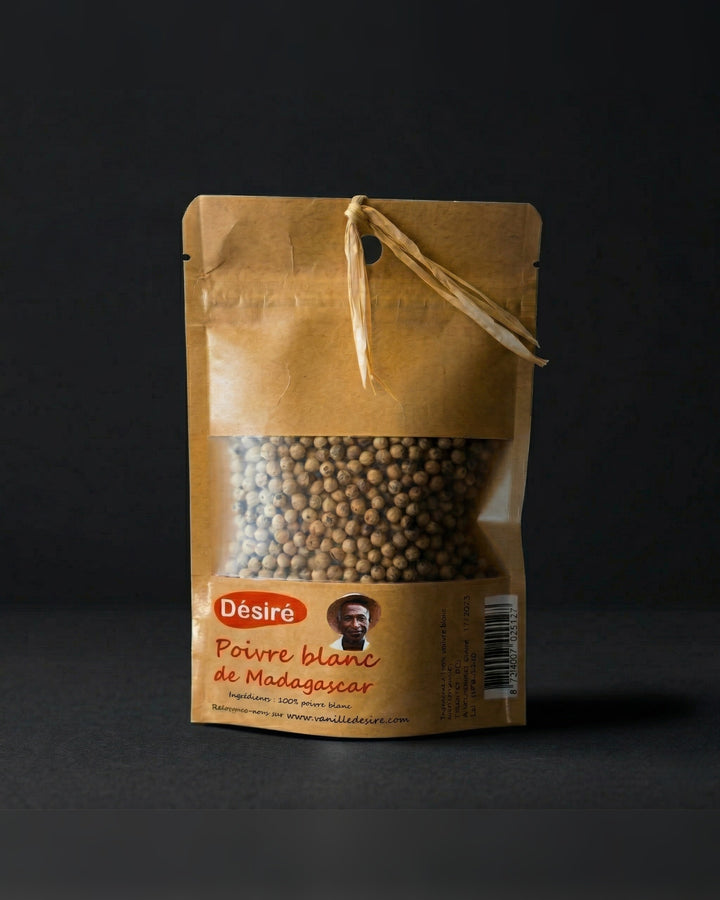
Fourteen months of work, eight steps
From the flower to the parcel
The journey of one vanilla bean at our place, from the flower pollinated by hand to the carton that leaves for France.
-

Pollination The flower
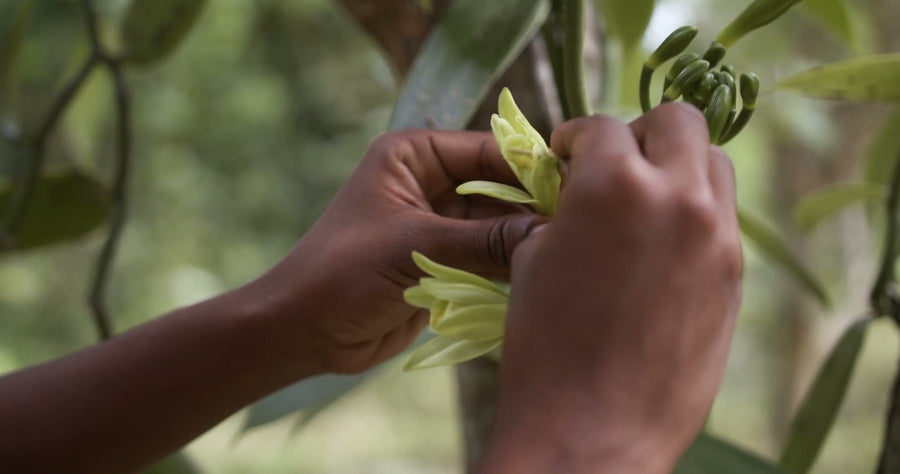
It opens for a single morning. It has to be married by hand, flower after flower, before the sun climbs.
Hand pollination of a vanilla flower. Illustrative image.
-

Nine months on the vine The bean
Nine months hanging on the vine. We cut when the tip turns yellow, not a day sooner.
Green beans on the vine, before the cut. Illustrative image.
-

Sun drying The sun
Scalded in hot water, the beans go out on the mats every morning. They turn brown and wrinkle.
Sun drying on the mats, SAVA region.
-

Slow drying The shade
In the afternoon they come back in to finish drying in the shade. This coming and going lasts for weeks.
Back in the shade for slow drying, SAVA region.
-

In the trunk The ageing
Tied in bundles, laid down in paper. The aroma gathers over months.
Bundles stored in a trunk for ageing.
-

Grading The sorting
Bean by bean, by length and by grain. Each size leaves in its own bundle.
Sorting and grading at the workshop, Sambava.
-

Workshop Into the tube
Counted, lined up, slipped one by one into the glass. Gloves, apron, clean table.
Filling the tubes, beans counted one by one.
-

Export The departure
Cartons weighed, numbered, strapped. They leave Sambava for France.
Numbered cartons, ready for export.


Our family grows, cures, sorts and ships. Between the vine and your kitchen there is nobody else.
Steps 1 and 2: royalty-free illustrative images. Green beans on the vine, photo RAJOELIMBOLOLONA Maryo Sebastieni, CC BY-SA 4.0, via Wikimedia Commons. The other six photos are ours, taken in the SAVA region of Madagascar.
The move
Split and scrape
-
Split lengthwise
Knife tip halfway through, one single pass from end to end.
-
Scrape out the seeds
The back of the blade scrapes both halves. That black is the caviar.
-
Infuse the bean too
The emptied skin holds the flavour: it goes into the cream with the seeds. Never throw it away.
One bean, split and scraped, flavours a litre of cream.
From the bag to the scale
20 beans or 250 g?

Size M
1 kg
≈ 250 beans
Size
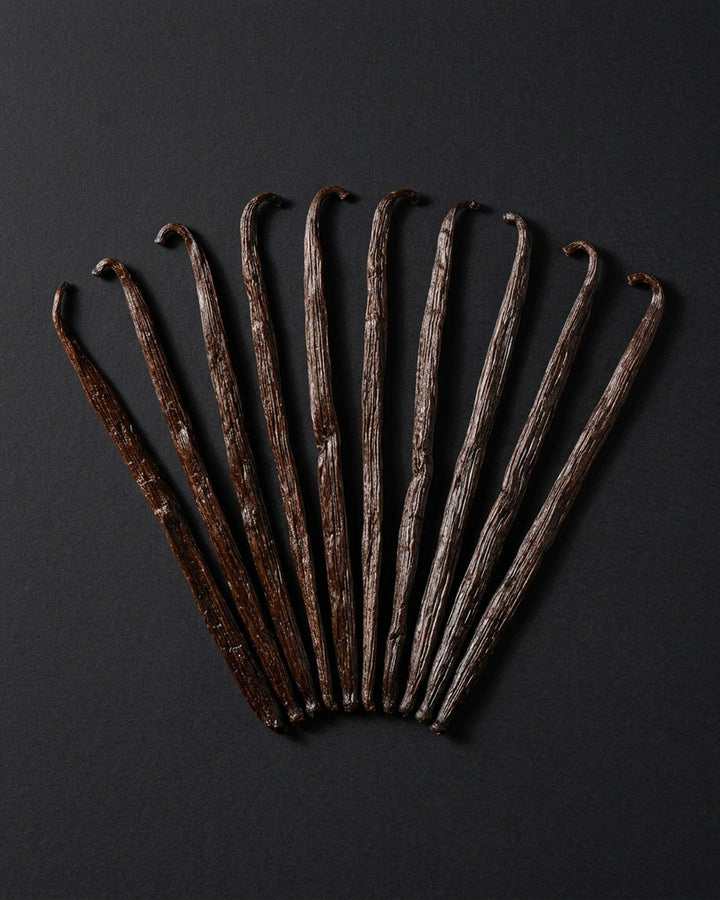
Our four sizes, measured against the ruler. The bag itself is sold by weight.
-
One bean weighs
4g
Average weight of one size M bean, measured on our bags.
-
250 g is
≈63beans
-
Per kilo
≈250beans
And 500 g is ≈ 125 beans.
The bag states its weight, and we write the size.

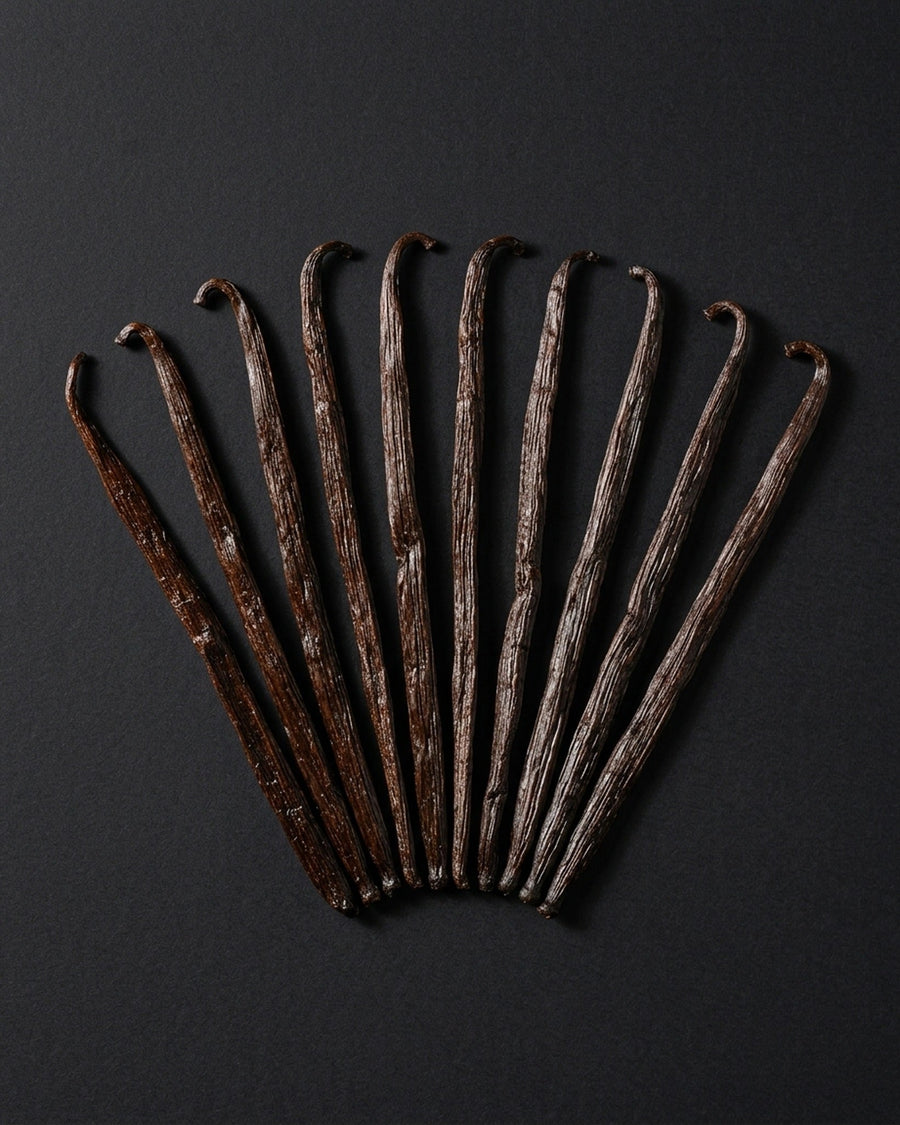
Our beans laid out in a fan, close-up on the skin. Photograph of our own sizes, unretouched.
The frost
Those white crystals on the bean
-
What you see
A veil of fine white crystals along the bean. Dry, glossy, in streaks that follow the ridges.
-
What it is
Crystallised vanillin, risen from the heart of the bean. Never mould: mould is fuzzy and smells musty. Frost smells of vanilla.
-
What to do
Nothing. The bean goes back into its tube. It is a sign of richness: do not throw it away.
Frost is a sign of richness, not a flaw.
Read the wiki entry on vanillin frostGrowers, not resellers
Our commitments
Our family grows
From hand pollination to curing, everything happens on our land, in the SAVA region in northeastern Madagascar. There is no one between our land and your kitchen.
From the grower to your kitchen
The vanilla beans ship from France within 48 hours, tracked, vacuum sealed. Direct grower pricing, no middleman, no broker.

The size is on the label
Every vanilla bean is measured with a gauge and the size is written on the bag. You know exactly what you're paying for.

Newsletter
Get our news and new arrivals
One letter a month: the harvest, the recipes, and the new sizes on the way. Nothing else.
By clicking, you agree to receive our newsletter. Unsubscribe anytime.