Quick answer: White pepper, combava and turmeric from Madagascar pair with fish without overpowering it. White pepper suits delicate flesh and pale sauces, combava lifts raw or barely cooked fish just before serving, and turmeric flavours a sauce or a stock for firmer fish.
Fish, especially when its flesh is delicate or white, calls for spices that do not overpower it. White pepper, combava and turmeric are among those that pair with it best, as long as the moment they are added is chosen carefully. This page presents these three spices on fish, raw or cooked, and points to two of our recipes to go further.
White pepper rather than black pepper, on delicate fish
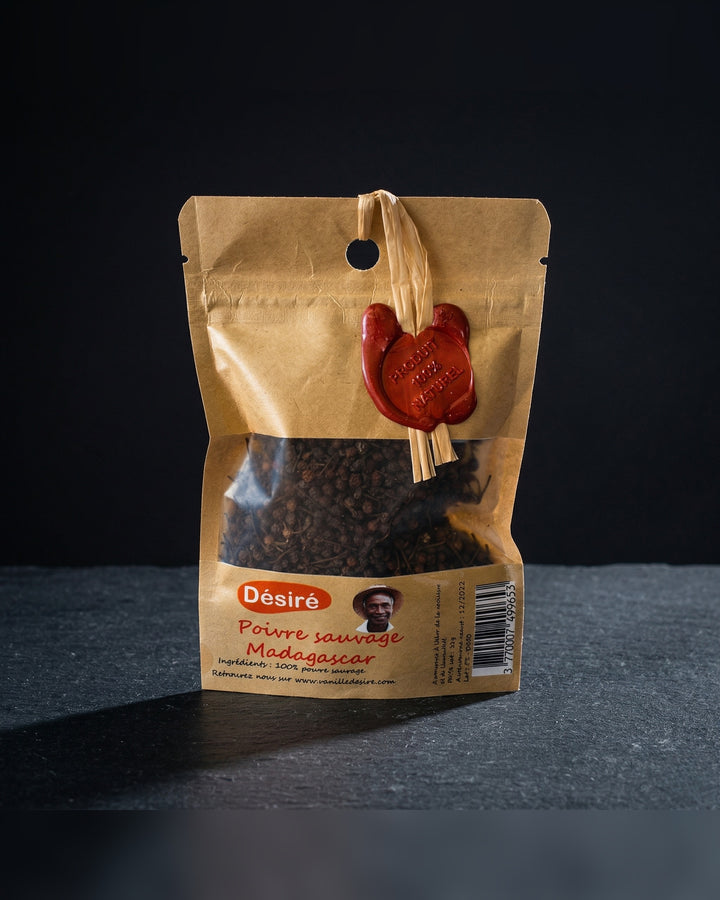
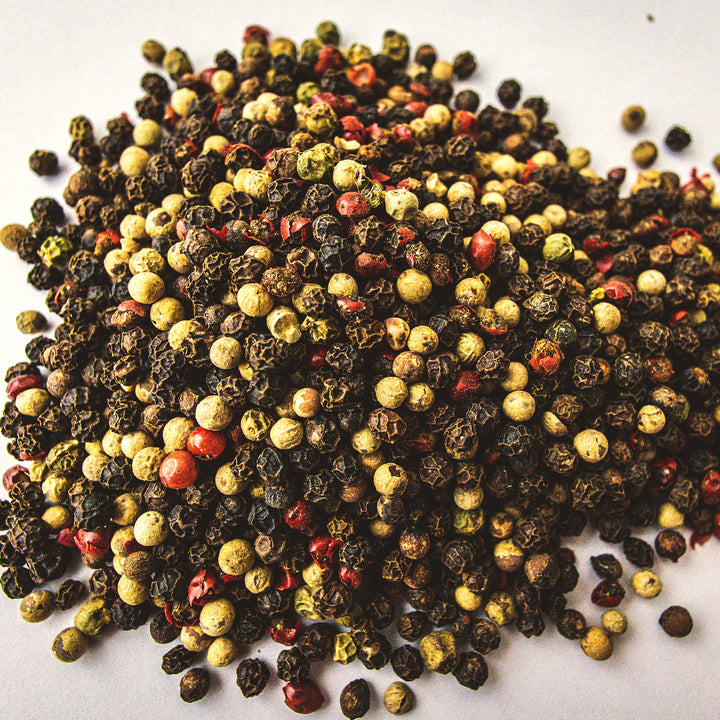
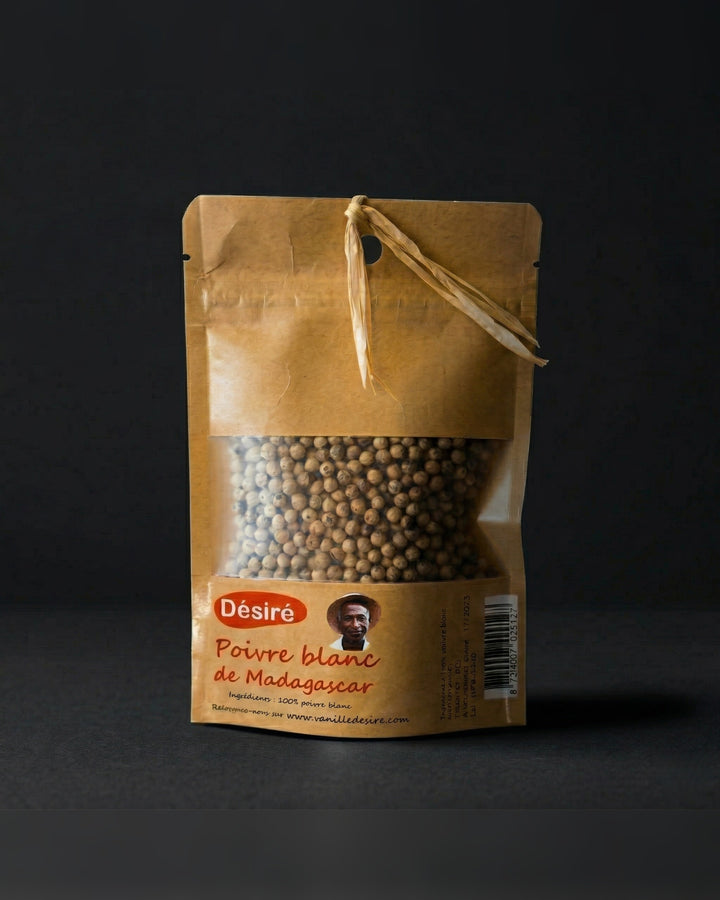
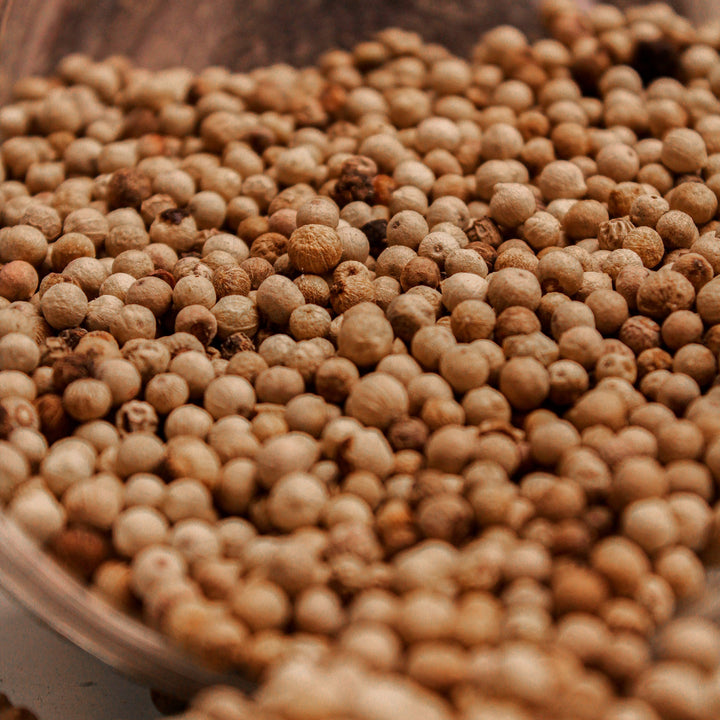
Black pepper and white pepper come from the same plant, harvested at a different stage of ripeness. On white fleshed fish or in a pale sauce, white pepper brings the bite without the black specks or the woodier notes of black pepper; it rather lifts delicate dishes, fish and seafood. Our page on white pepper or black pepper details this difference more broadly.
In a sauce or as a finishing touch
White pepper ground at the last minute works well in a beurre blanc sauce or a cream sauce, as in our recipe for roasted cod with Madagascar white pepper beurre blanc. On simply pan fried fish, a few turns of the mill as it comes out of the pan are enough, without the pepper cooking any further.
Combava, on raw or barely cooked fish
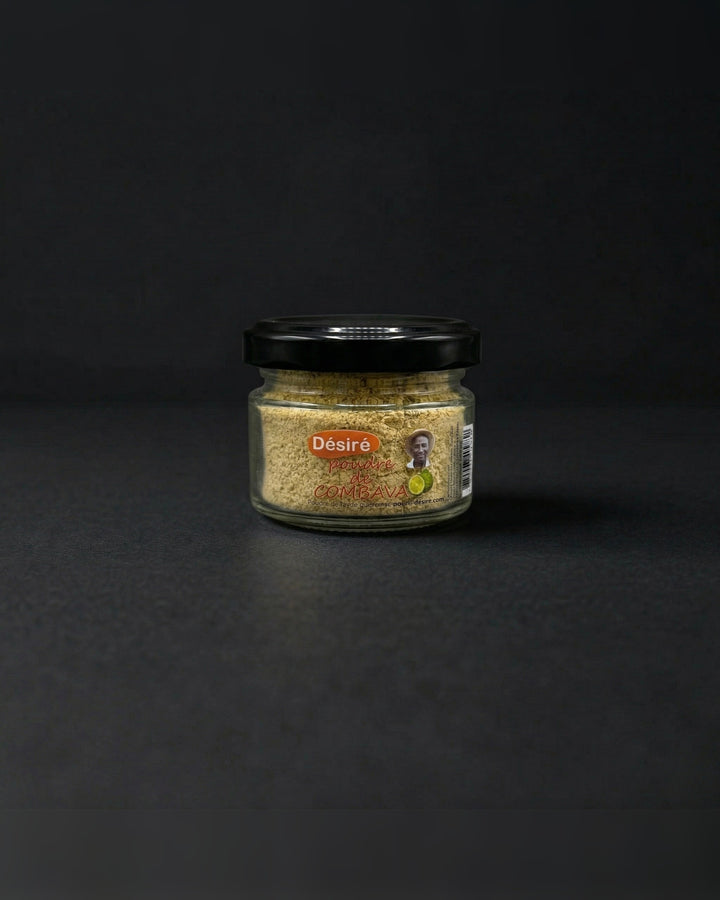
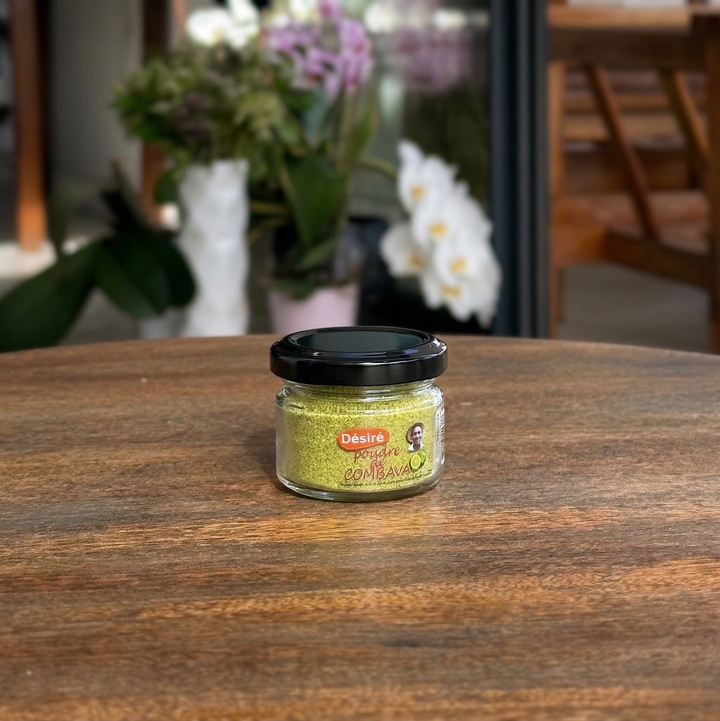
Combava, a small citrus fruit with a bumpy skin, is gathered wild in Vangaindrano, in south east Madagascar. Its dried, ground zest keeps a lemony, floral freshness that lifts raw fish without masking it. On a carpaccio or a tartare, a fine pinch is enough, sprinkled just before serving: this is the principle behind our recipe for sea bass carpaccio with combava and olive oil. On cooked fish, it is rather used right at the end of cooking, to keep its freshness.
Turmeric, for a fish sauce or stock
Turmeric colours and flavours a fish stock or a sauce that goes with firmer fish, such as a cod loin or a pollock fillet. It is heated briefly in oil before adding the liquid, as for a rice dish or a simmered dish: the heat releases its flavour without it overpowering the taste of the fish. It also goes into certain fish curries, where it mixes with other spices.
Delicate fish or firmer fish: adjusting the quantity
Delicate fleshed fish (sea bass, sole, pollock) calls for modest quantities and spices that leave a light mark: white pepper, combava in a small pinch. Firmer fish (salmon, tuna, mackerel) can take more spice and suits turmeric or a whole curry better. In every case, it is best to add gradually and taste, rather than spicing the whole piece at once.
Raw, pan fried or in the oven: the moment changes everything
On raw fish, the spice is sprinkled on just before serving, it never cooks. On pan fried or roasted fish, pepper is rather ground at the end of cooking or into the sauce, to keep its flavour; turmeric, on the other hand, infuses better at the start of preparation, in the oil or the cooking liquid.
Fish in the oven, pan fried fish, fish in a parcel
In the oven, white pepper or turmeric can be slipped into a little oil poured on before cooking, and infuse gently with the fish. In a parcel, combava is sprinkled over the fish before closing the paper: the steam that builds up inside carries its flavour without dispersing it. In the pan, it is best to keep the most delicate spices, white pepper and combava, for the moments right after cooking, once the fish has just been taken off the heat.
Where our spices come from
Our family grows white pepper and turmeric in Vangaindrano, in south east Madagascar. Combava is gathered there in the wild, in the same region.
Frequently asked questions
Which spice to choose for delicate fleshed fish?
Delicate fleshed fish such as sea bass, sole or pollock calls for modest quantities of white pepper or combava in a small pinch, which leave a light mark on the flavour of the fish.
When to add combava to fish?
On raw fish, combava is sprinkled on just before serving, never cooked; on cooked fish, it is rather used right at the end of cooking, to keep its freshness.
Why use white pepper rather than black pepper on fish?
White pepper brings the bite without the black specks or the woody notes of black pepper, which lifts delicate dishes such as fish and seafood.
How to use turmeric with fish?
Turmeric colours and flavours a fish stock or a sauce for firmer fish such as a cod loin, by heating it briefly in oil before adding the liquid.
Our products to go further: Madagascar white pepper · Wild combava powder · Madagascar turmeric
The Vanille Désiré team