Quick answer: On cheese, black pepper suits a plain fresh cheese, wild pepper and pink peppercorns, more subtle, pair better with a matured cheese, and pili-pili chilli lifts a fondue or raclette. The spice is added just before serving, except in a hot preparation, where it goes in a little earlier.
Cheese often pairs with a spice, used as a condiment added at serving time rather than cooked with it. Pepper, pink peppercorns and pili-pili each lend themselves to this in their own way, depending on whether the cheese is fresh, matured or melted. This page presents these pairings and when to add each one.
Black pepper, as a condiment on fresh cheese
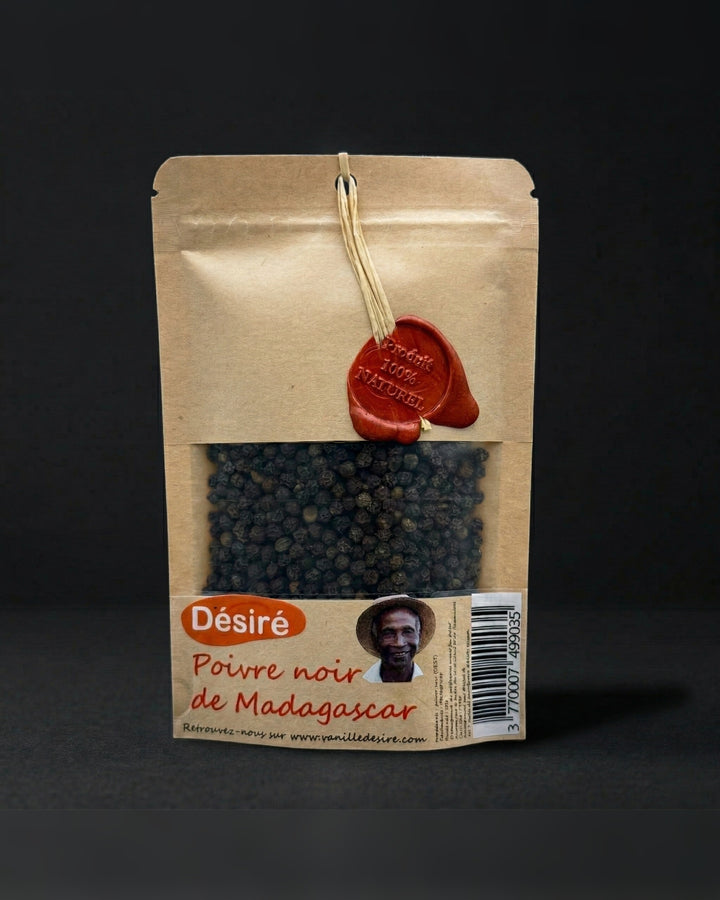
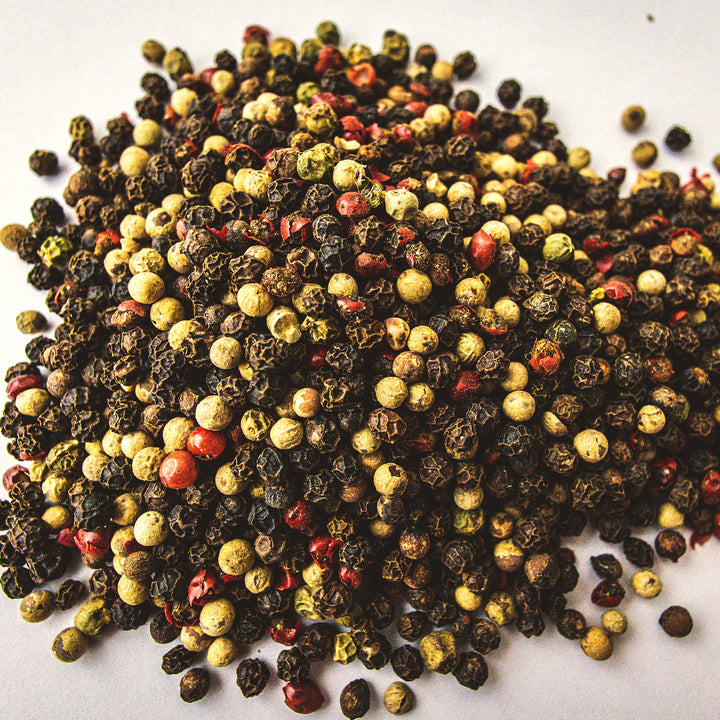
On fresh cheese, pepper is one of the simplest condiments to add, alongside fresh herbs or garlic: a few turns of the mill are enough, straight onto the cheese, with no cooking. Black pepper, more assertive, suits a fairly plain fresh cheese well, which isn't at risk of being overpowered by it.
Wild pepper, on a matured cheese
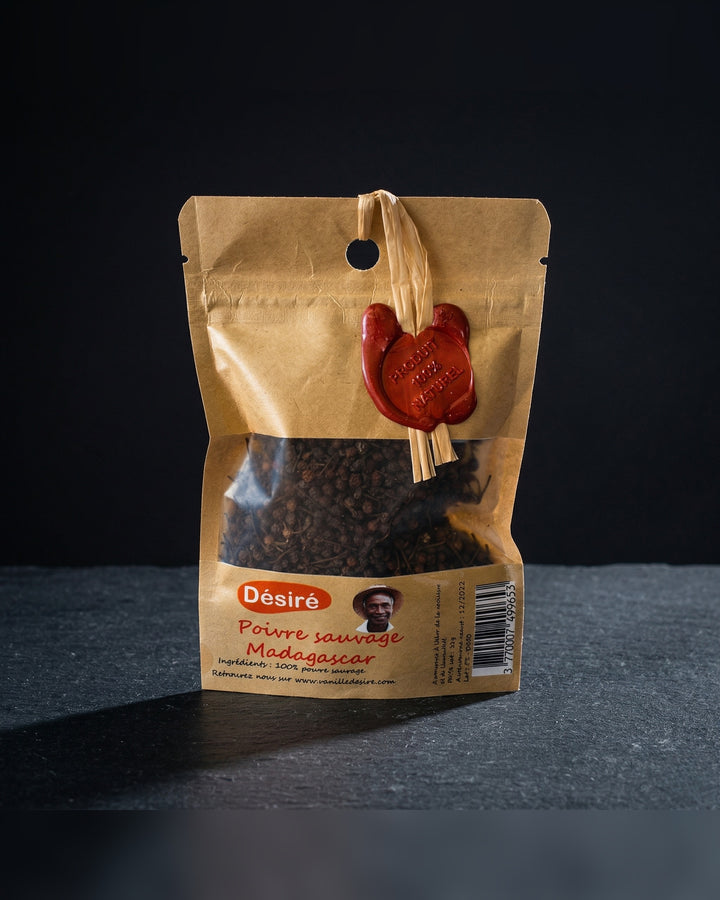
Wild Voatsiperifery pepper is gathered in the wild in Madagascar's forests, never cultivated: its fragrance, more floral and subtler than that of black pepper, is less easily lost against a cheese that is already matured and full of flavour. A few crushed berries, scattered over the surface, are enough to lift the cheese without masking its own taste. To grind it or use it whole, see our page wild Voatsiperifery pepper, grinding it in a mortar or a mill.
Pink peppercorns, on fresh cheese or goat's cheese
Pink peppercorns are not, botanically, a true species of pepper: they come from a different tree, the Peruvian pepper tree, native to South America. Their fragrance, more fruity and milder than that of pepper, pairs well with a fresh cheese or goat's cheese, over which they are lightly crushed on the surface. Our page pink peppercorns, a pepper or not covers this distinction in more depth.
Pili-pili, a touch on a fondue or raclette
Pili-pili chilli is sold whole and dried, to be crumbled or ground yourself: a small touch, crumbled into a fondue or raclette while still hot, lifts the melted cheese without changing its texture. Madagascar chilli paste, on the other hand, mixes more easily into an already liquid or creamy preparation. See our pages on Madagascar pili-pili chilli and Madagascar chilli paste, how to use it.
Before serving or during cooking
On a cold cheese, fresh or matured, the spice is added just before serving, to keep all its fragrance. In a hot preparation, a fondue or raclette, it can go in a little earlier, while the cheese is melting, so it has time to blend into the dish without burning.
Pairing without overpowering the cheese
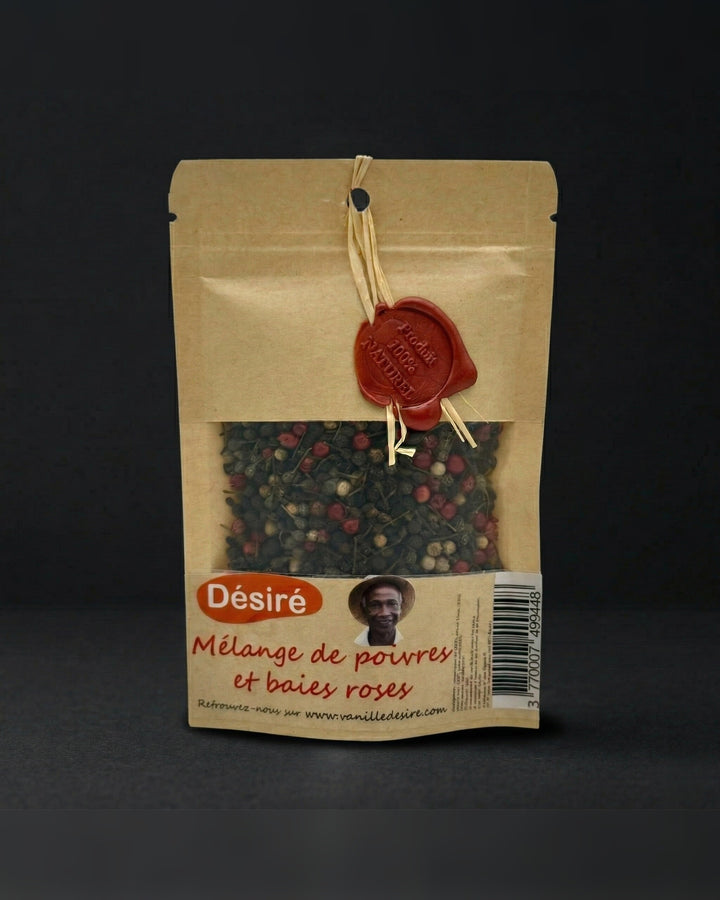
A mild, young cheese doesn't take well to too assertive a spice, which takes over completely; a matured or stronger-tasting cheese leaves more room for a noticeable pepper or chilli. In all cases, it's best to start with a small amount and taste before adding more. Our page on the Madagascar pepper and berry blend also offers a ready-made pairing for varying your experiments.
On a cheese board, as separate touches
On a board bringing together several cheeses, it's better to offer the spices separately, in small dishes, rather than mixing them ahead of time: everyone can then choose the touch that suits the cheese they are tasting, without imposing the same fragrance on the whole board. Wild pepper and pink peppercorns, more subtle, suit a cheese that is already matured and full of flavour; black pepper and pili-pili, more assertive, suit a fresh cheese or a fairly plain hard cheese better.
Where our spices come from
Our family grows black pepper and pink peppercorns in Vangaindrano, in south-eastern Madagascar, as well as pili-pili chilli; wild pepper, meanwhile, is gathered there in the forest, and is not cultivated.
Frequently asked questions
Which pepper should you choose for a matured cheese?
Wild Voatsiperifery pepper, with its fragrance more floral and subtler than that of black pepper, is less easily lost against a cheese that is already matured and full of flavour.
When should spice be added to cheese?
On a cold cheese, fresh or matured, the spice is added just before serving; in a hot preparation such as a fondue or raclette, it can go in a little earlier, while the cheese is melting.
Are pink peppercorns a pepper?
No, botanically they come from the Peruvian pepper tree, native to South America, and not from the true pepper plant.
How should pili-pili be used on a fondue?
A small touch of pili-pili chilli, crumbled into a fondue or raclette while still hot, lifts the melted cheese without changing its texture.
Our products to go further: Madagascar black pepper · Madagascar wild pepper · Madagascar pink peppercorns · Madagascar pili-pili chilli
The Vanille Désiré team