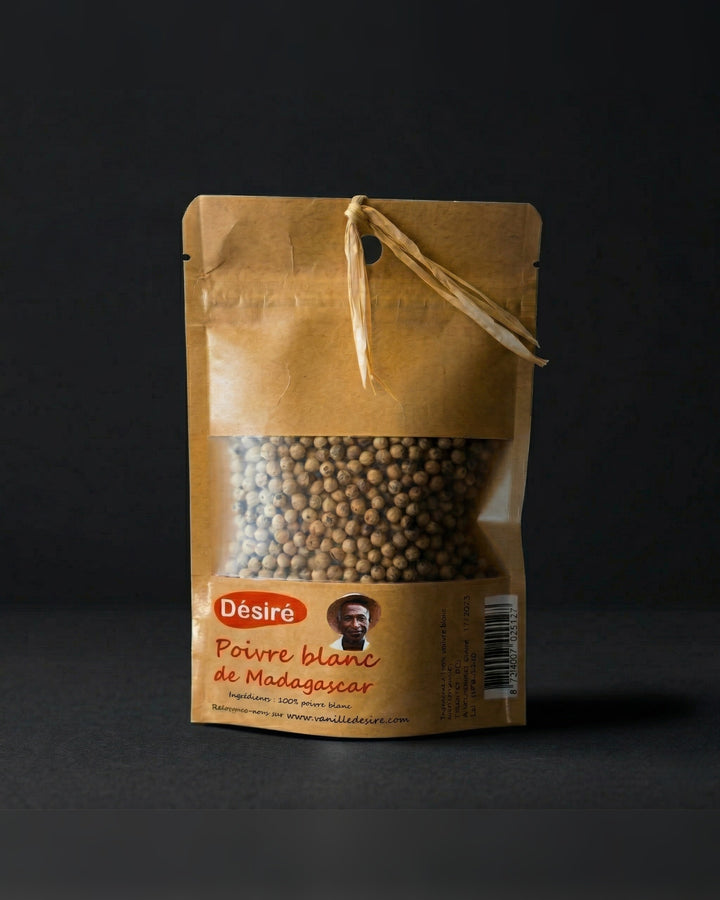
Quick answer: Pepper from Madagascar, Kampot, Penja and Tellicherry come from four distinct regions. Kampot and Penja are protected geographical indications under European Union law; Tellicherry is a grade of Malabar pepper from India, sorted by grain size. Vanille Désiré only sells its own pepper from Madagascar.
Madagascar pepper, Kampot pepper, Penja pepper, Tellicherry pepper: these names all refer to pepper, but they don't tell the same story. Some are protected by a European designation, others denote a grain size rather than a precise origin. This page introduces these four markers, without comparing their taste or ranking them against one another: Vanille Désiré only sells its Madagascar pepper, grown or picked by our family.
What a protected geographical indication guarantees
A protected geographical indication is a European Union label that recognises that a product owes a particular quality or reputation to its geographical origin. It reserves the product's name for goods actually grown within the defined area, and protects that name against imitations and against uses that evoke it without entitlement. It says nothing, however, about the quality of one pepper compared with another pepper that carries no protected geographical indication: many peppers widely used in cooking, including Madagascar's, carry none.
Kampot pepper, a protected designation in Cambodia
Kampot pepper is grown in the provinces of Kampot and Kep, in southern Cambodia. In February 2016, the European Commission granted it protected geographical indication status, under the name "Mrech Kampot / Kampot Pepper": it was the first recognition of this kind granted to a Cambodian product within the European Union. This status reserves the name "Kampot pepper" for grains actually grown in this region, to prevent the name being used on other peppers.
Penja pepper, the first African protected geographical indication
Penja pepper is grown on the volcanic slopes of the Moungo plain, at the foot of Mount Cameroon. In 2013, it became the first pepper, and one of the first African products, to receive a protected geographical indication from the European Union. As with Kampot, this status reserves the name "Penja pepper" for grains grown in this precise region. It comes in black and white versions, depending on when the grain is harvested and how it is then prepared.
Tellicherry, a grade rather than a region
Tellicherry is not a geographical designation in the same sense as the previous two. It is a grade of black pepper, sorted by grain size, among the pepper harvested on the Malabar coast, in the state of Kerala, India. The name comes from Tellicherry, a port on the northern part of this coast. To carry this name, grains must exceed a minimum size, around 4.2 mm in diameter: smaller grains are sold as Malabar pepper, without this specific name. Within the Tellicherry grade itself, sub-categories exist according to even larger grain size, up to grains exceeding 4.75 mm, sorted separately by Indian exporters.
Madagascar pepper, our family's own
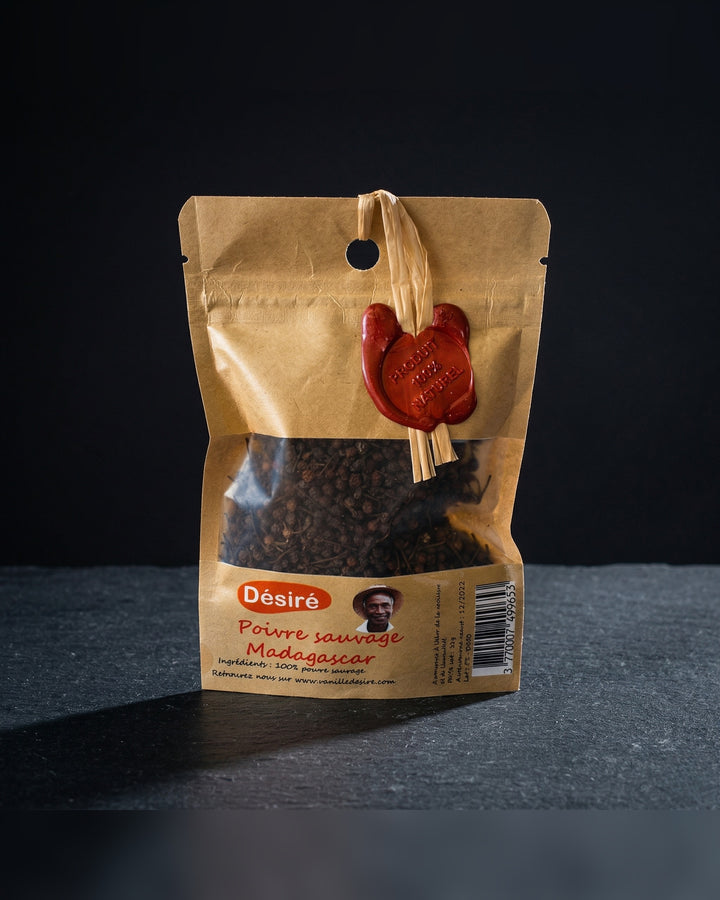
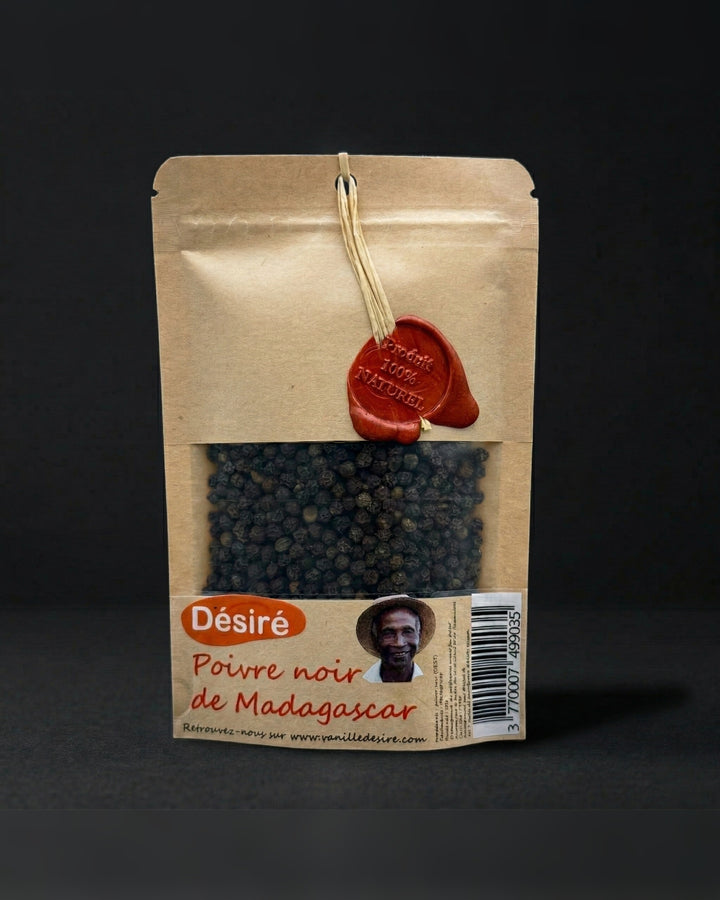
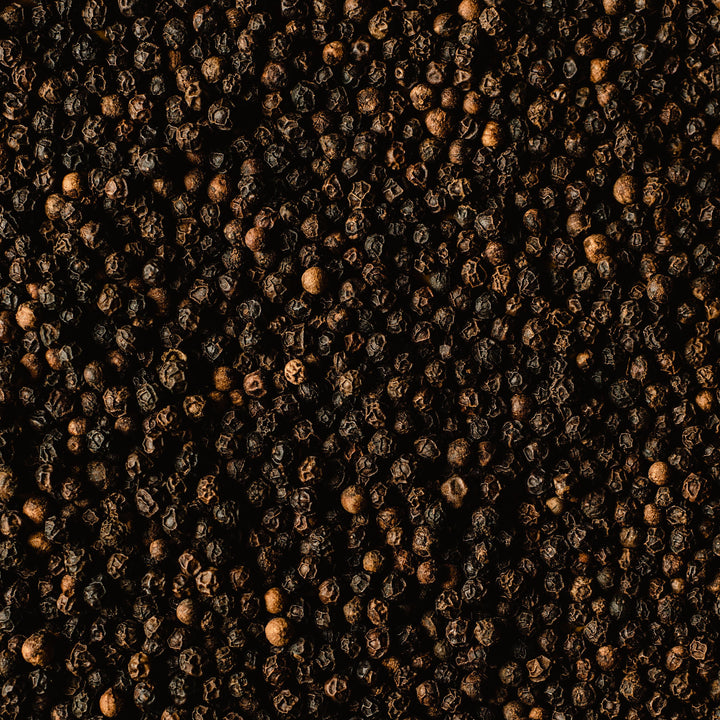
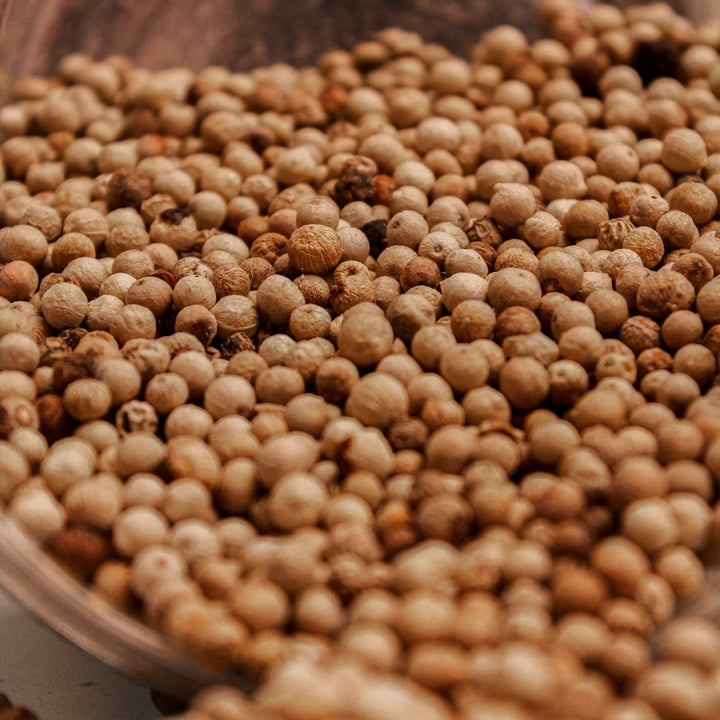
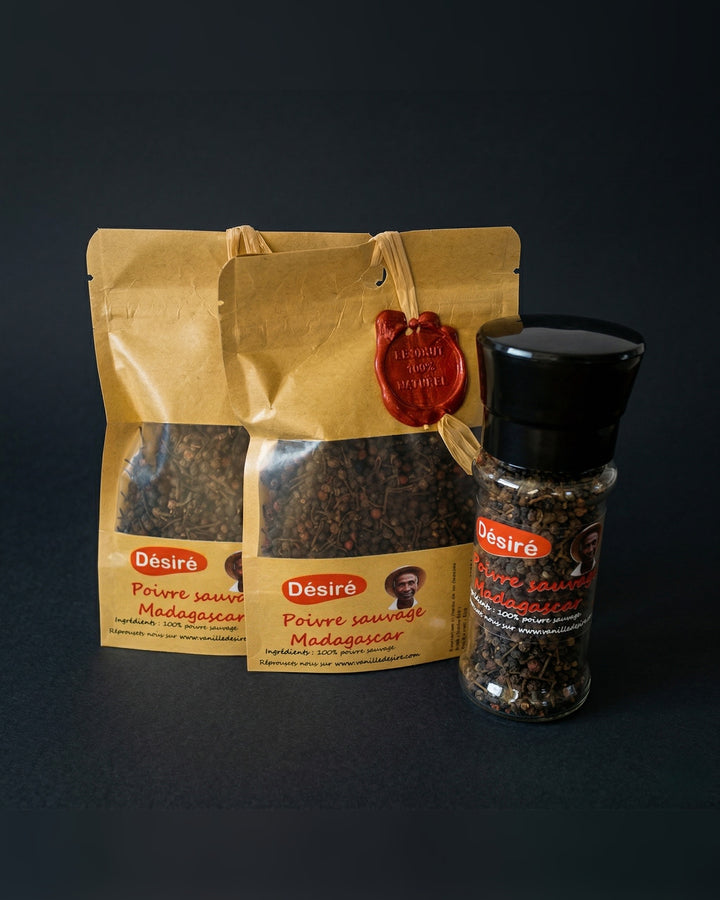
Our family grows black pepper, white pepper and green pepper in Vangaindrano, in south-eastern Madagascar; wild Voatsiperifery pepper, meanwhile, is picked in the forest, not cultivated. Madagascar does not carry a European protected geographical indication for its pepper, unlike Kampot and Penja: it is an origin, not a designation in the legal sense of the term.
Why these four markers cannot be compared
A protected geographical indication states where a product was grown and under which rules; it does not rank peppers against one another by quality. Tellicherry, for its part, states grain size, not a precise origin within the Malabar coast. These are therefore markers of a different nature: a growing area, a legal status, or a grain size. Vanille Désiré sells neither Kampot, nor Penja, nor Tellicherry: only its Madagascar pepper, in whole grains and refillable mills.
Our Madagascar peppers
For each pepper, our guides detail its grain and its use in cooking: Madagascar black pepper, wild Voatsiperifery pepper, Madagascar white pepper and our overview page peppers and berries of Madagascar.
Frequently asked questions
Are Kampot pepper and Penja pepper protected by a designation?
Yes. Kampot pepper, in Cambodia, and Penja pepper, in Cameroon, are both protected geographical indications under European Union law, since 2016 and 2013 respectively.
Is Tellicherry a region that produces pepper?
No, it is a grade: a pepper from the Malabar coast, in India, sorted by grain size, not a geographical designation in the legal sense.
Does Madagascar have a protected designation for its pepper?
No, unlike Kampot and Penja: Madagascar pepper is a geographical origin, without European protected geographical indication status.
Does Vanille Désiré sell Kampot or Tellicherry pepper?
No. Vanille Désiré only sells its own Madagascar pepper: black, white, green and wild, grown or picked by our family.
The Vanille Désiré team