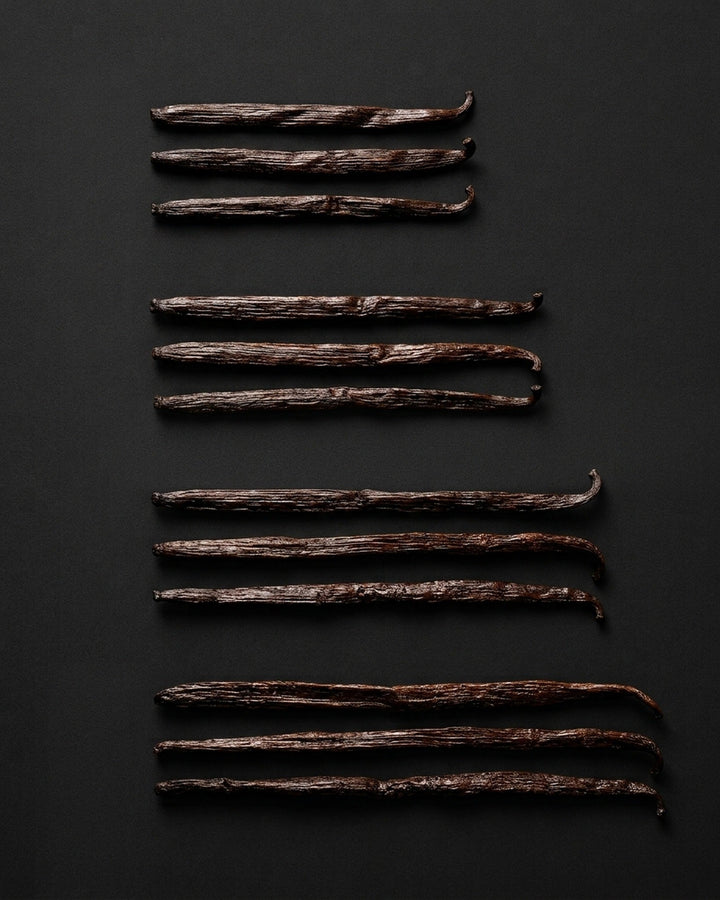
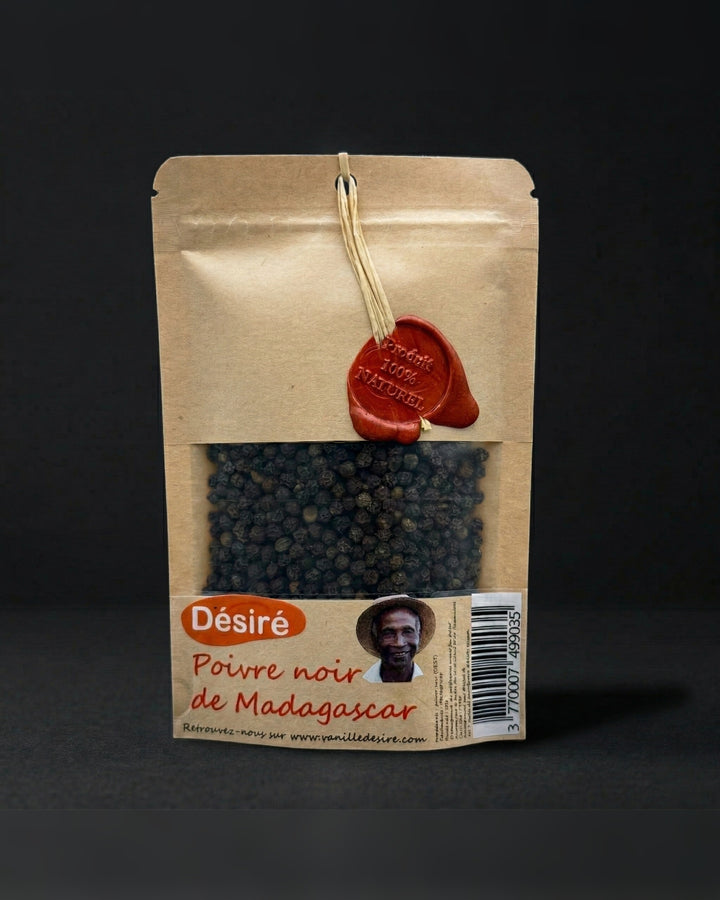
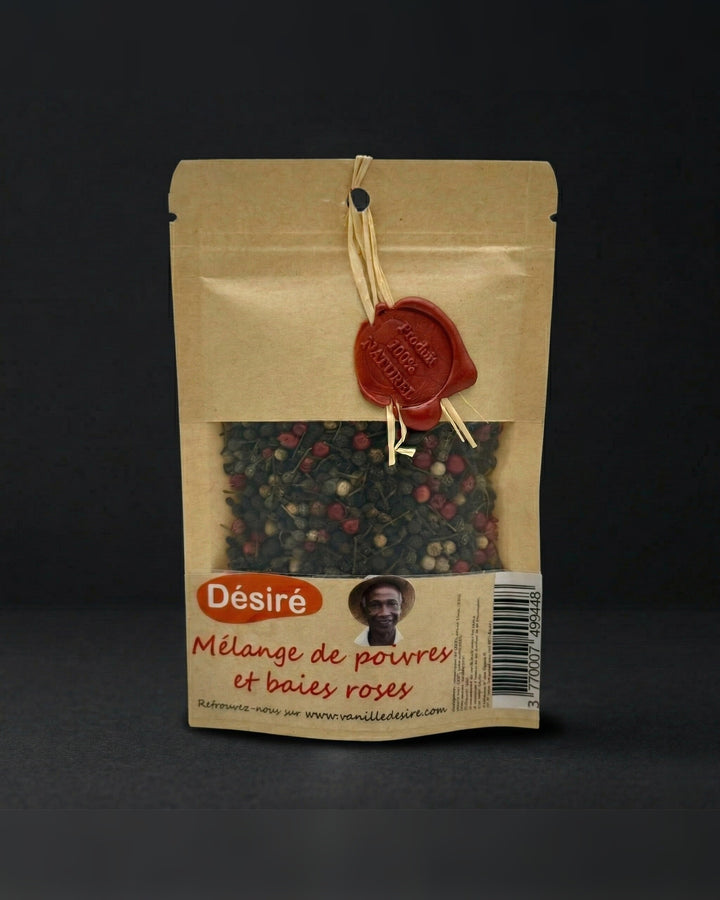
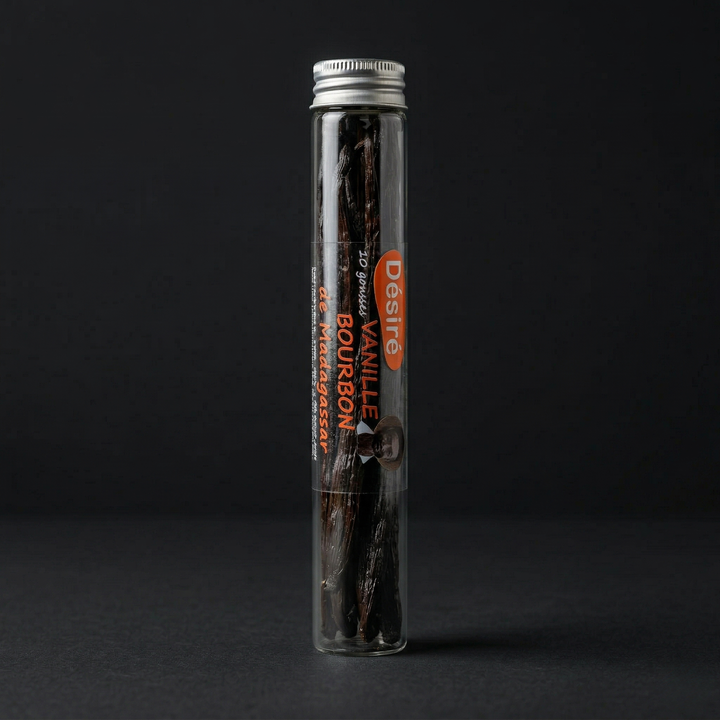
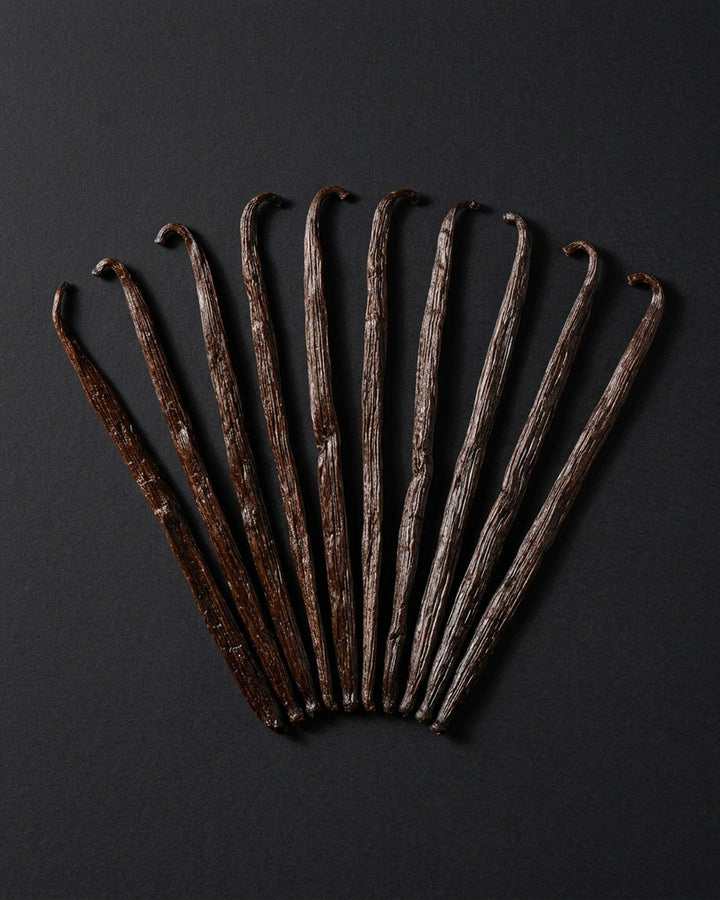
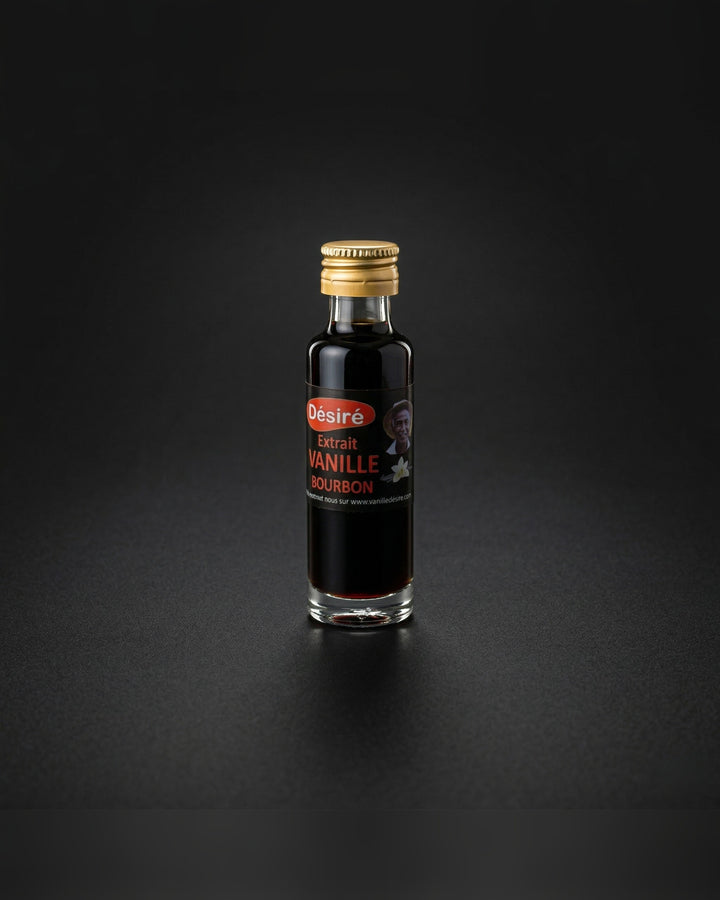
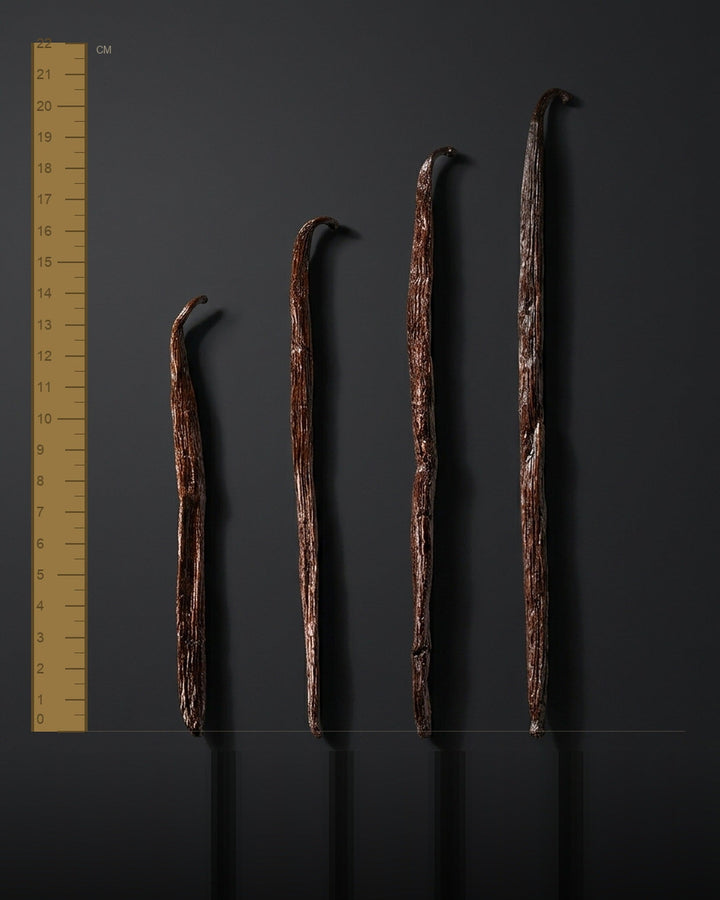
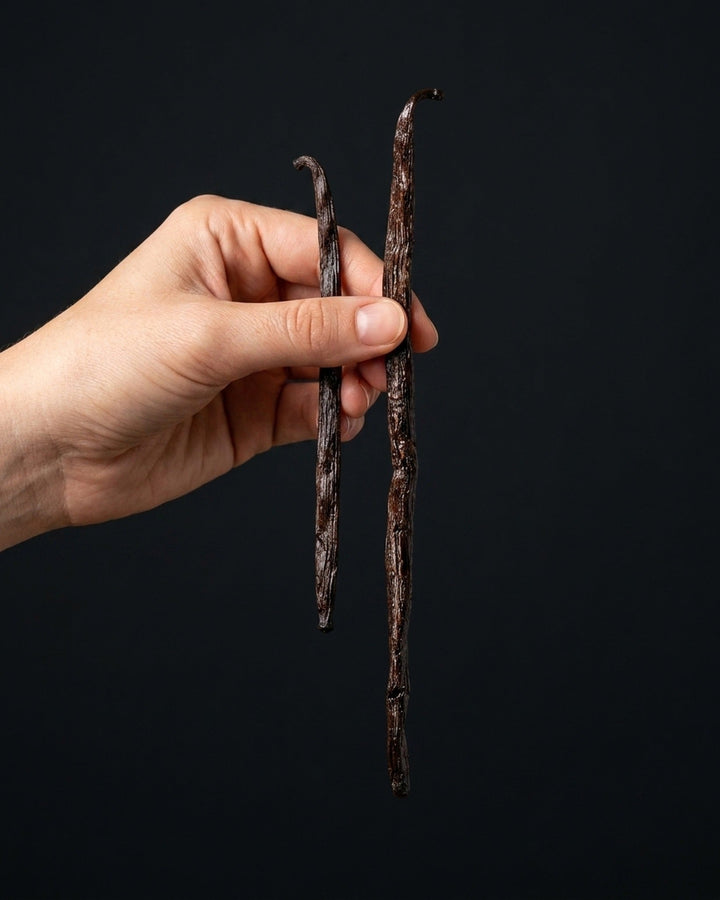
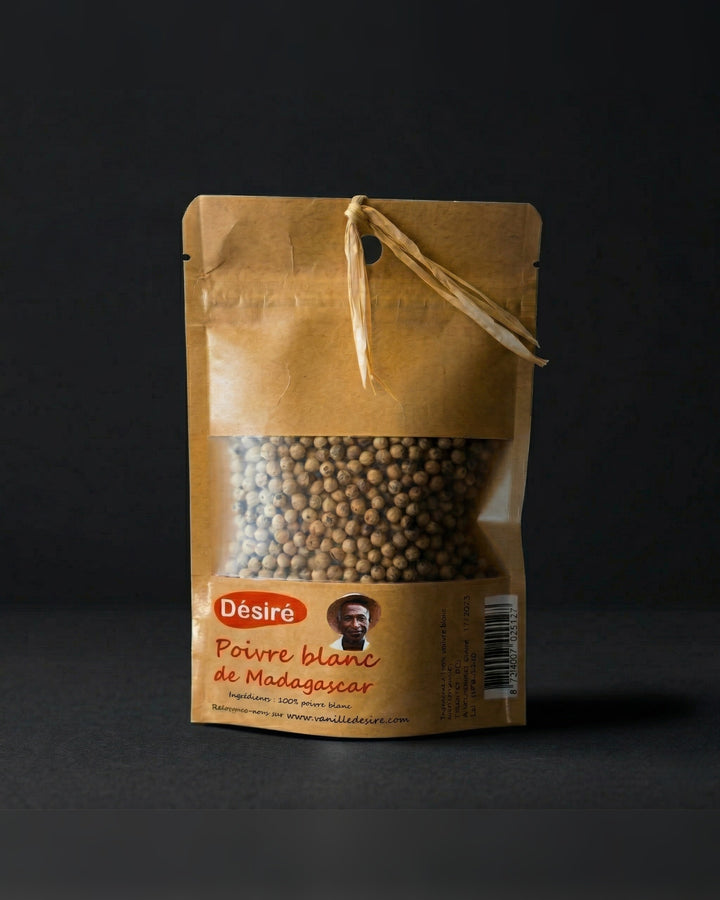
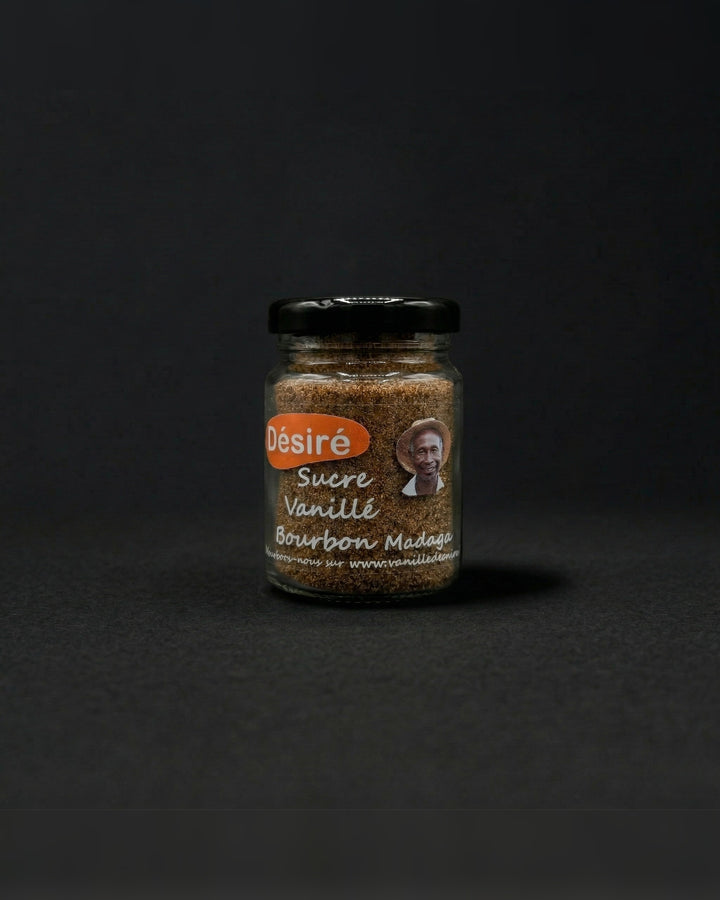
Our family grows vanilla in the SAVA region of north-eastern Madagascar, and grows and prepares its spices and pepper further south, around Vangaindrano, on the south-east coast. That is where our range of twenty-three references comes from: wild voatsiperifery pepper, black and white pepper, pink peppercorns, combava, turmeric, cloves, ginger, cinnamon, pili-pili chilli, curry and house blends, and flavoured salts. Everything sells direct, from our land to your kitchen, with no middleman in between. This guide sets out what makes each spice distinct, how to choose between them, and how to keep them at their best once they reach your kitchen in the UK or Ireland.
What makes Madagascar spices special
Madagascar brings together tropical growing conditions rarely found on a single island: volcanic soil, heavy rainfall on the east coast, and a proximity to primary forest that lets a handful of species grow wild rather than under cultivation. Our family's spices come from two terroirs a few hundred kilometres apart. Vanilla is grown and cured in the SAVA region, in the north-east, while pepper, pink peppercorns, combava and the rest of our Madagascar spices are grown and harvested around Vangaindrano, further south on the same coast. Selling direct removes the layers of trading houses that usually sit between a Malagasy grower and a European kitchen, so every batch can be traced back to a place and a season rather than a generic import lot.
Black pepper, white pepper and wild pepper: one genus, two fates
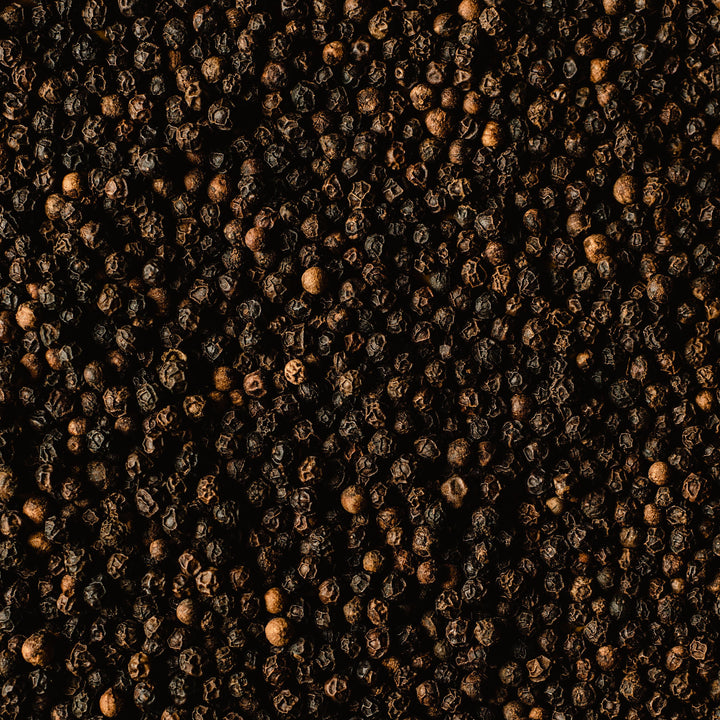
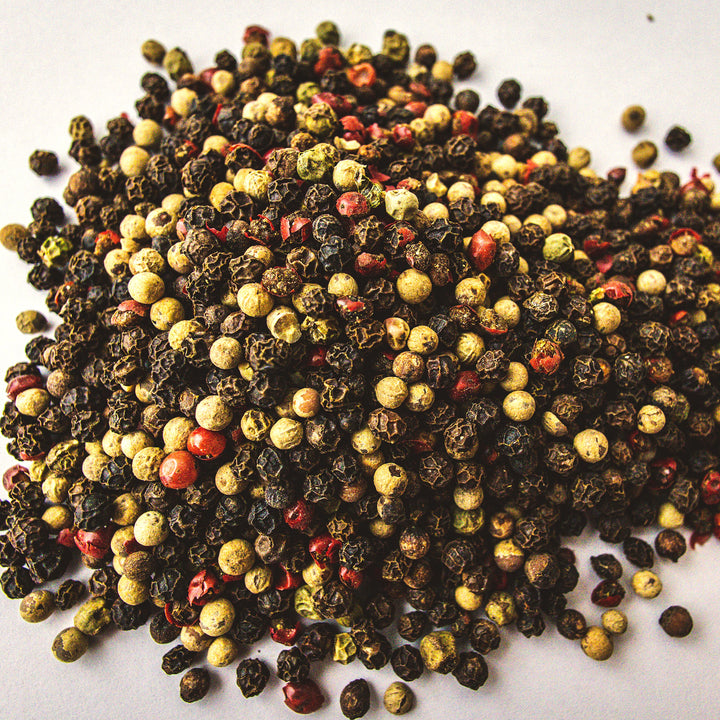
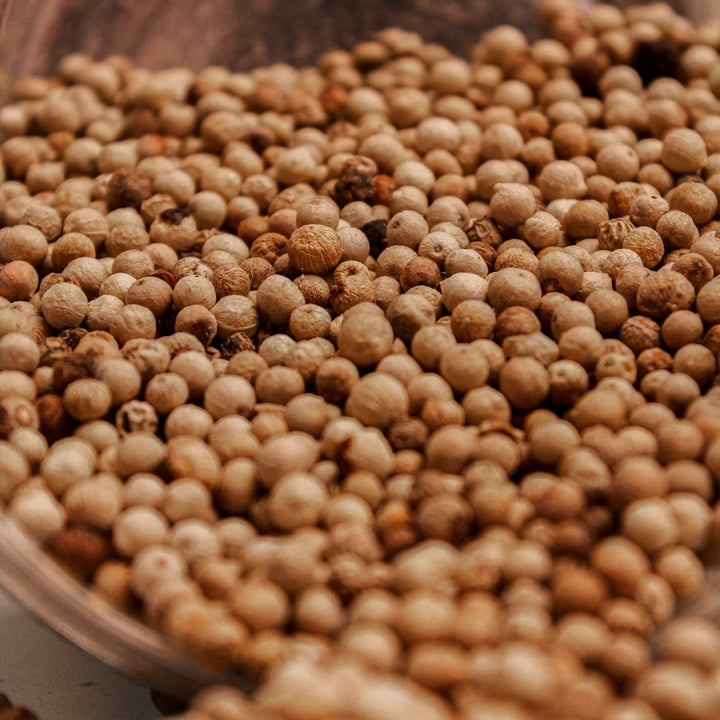
Black pepper and white pepper both come from Piper nigrum, a cultivated vine, and the difference between them is a matter of processing rather than variety. Black pepper is picked while the berry is still green, then dried in the sun until it turns dark and wrinkled; white pepper is left to ripen fully before the outer skin is removed, which leaves a milder grain suited to pale sauces where dark flecks would show. Wild pepper, known locally as voatsiperifery, is a different species again: Piper borbonense, a vine that is never planted but grows on its own in the humid forest canopy. Our peppers and berries collection brings all of these grains together alongside the pink peppercorn, which, as explained below, is not a pepper at all.
Voatsiperifery versus black pepper: how the two really compare
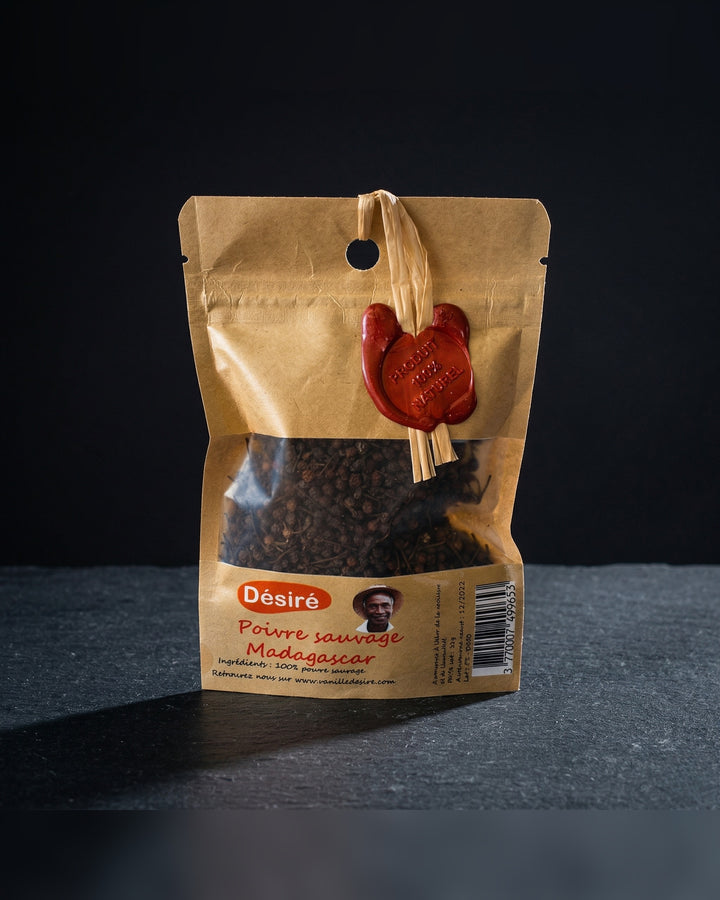
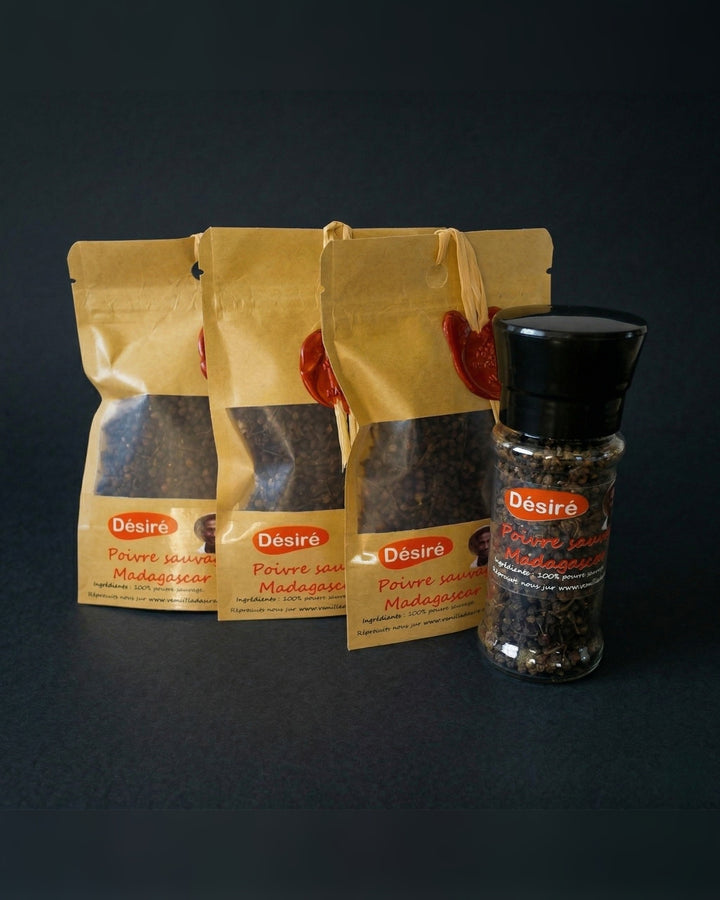
The clearest way to tell the two apart is the tail: voatsiperifery keeps a thin stalk attached to the berry, a trace of the flower it grew from, which ordinary black pepper never has. The grain is also smaller, and its piperine content, the compound responsible for pepper's heat, sits around four to five per cent, against five to eight per cent for a standard black pepper. In practice that means less bite and considerably more aroma: citrus, wood and a floral edge that unfolds over a long finish rather than hitting the palate all at once. Because the vine is never cultivated and each berry is picked and dried by hand from the wild forest, volumes stay naturally limited, which is reflected in the price. Our wild pepper collection and our detailed guide to voatsiperifery go further into the harvest and the terroir behind this pepper. It rewards restraint in the kitchen: a couple of turns of the voatsiperifery grinder over a finished dish, added at the very last moment, carries further than a heavier hand with ordinary pepper.
Pink peppercorns: not a pepper at all
Pink peppercorns look at home on a table set with black and white pepper, but botanically they have nothing to do with either. They are the dried berry of Schinus terebinthifolius, a tree related to the mango and the cashew rather than to the pepper vine, so the word "peppercorn" is closer to a culinary convention than a strict description. That distinction matters in the kitchen: the thin, papery skin bursts rather than crushes under a grinder, releasing a soft, resinous sweetness with only a faint peppery edge, closer to juniper than to real heat. That makes our Madagascar pink peppercorns a finishing spice rather than a cooking one, suited to fish, poultry or dark chocolate, where a stronger pepper would overpower rather than lift the dish.
Cooking with combava
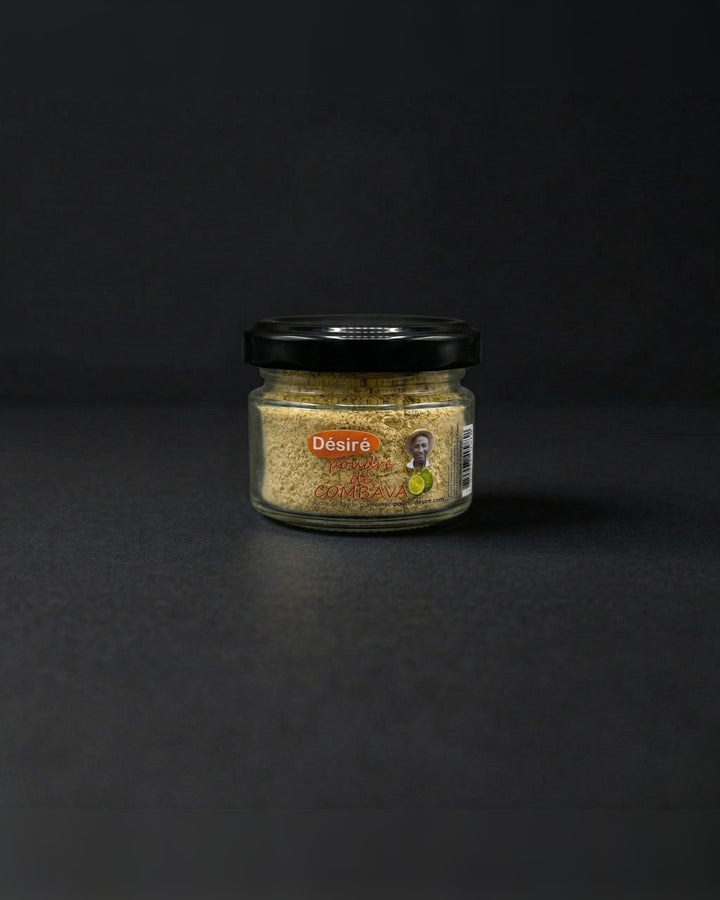
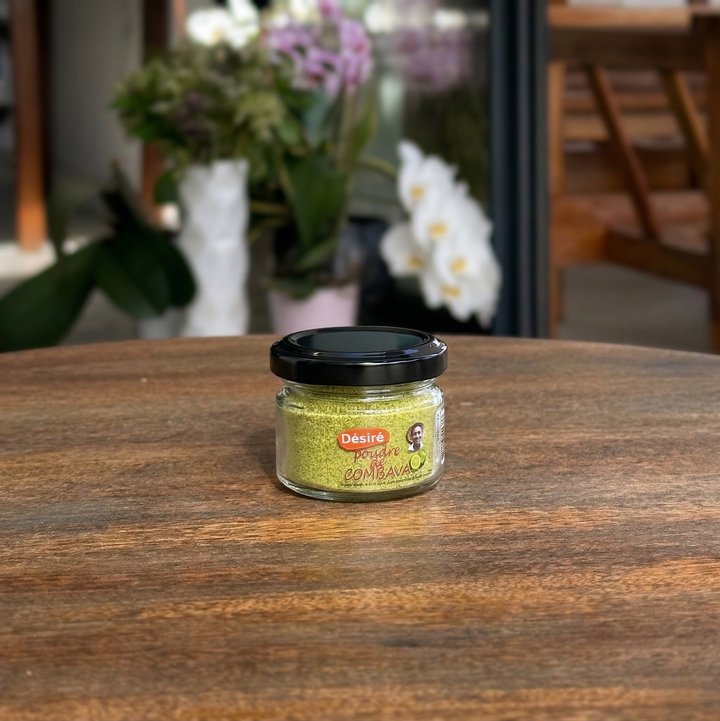
Combava, also known as makrut or kaffir lime, is a small, knobbly green citrus whose value lies almost entirely in its zest rather than its juice, which is scant and bitter. Native to South East Asia, it has grown along Madagascar's east coast for generations, including around Vangaindrano, and our family harvests it there before drying the zest at a low temperature to protect its aromatic oils, which break down quickly under high heat. The result is a powder with a profile closer to lemongrass and orange blossom than to any citrus fruit sold fresh in a British greengrocer, and it is potent enough that a quarter of a teaspoon flavours a dish for four. The one rule worth remembering is timing: combava belongs at the end of cooking, off the heat or added moments before serving, since its aromatic compounds evaporate quickly once they meet a hot pan. It suits fish, rice, poultry and coconut-based sauces, and pairs unexpectedly well with vanilla; our full guide to Madagascar makrut lime covers its origin and further recipes in detail.
Choosing the right spice for your kitchen
A useful way to choose is by pairing the spice with the meal it is meant to lift, rather than by name recognition alone. The table below sets out a quick profile for the spices covered in this guide.
| Spice | Aromatic profile | Best use |
|---|---|---|
| Black pepper | Warm, sharp, woody | Red meat, hearty sauces |
| White pepper | Milder, less sharp | Fish, pale sauces |
| Voatsiperifery (wild pepper) | Citrus, floral, woody, long finish | Finishing fish, seafood, chocolate |
| Pink peppercorns | Soft, resinous, faintly sweet | Fish, poultry, desserts |
| Combava | Lemongrass, orange blossom, floral | Rice, fish, coconut sauces |
| Cinnamon and cloves | Warm, sweet, woody | Baking, hot drinks, mulled wine |
Storing your spices and pepper
All of these keep best the same way: in an airtight container, away from heat, light and humidity, and ideally left whole until the moment of use rather than pre-ground. Whole pepper and pink peppercorns hold their aroma for eighteen to twenty-four months stored this way, while combava powder, being more volatile, is best used within eighteen months and kept in a jar that is not opened more often than necessary. A refillable grinder such as our black pepper grinder is worth keeping on the worktop for everyday use, filled in small batches from a sealed pouch kept in a cupboard, since grinding releases the essential oils that carry the aroma and they fade within weeks once exposed to air.
Buying direct from the grower, and delivery to the UK
Buying direct means the price reflects the harvest rather than a chain of intermediary margins, and it also means a batch can be tied back to a season and a place rather than a blended import lot. Every order ships tracked from our stock in France, generally within forty-eight hours. Deliveries within the EU, Ireland included, already have customs duties built into the checkout price, so nothing further is due on arrival. The United Kingdom sits outside the EU customs union, so import duties and any applicable taxes are collected on delivery rather than at checkout, which is worth planning for on a larger order.
Frequently asked questions
What is the difference between voatsiperifery and ordinary black pepper?
Both belong to the Piper genus, but black pepper is Piper nigrum, cultivated on a vine, while voatsiperifery is Piper borbonense, a wild vine picked by hand in the forest canopy. Voatsiperifery keeps a thin tail on the berry, carries less piperine, so less heat, and offers a citrus, floral and woody profile with a long finish, against the sharper, more direct bite of cultivated black pepper.
Are pink peppercorns really a type of pepper?
No. They are the dried berry of Schinus terebinthifolius, a tree related to the mango and the cashew, not a member of the Piper genus at all. They are used in the kitchen like a mild, fragrant pepper, with a soft, resinous sweetness rather than real heat.
When should combava be added to a dish?
At the end of cooking, off the heat or moments before serving. Combava's aromatic compounds are volatile and break down quickly under high heat, so adding it early wastes most of its fragrance.
How should I store Madagascar pepper and spices?
In an airtight container, away from heat, light and humidity, kept whole rather than pre-ground wherever possible. Whole pepper and pink peppercorns keep their aroma for eighteen to twenty-four months this way, while more volatile spices such as combava are best used within about eighteen months.
Do I have to pay customs duties on an order delivered to the UK?
Yes. Deliveries within the EU, Ireland included, already have customs duties built into the checkout price. The United Kingdom sits outside the EU customs union, so import duties and any applicable taxes are collected on delivery rather than at checkout.