Quick answer: Bourbon vanilla is the trade name for cured Vanilla planifolia beans, the variety that makes up roughly 80% of world production, most of it grown in Madagascar's SAVA region. A good bean is supple enough to wrap around a finger, has an even dark brown colour, and releases a rich aroma of cocoa and prune the moment the tube is opened. Grades run from Gourmet Grade A, whole beans for pastry work, down to Cuts, an extraction grade; size, measured in centimetres from 10 to 20 cm, decides how many seeds a bean holds and how it is best used. Buying direct from the grower, rather than through several middlemen, is the surest way to get a fresh, properly cured bean at a fair price. Our family grows and cures Bourbon vanilla in Sambava, in the SAVA region of north-eastern Madagascar, and ships it from France within 48 hours, with customs duties already included on deliveries inside the EU.
What is Bourbon vanilla?
"Bourbon vanilla" is not a botanical species in its own right. It is the name given to Vanilla planifolia beans grown and cured using the traditional method of the Indian Ocean islands, named after Île Bourbon, the former name of Réunion, where the vine was first cultivated outside Mexico in the nineteenth century. From Réunion the crop spread to Madagascar, which today accounts for around 80% of world production, concentrated in the SAVA region: Sambava, Antalaha, Andapa and Vohémar. A Bourbon bean spends nine months ripening on the vine after hand pollination, then a further six to nine months in post-harvest curing, scalding, sweating, sun-drying and conditioning, before it is ready to sell. For the full history and the difference with the closely related Planifolia terminology, see our guide to Bourbon and Planifolia vanilla.
Bourbon vanilla, Tahitian vanilla and synthetic vanillin
Three very different products are sold under the word "vanilla". Bourbon vanilla (Vanilla planifolia) has a round, warm profile: cocoa, prune, a little butter. It is the workhorse of pastry and everyday baking. Tahitian vanilla (Vanilla tahitensis) is more floral and aniseed, prized in fine fruit desserts but far less widely grown. Then there is synthetic vanillin, made from wood lignin or petrochemicals: more than 95% of the "vanilla" flavour consumed worldwide comes from this single molecule, not from a cured bean. A natural bean carries over 200 identified aromatic compounds; synthetic vanillin offers one, which is why vanilla remains among the most imitated spices in the world.
How to spot a good vanilla bean
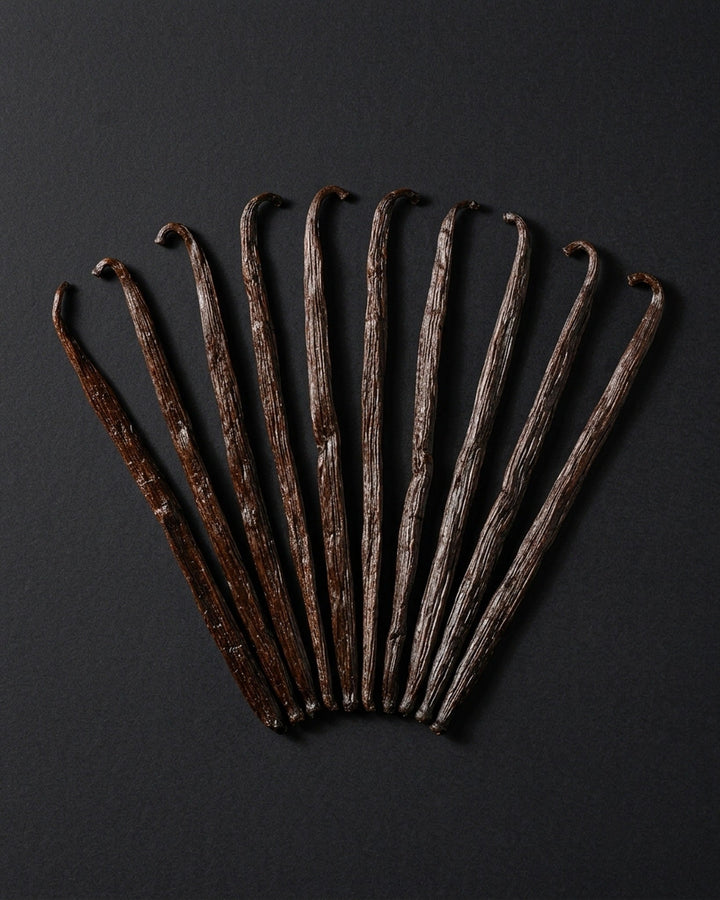
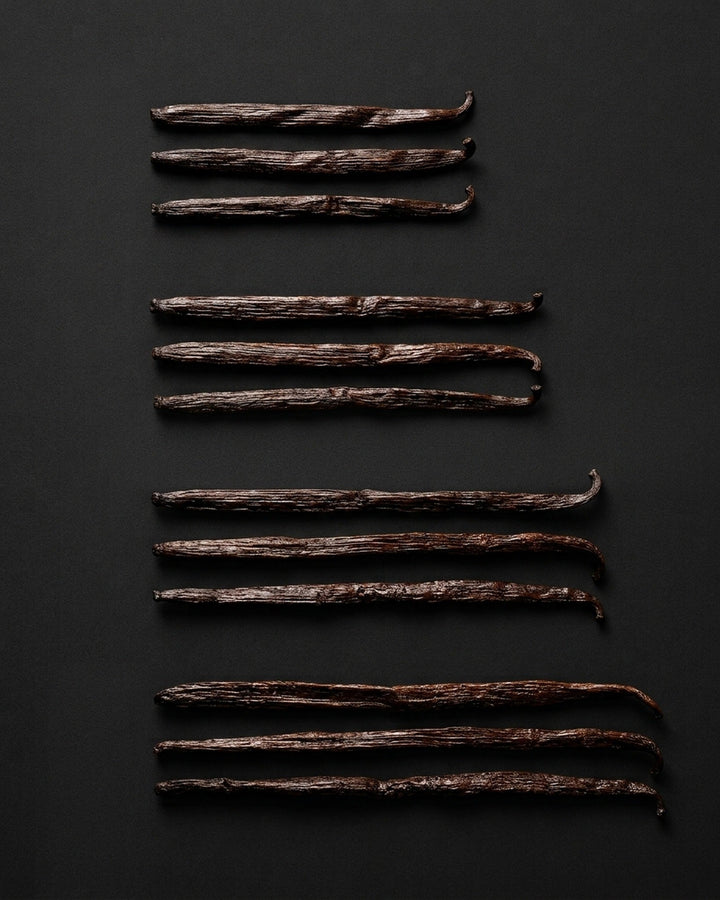
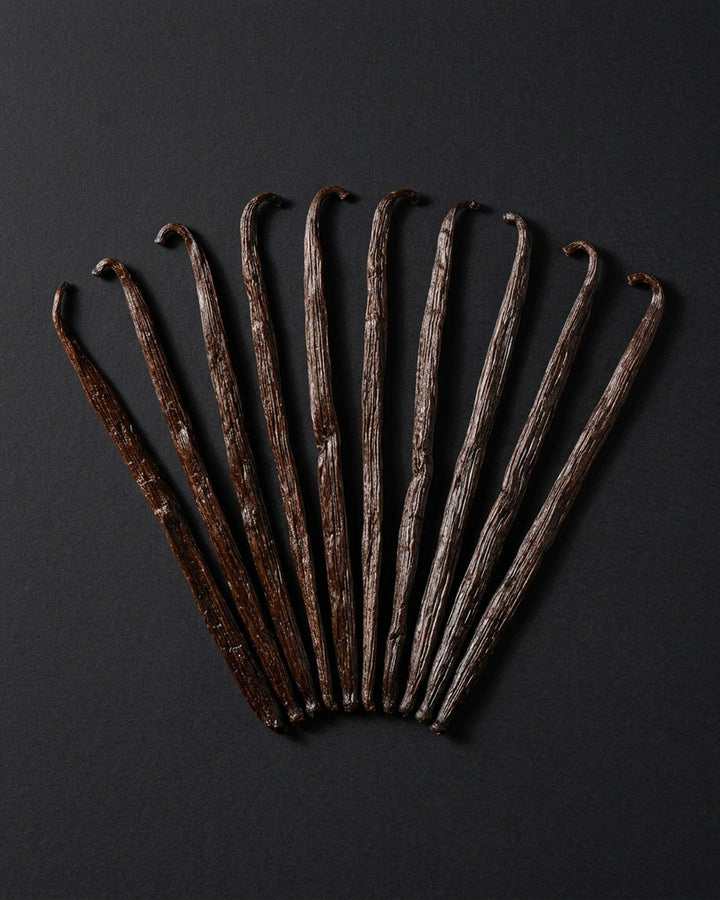
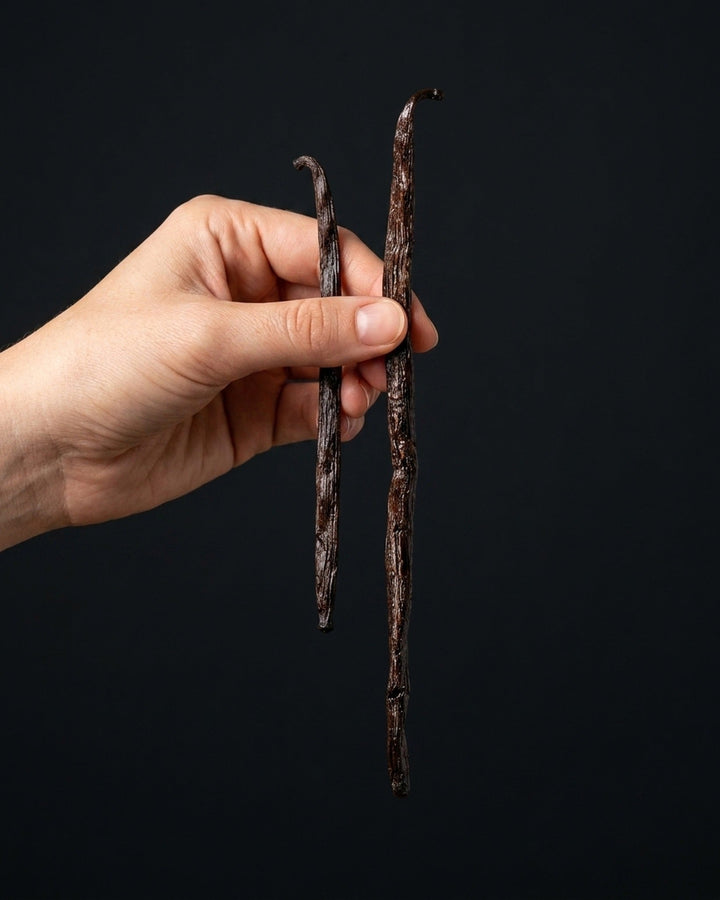
Four checks are enough to judge a bean before you even open the tube. Suppleness: a good bean bends around a finger without snapping. Colour: an even dark brown to almost black, with no dry or pale patches. Aroma: the scent should fill the room as soon as the tube is opened, cocoa and prune for a Bourbon bean, with no trace of alcohol or mildew. Moisture: a Gourmet Grade A bean typically holds 30 to 38% moisture, which is what keeps it supple and lets it be split and scraped cleanly. White crystals sometimes appear on the surface of a well-cured bean: this is crystallised vanillin, a mark of quality, not a defect, and should not be mistaken for mould, which is fuzzy and matte rather than crystalline. Below a certain price, be cautious: very cheap vanilla is usually under-cured, over-dried, or has passed through too many middlemen to trace.
Grades and sizes
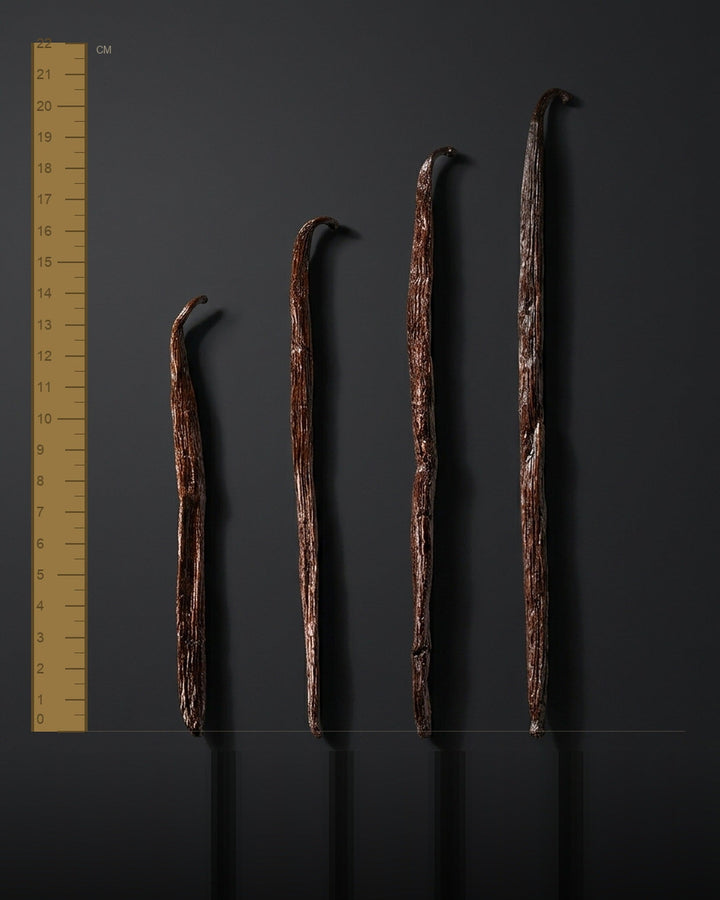
Vanilla is graded by moisture content and appearance, and sized by length in centimetres. The two are independent: a small bean and a large bean can both be Gourmet grade.
| Grade | What it is | Best for |
|---|---|---|
| Gourmet Grade A | Supple, unsplit whole beans, moisture 30-38% | Pastry work: splitting the bean and scraping out the seeds |
| TK | Moisture up to 32%, roughly half the batch already split | Infusing in cream or milk, homemade extract, syrup, powder |
| Red | Reddish-brown to mahogany, moisture up to 30% | Alcohol-based extracts, syrups, vanilla sugar, ice cream |
| Cuts | Cut pieces, moisture up to 18% | Industrial extraction, powder, large-volume infusion |
| Size | Length | Best for |
|---|---|---|
| S | 10 to 12 cm | Infusions, everyday cooking |
| M | 13 to 15 cm | Everyday baking, best price per bean |
| L | 16 to 18 cm | When the vanilla should show on the plate |
| XL | 19 to 20 cm | Showcase desserts, professional pastry |
One species stands apart from this table: Vanilla pompona, sold as Pompona XXL. It is not a size of Bourbon vanilla but a distinct species, larger and more fragrant, with its own aromatic profile. See our dedicated guide to Pompona vanilla if you are considering it for long infusions or showcase dishes.
Storage
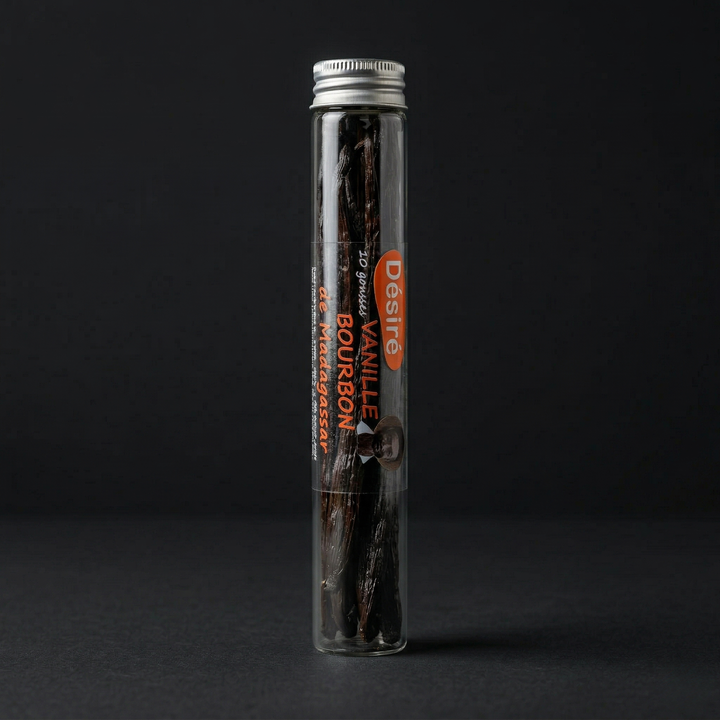
Kept in an airtight glass tube at room temperature, 18 to 22°C, away from light, a Bourbon vanilla bean keeps for two to three years without losing much of its aromatic richness. The one rule that matters most: never store vanilla in the refrigerator, since condensation on opening and closing the tube encourages mould. Our full guide, How to store vanilla beans, covers splitting technique, how to reuse an already-infused bean, and how to tell frosting from mould.
Price, and why
A Bourbon vanilla bean is not an inexpensive product, and there is a reason for that. It takes around 600 flowers, pollinated by hand one by one, to produce a single kilogram of cured vanilla, plus nine months on the vine and up to nine more in curing. Price varies mainly with size and grade: expect to pay more for a supple, full-length Gourmet bean than for a smaller one or an extraction grade sold in bulk. Buying direct from the grower removes several layers of margin found in a longer supply chain, part of why a short, traceable chain can offer a fair price without compromising on curing time or moisture content.
Uses in baking and cooking
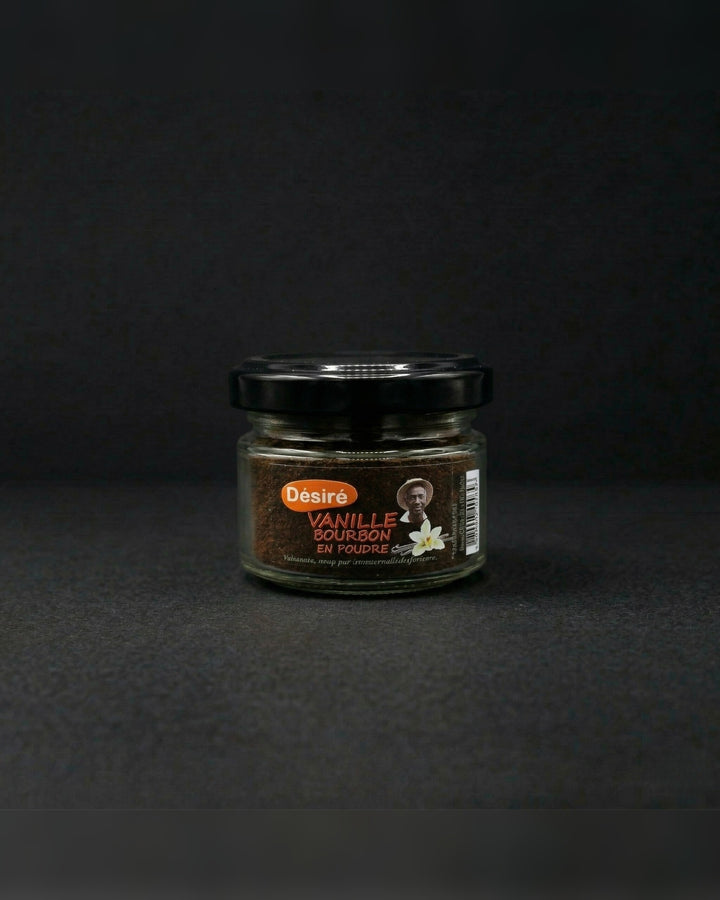
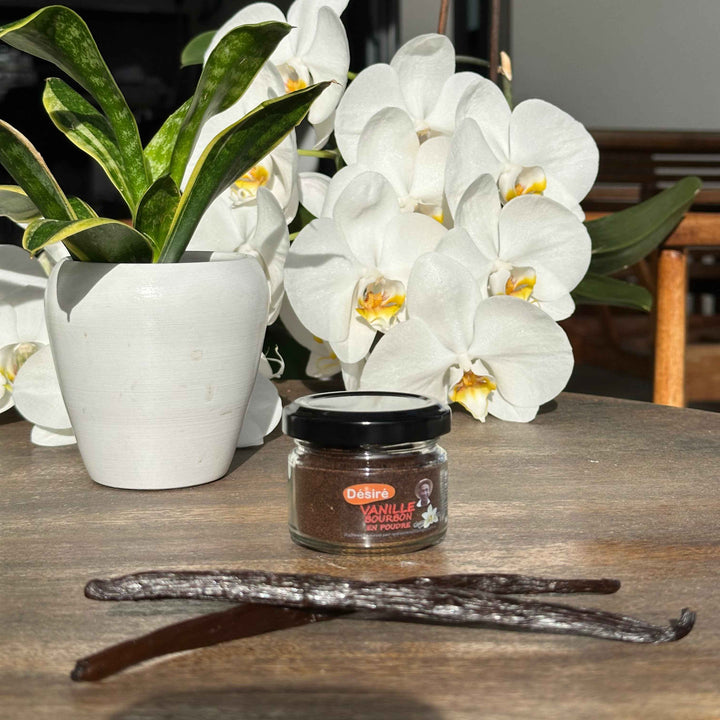
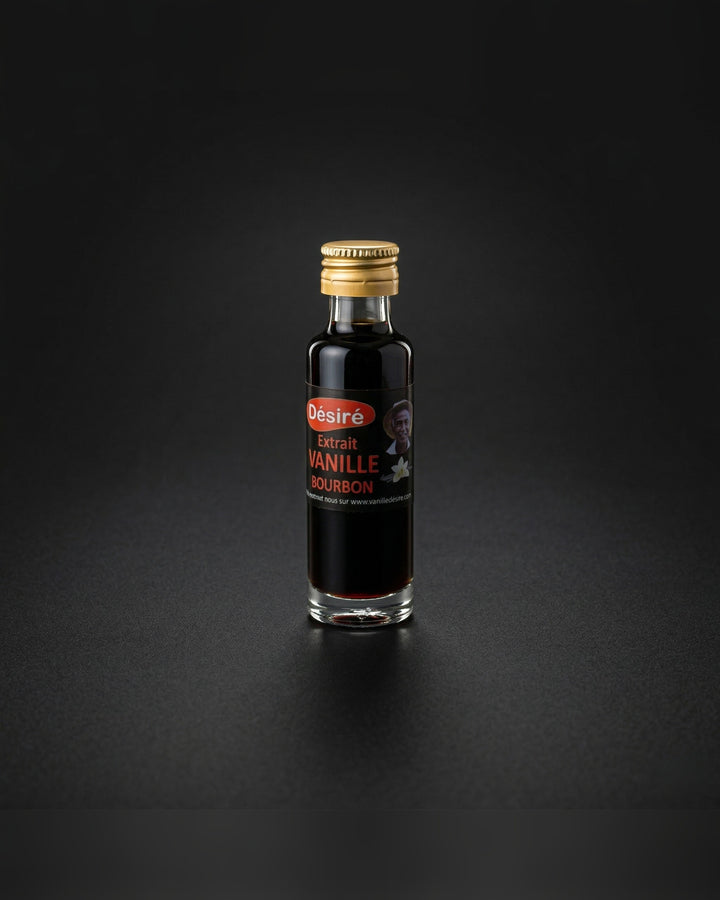
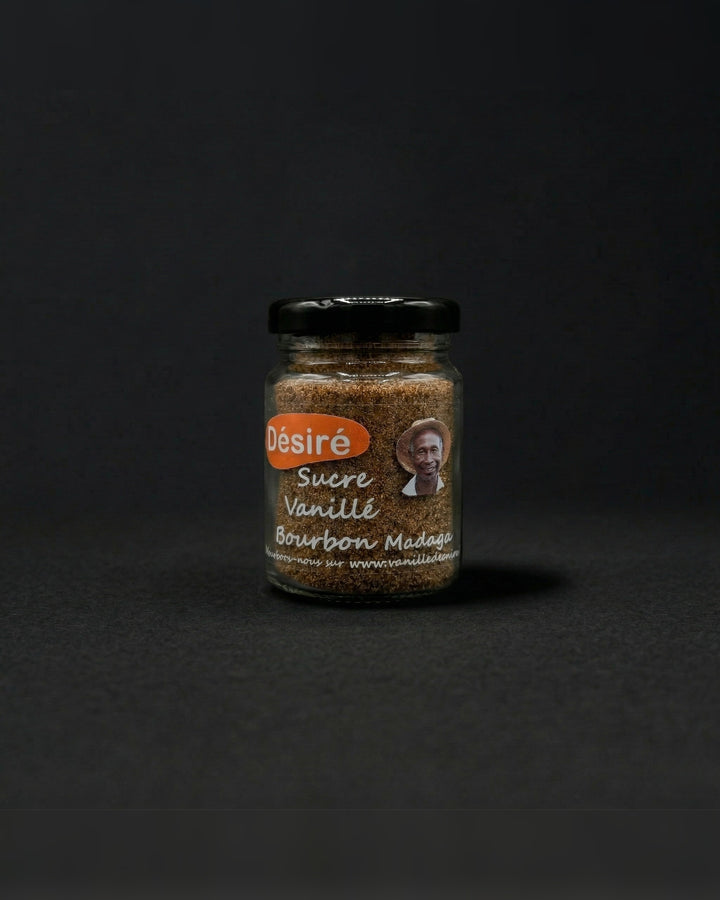
The whole bean gives the best result for both aroma and appearance: split lengthways and scrape out the black seeds, sometimes called vanilla caviar, for custards, crème brûlée, ice cream or a chocolate ganache. Vanilla powder, ground from whole beans, gives quick, precise dosing without added liquid, for dry mixes or ganaches. Vanilla extract, macerated in alcohol, suits liquid batters, pancakes and cocktails. Vanilla caviar on its own is a finishing touch, for moments when the visible black flecks matter as much as the aroma. Vanilla sugar, made by blending already-used beans with caster sugar, is an easy way to use a bean twice. For step-by-step recipes built around each format, see Vanilla uses and recipes.
Buying direct from the grower
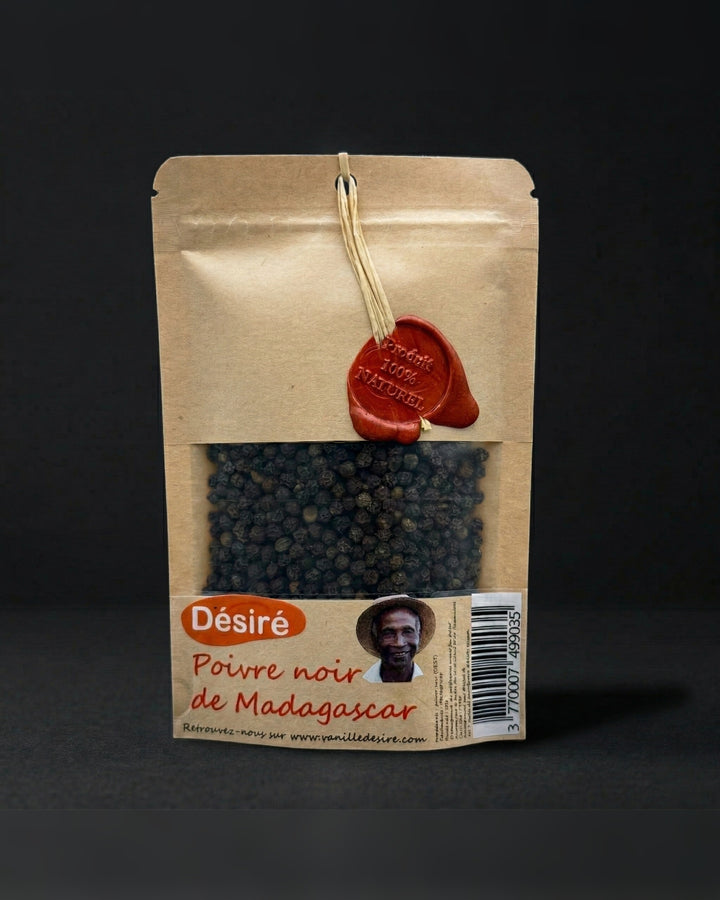
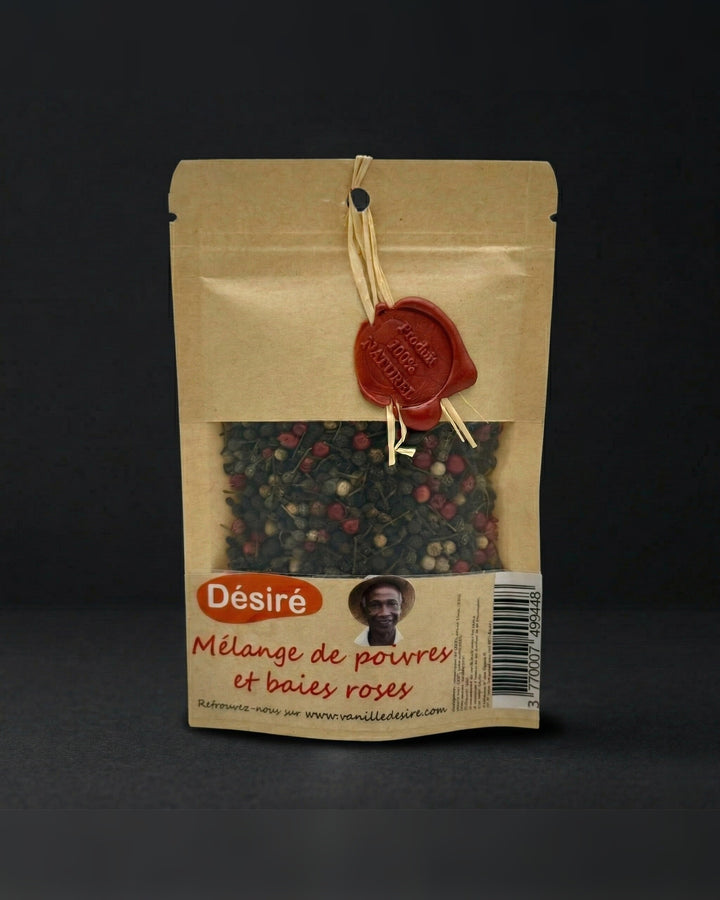
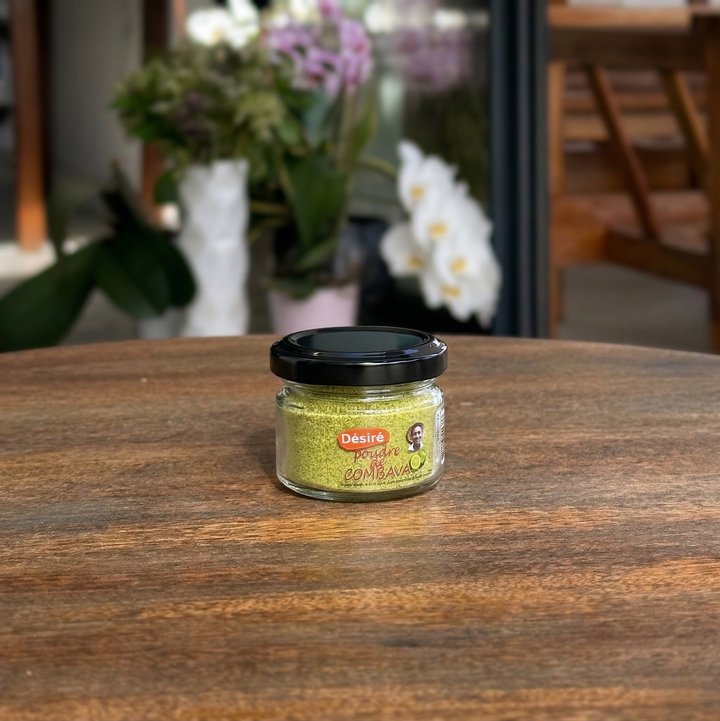
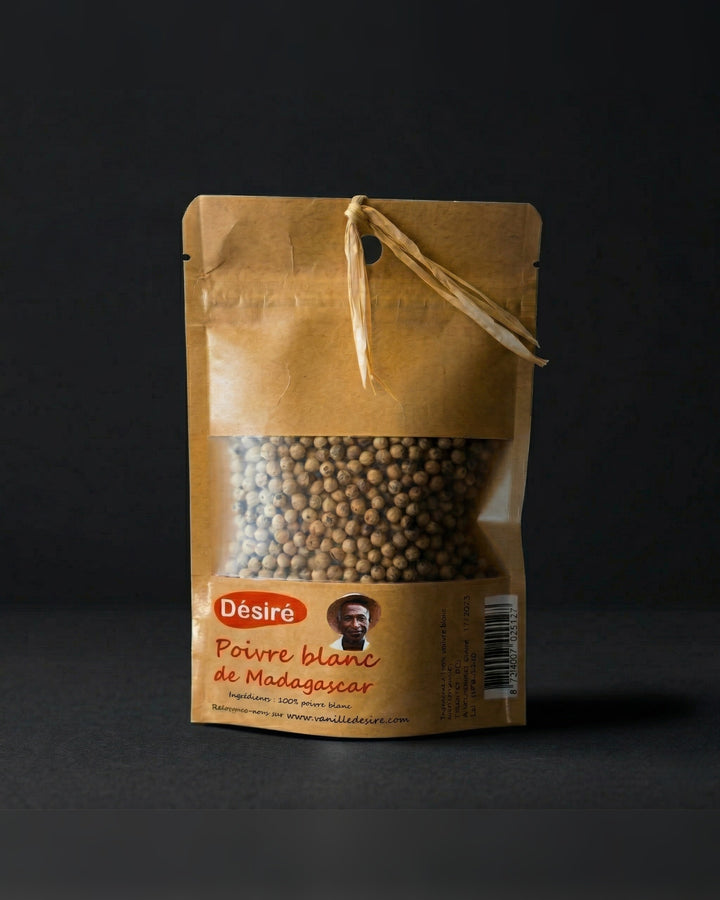
Our family grows and cures this vanilla ourselves, in Sambava, in the SAVA region of north-eastern Madagascar, from hand pollination through to curing and packing: there is nobody between our land and your kitchen. Beyond vanilla beans, we also sell vanilla caviar, powder, extract and vanilla sugar made from the same beans, together with a range of Madagascar spices and peppers. Our Bourbon vanilla collection is rated 5.0 out of 5 from verified customer reviews, and the large glass tube of 10 Bourbon beans is our best-value everyday format. For restaurants, pastry kitchens and retailers who need larger volumes, we also sell vanilla by the kilogram on our trade page, from graded whole beans through to extraction cuts.
Shipping to the UK and Ireland
Every order ships from France, tracked, generally within 48 hours. For deliveries within the EU, including Ireland, customs duties are already included at checkout: nothing more to pay on arrival. For the United Kingdom, outside the EU customs union, import duties and taxes are payable on receipt rather than at checkout. Deliveries to the Nordic countries and the rest of the world are handled the same way, from our France-based stock.