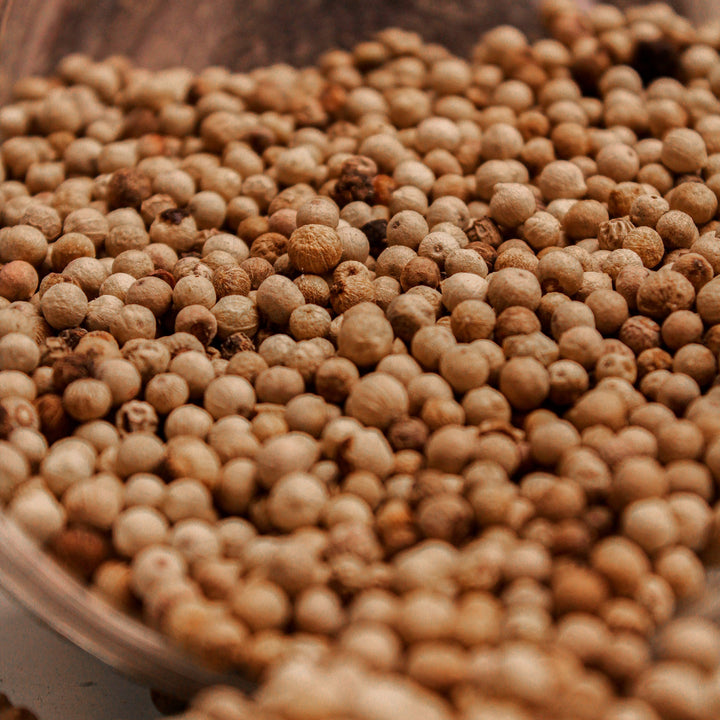
Quick answer: Pink peppercorns, which come from the Peruvian pepper tree rather than the true pepper plant, are used whole or lightly crushed on a tartare, a roasted salmon or poultry, always added at the end of preparation. It's better to crush them just before serving rather than grinding them ahead of time, to keep their fruity fragrance and bright colour.
Pink peppercorns find their way into many savoury dishes, on raw fish as well as on roasted meat, for their fruity fragrance and slight hint of heat. This page covers their uses in savoury cooking; for desserts, see our companion page on pink peppercorns in desserts, which we do not repeat here.
A berry that is not a true pepper
Pink peppercorns come from the Peruvian pepper tree, a tree native to South America, and not from the true pepper plant: their fragrance, more fruity and milder than that of pepper, explains why they are often used in larger quantities without making a dish too hot. Our page pink peppercorns, a pepper or not covers this distinction in more depth, which we do not repeat here.
On raw fish: tartare and cold preparations
On a fish tartare, pink peppercorns are added whole or lightly crushed, just before serving, to keep all their fragrance and colour. Our recipe for salmon tartare with pink peppercorns and lemon gives an example of this, with the lemon balancing the fruitiness of the berries.
On roasted or pan-fried salmon
When cooked, pink peppercorns lose a little of their heat but keep their fragrance, especially if added towards the end of cooking rather than at the start. On a roasted salmon fillet, they go on crushed before baking, or are sprinkled whole once it comes out of the oven. See our recipe for roasted salmon with pink peppercorns.
On poultry or white meat
Pink peppercorns also go well with roasted poultry or a pan-fried escalope, added towards the end of cooking or mixed into a light sauce based on cream or poultry juices. Their fragrance, more subtle than that of black pepper, leaves room for the taste of the meat rather than covering it.
Whole, lightly crushed, never ground ahead of time
Pink peppercorns are delicate: ground too early or in large amounts, they quickly lose their fragrance and bright colour. It's better to crush them lightly between your fingers or under the flat of a knife, at the moment you use them, rather than grinding them into a powder ahead of time. A refillable mill also lets you grind them coarsely, berry by berry, just before serving.
Pairing pink peppercorns without losing them
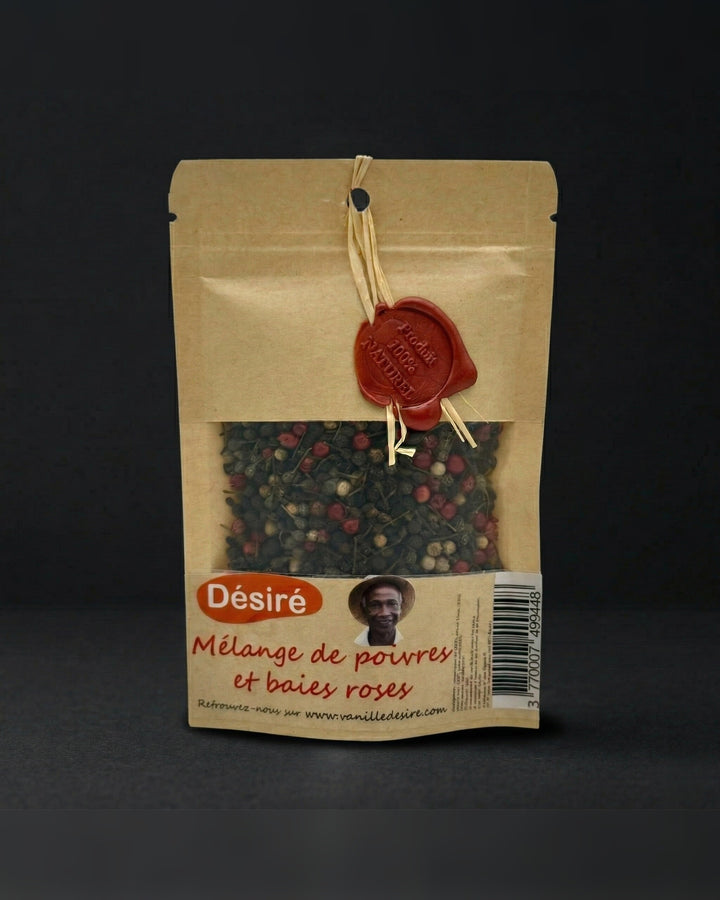
In a dish that already contains other spices, pink peppercorns hold their place best right at the end, added after cooking or just before serving. A dish with too many other strong flavours can easily drown them out; our page on the Madagascar pepper and berry blend offers a pairing already designed to combine them with other peppers without this risk.
With a vinegar or a touch of acidity
Pink peppercorns also pair well with a touch of vinegar or citrus juice, which extends their own mild acidity: on a raw vegetable salad, a drizzle of vinegar and a few crushed pink peppercorns are enough to lift the whole dish, without adding black pepper, which is more assertive on the palate.
Storing pink peppercorns away from light
Like many whole spices, pink peppercorns lose their colour and fragrance if left for a long time in bright light or in a damp place. Our page on storing your spices: jar, light, humidity gives general guidance for all of the house's whole spices, pink peppercorns included.
Where our pink peppercorns come from
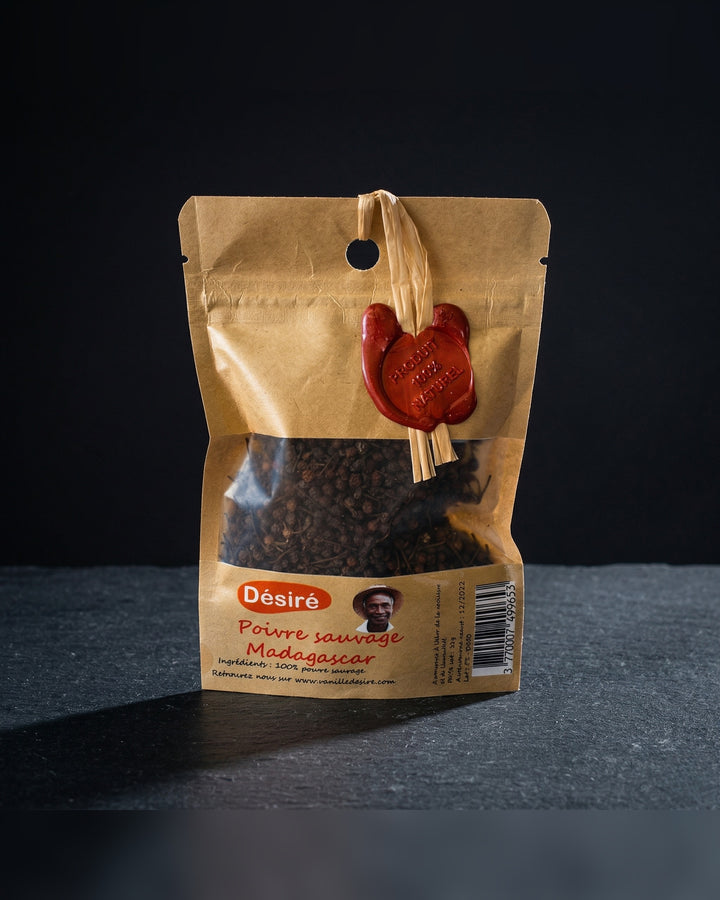
Our family grows pink peppercorns in Vangaindrano, in south-eastern Madagascar.
Frequently asked questions
Are pink peppercorns a true pepper?
No, they come from the Peruvian pepper tree, a tree native to South America, and not from the true pepper plant; their fragrance is more fruity and milder than that of pepper.
Can pink peppercorns be ground ahead of time?
It's better to crush them lightly between your fingers or under the flat of a knife at the moment you use them, as ground too early or in large amounts they quickly lose their fragrance and colour.
What pairs well with pink peppercorns in savoury cooking?
They go on a fish tartare, roasted salmon, poultry or an escalope, and also pair well with a touch of vinegar or citrus juice.
How should pink peppercorns be stored?
Like many whole spices, they lose their colour and fragrance if left for a long time in bright light or in a damp place.
Our products to go further: Madagascar pink peppercorns · Madagascar pink peppercorns, refillable mill
The Vanille Désiré team