Quick answer: In savoury cooking, sesame is used raw or toasted, as whole seeds, oil or tahini paste, notably in hummus or Japanese gomashio. Toasted, the seed develops a more pronounced nutty aroma; sesame remains an allergen to be declared on any preparation that contains it.
Sesame is not just a baking seed. In savoury cooking, it finds its way into many dishes around the world, from Middle Eastern hummus to Japanese gomashio, by way of a fish's breading or a sprinkling over a salad. This page looks at its uses in savoury cooking, without repeating the toasting step, already detailed on another of our pages, or its uses in baking.
A seed with many uses
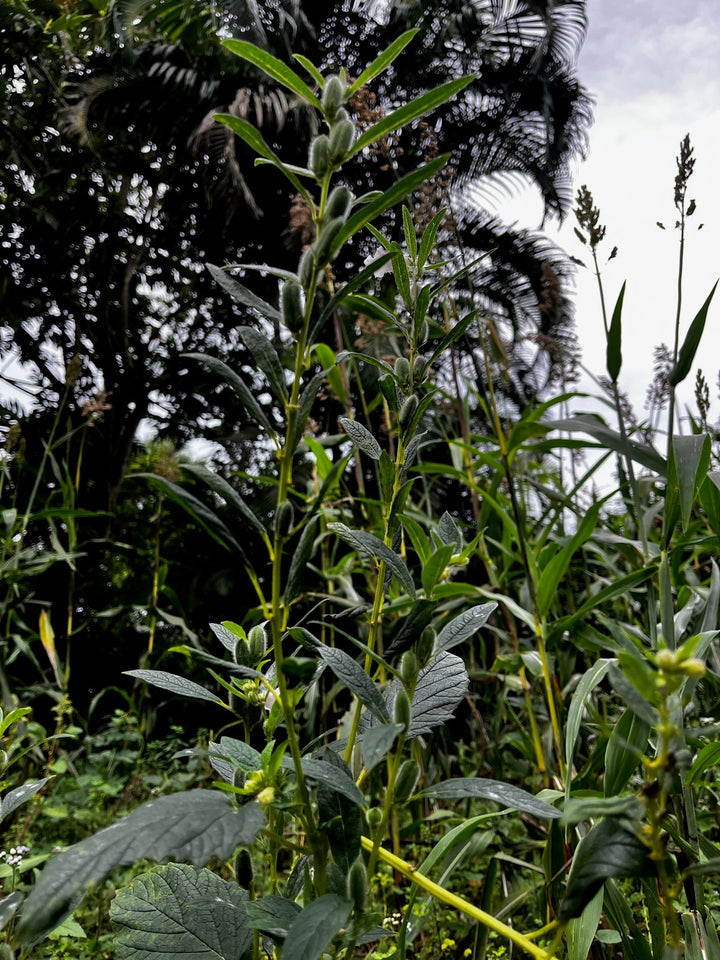
Sesame, Sesamum indicum, is an oilseed grown for several thousand years, probably native to the Indian subcontinent. In savoury cooking, it is used in several forms: the whole seed, raw or toasted, sesame oil, widely used in East Asian cuisines, and tahini paste, obtained by grinding the seeds. Each form has its own use, from the seed that crunches underfoot to the oil that flavours a cold dish.
Raw or toasted: two aromas
Raw, sesame seed has a mild, almost neutral taste. Toasted for a few moments with no fat, it develops a more pronounced nutty aroma, prized in many cuisines. The step for toasting it in a pan or in the oven is detailed on our page on toasting sesame seeds; in savoury cooking, the toasted seed is mostly used as a finishing touch, sprinkled over an already-prepared dish, to make the most of its aroma.
Tahini, a sesame paste for savoury dishes
Finely ground, sesame seeds give a smooth paste, tahini, central to several savoury Middle Eastern preparations. Hummus, a chickpea purée typical of Middle Eastern cooking, combines chickpeas, tahini, garlic, lemon and salt for a creamy preparation. Our homemade sesame hummus recipe details the method. Tahini is also used on its own, as a sauce poured over roasted vegetables or a salad, thinned with a little water, lemon and garlic. Our homemade toasted sesame tahini recipe offers a version made from toasted seeds.
Gomashio, a Japanese condiment
Gomashio is a Japanese condiment made from toasted, crushed sesame seeds mixed with sea salt, used for a long time in Japanese cooking. It is sprinkled over rice, vegetables or a grain dish to add both salt and the aroma of toasted sesame in a single pinch. Similar condiments exist in other Asian cuisines, under different names, built on the same principle of toasted sesame and salt.
On bread or in breading
Sesame seeds, hulled or not, traditionally top many breads, from Middle Eastern flatbread to the bagel, sticking to the dough before baking, sometimes after a brush of beaten egg to help them adhere better. In breading, sesame replaces or adds to breadcrumbs on chicken, fish or tofu, for a crunchy crust that recalls, once browned during cooking, the toasted aroma of the seed.
Which other spices to pair it with
Sesame pairs well with ginger, chilli and sesame oil itself, a trio often found in Asian cuisines in a vegetable stir-fry or a marinade. It also pairs with garlic in Middle Eastern preparations, such as hummus. In a salad or over roasted vegetables, a touch of toasted sesame goes well alongside a curry or turmeric seasoning.
An allergen to declare
Sesame is among the allergens that must be declared on the label of a pre-packaged food product, under Annex II of European regulation 1169/2011. Contains sesame: this note is worth keeping in mind for a savoury dish made at home and shared with others, especially when the seed or the tahini is hidden in a sauce or a breading where it is not visible to the eye.
Where our sesame comes from
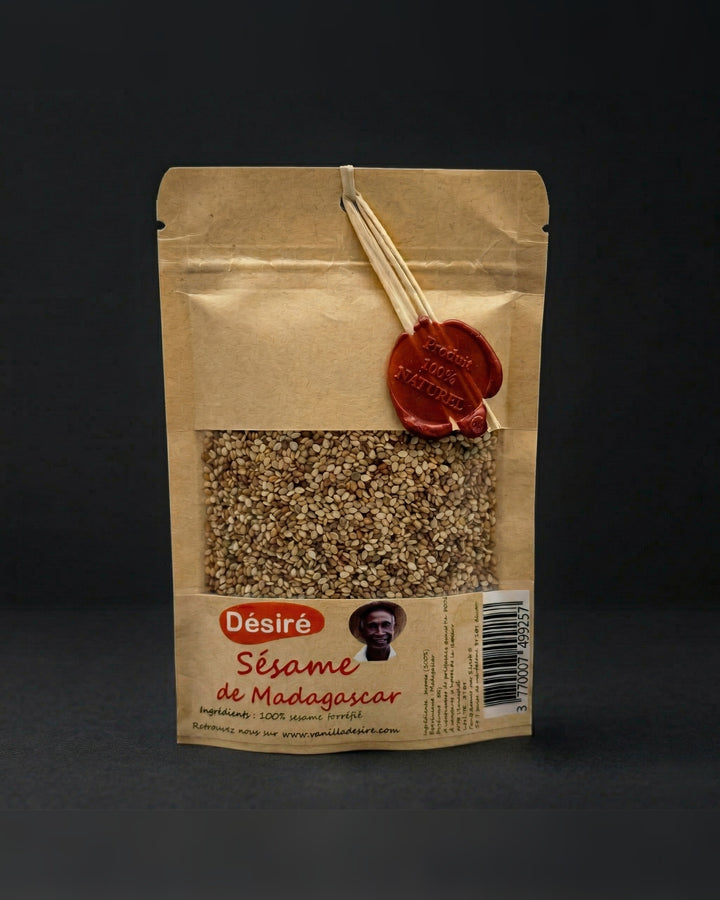
Our family grows sesame in Vangaindrano, in south-east Madagascar. The pods open when ripe and the seeds are then harvested, and sorted by hand. Our Madagascar sesame page presents the spice in more detail.
Frequently asked questions
What is the difference between raw and toasted sesame?
Raw, the seed has a mild, almost neutral taste; toasted for a few moments with no fat, it develops a more pronounced nutty aroma.
What is gomashio?
It is a Japanese condiment made from toasted, crushed sesame seeds mixed with sea salt, sprinkled over rice, vegetables or a grain dish.
How is tahini used in savoury cooking?
Finely ground, sesame seeds give this smooth paste, central to hummus, or used on its own as a sauce thinned with water, lemon and garlic over roasted vegetables or a salad.
Is sesame an allergen that must be declared?
Yes, it is among the allergens that must be declared on the label of a pre-packaged food product, under Annex II of European regulation 1169/2011.
Our products to take things further: Madagascar sesame seeds
The Vanille Désiré team