Quick answer: A refillable pepper mill is filled without packing the grains down, up to the marked level, then adjusted finer for a sauce or coarser for a crust. It suits whole, dry peppercorns; it is best to empty it from time to time and store it somewhere dry, away from light.
A refillable mill changes grain several times over its life, well beyond the first sachet of pepper that came with it. This page explains how to fill it without forcing the mechanism, adjust the grind to suit the use, and maintain it so it lasts for years.
How to fill it
Most refillable mills open from the top, by unscrewing or lifting off the lid, sometimes from the bottom by removing the mechanism. Pour the grains in up to the marked level or until the reservoir is nearly full, without packing them down: grains packed too tightly jam the mechanism instead of falling one by one towards the blades. Close it, then turn it once empty to check that the grains flow normally before bringing it to the table.
Adjusting the grind
The adjustment is usually found on top of the mill, sometimes under the mechanism depending on the model. You generally turn one way for a finer grind, the other way for coarser flakes. A fine grind gives a pepper that mixes easily into a sauce; a coarse grind keeps some bite under the tooth, useful for a crust or a finishing touch at the table. It is best to test the setting empty before serving, so as not to end up with too fine or too coarse a grind at the moment it is needed.
Which grains to put in it
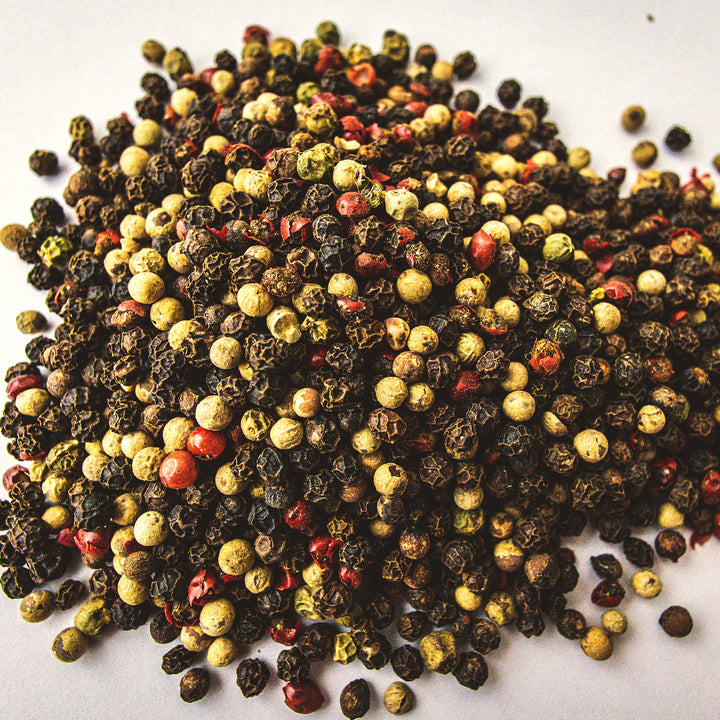
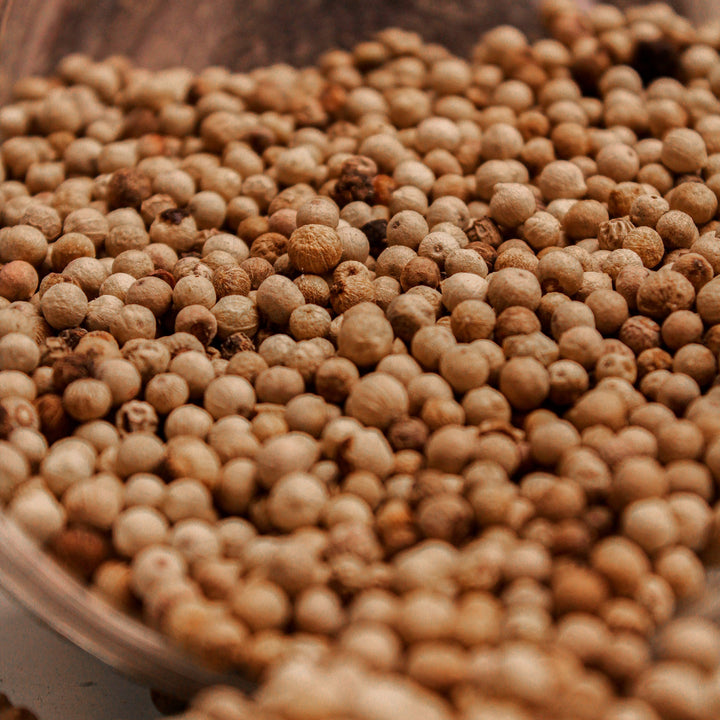
A classic mill aims for a regular grind: it suits black pepper, white pepper or wild pepper in whole, dry grains well. Grains that are still damp, or a blend with softer berries such as some pink berries, can wear out the mechanism faster or jam it; a mortar suits these specific cases better. For the particular gesture for wild pepper, between mortar and mill, see our page on grinding it.
Maintaining the mill
- empty the reservoir from time to time rather than letting the same pepper sit in it for several months;
- wipe the outside with a dry cloth; avoid water on a mechanism or a wooden body, which would swell;
- a ceramic mechanism does not rust, unlike some metal mechanisms exposed to damp;
- store the mill closed, away from light, to protect the pepper it holds as much as its mechanism.
What to do if the mill jams
A mill that suddenly resists often signals a grain that is too large, a splinter of wood or ceramic caught in the mechanism, or a reservoir too full for the grains to feed down properly. Empty the reservoir into a bowl, inspect the mechanism empty by turning it gently, then refill it without packing the grains down. If the grind stays jammed despite this, a quick burst of dry air, with no water, is usually enough to dislodge whatever is in the way.
The signs of a tired mill
A grind that becomes uneven, a mill that turns freely without grinding anything, or grains that come out whole despite a fine setting: these are signs that the mechanism needs checking, cleaning, or replacing if the wear is too advanced. A good quality ceramic mechanism usually lasts several years with minimal maintenance.
Summary in a few lines
- Fill without packing down, up to the mark or nearly full, then test empty.
- Adjust the grind to suit the use: fine for a sauce, coarse for a crust.
- Maintain it dry, away from light, and empty the reservoir from time to time.
Our refillable mills
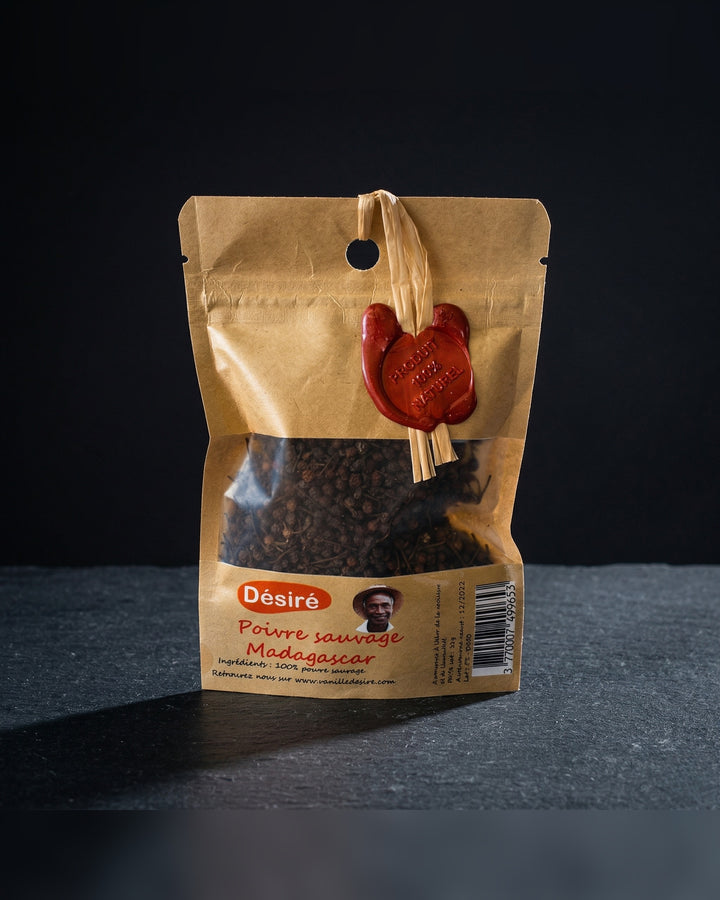
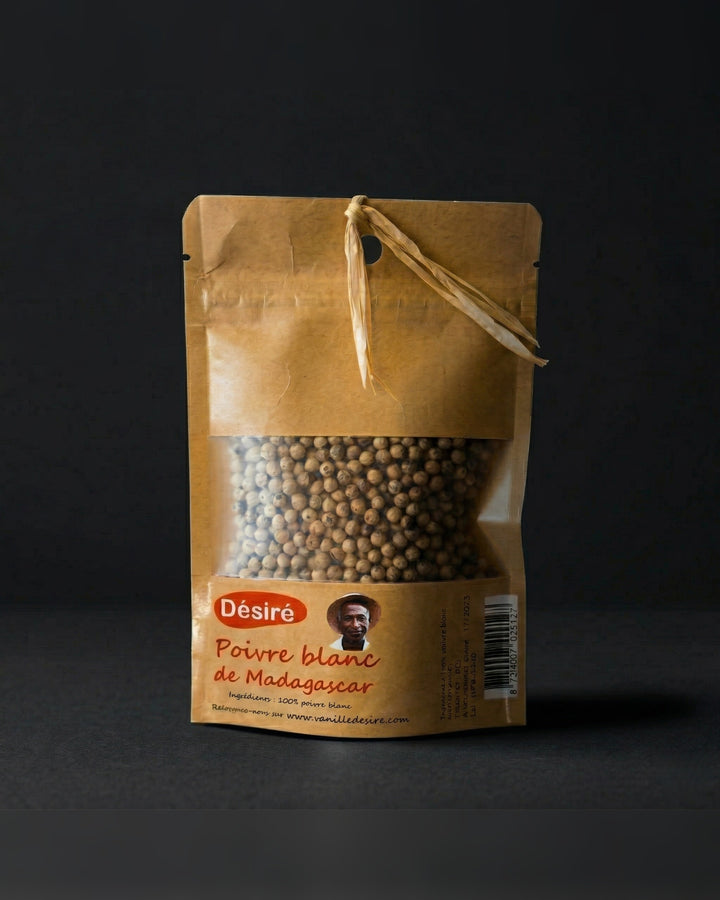
Our family grows black pepper and white pepper in Vangaindrano, in south east Madagascar; wild Voatsiperifery pepper is gathered there in the forest, it is not cultivated. We offer these peppers with a refillable mill, to be filled yourself as you go through the sachets.
- See black pepper with a refillable mill.
- See white pepper with a refillable mill.
- See wild pepper with a refillable mill.
- See our peppers and blend with a refillable mill.
Frequently asked questions
How to fill a refillable pepper mill?
Pour the grains in up to the marked level or until the reservoir is nearly full, without packing them down, then turn it once empty to check that they flow normally.
How to adjust the grind on a pepper mill?
The adjustment is usually found on top of the mill: a fine grind suits a sauce, a coarser grind keeps some bite for a crust or a finishing touch at the table.
Which grains can go into a classic pepper mill?
Black pepper, white pepper or wild pepper in whole, dry grains; grains that are still damp or softer berries such as some pink berries risk wearing out or jamming the mechanism, a mortar suiting these cases better.
What to do if the pepper mill jams?
Empty the reservoir into a bowl, inspect the mechanism empty by turning it gently, then refill it without packing the grains down; a quick burst of dry air, with no water, is usually enough to dislodge whatever is in the way.
The Vanille Désiré team